 how-to
Sustainable irrigation solutions for new housing estates
Table of Contents
- Why sustainable irrigation matters for new housing estates
- Planning irrigation around soil type and plant selection
- Water-efficient irrigation systems for residential landscapes
- Smart irrigation controllers and water management
- Drip irrigation for garden beds and planting areas
- Irrigation system maintenance for long-term performance
- Installing irrigation during landscape construction
- Designing for resident ease of use and water savings
- Frequently Asked Questions
Last Updated: October 21, 2026
Why sustainable irrigation matters for new housing estates
New housing estates must deliver attractive outdoor spaces while managing water responsibly. Sustainable irrigation solutions reduce water consumption, lower maintenance costs and create landscapes that thrive without constant manual intervention.
Planning irrigation during the initial landscape design phase avoids expensive retrofits and future-proofs your investment against rising water costs and tighter usage restrictions.
At FDSS Landscaping Services, we integrate irrigation planning into the landscape design and construction process rather than treating it as an afterthought.
Planning irrigation around soil type and plant selection
Soil type determines how water moves through the ground and how long plants can access it.
Before selecting an irrigation system, conduct a soil assessment. Understand your drainage characteristics. This shapes everything: watering frequency, system type, and plant selection.
Plant choice matters equally. Native and drought-tolerant species thrive on less water than exotic ornamentals. Grouping plants by water need, hydrozoning, lets you run different zones on different schedules.
Water-efficient irrigation systems for residential landscapes
Choosing an irrigation approach for a new estate means decisions across shared infrastructure, individual lots and planting zones. Most well-planned estates combine two or three of the systems below.
Comparing the main irrigation technologies
| System | Best suited to | Water efficiency | Maintenance profile | Estate-scale considerations |
|---|---|---|---|---|
| Drip (surface) | Garden beds, shrub borders, vegetable plots, street-tree pits | High, delivers to root zone with minimal evaporation | Regular flushing and emitter checks; mulch helps | Easy to zone per lot; shared manifolds work well on communal beds |
| Subsurface drip | Turf, high-visibility lawn areas, medians | Very high, water below the surface, no overspray or wind loss | Requires root-intrusion management and periodic line flushing | Good for shared turf and verges where vandalism or mower damage is a risk |
| Pop-up sprinklers | Lawn areas, large open spaces, sports and play turf | Moderate, wind and evaporation losses are higher | Nozzle cleaning, head alignment, seasonal adjustment | Needs matched precipitation rates across zones; pressure regulation matters on shared lines |
| Smart controllers with weather and soil-moisture input | Any zoned system | High, skips or shortens cycles based on real conditions | Firmware and sensor checks; seasonal review of schedules | Central controllers can manage multiple lots or common areas from one interface |
A common pattern on new estates is subsurface drip under turf and shared lawn, surface drip in planted beds, and pop-up sprinklers only where a uniform lawn finish is required. Smart controllers then sit across all zones.
Rainwater harvesting and underground storage
Collecting roof runoff reduces reliance on mains supply and works best when designed into the roof and drainage layout from the start.
Storage sizing depends on roof catchment area, local rainfall and how much demand the tank must meet. A common approach is to size against dry-season garden demand rather than annual rainfall, because the tank is most useful when full at the start of the dry period.
Natural filtration for collected water
Roof runoff carries leaves, grit, bird droppings and dust. First-flush diverters discard the initial runoff from each rain event, which carries the heaviest debris. Downstream, sand-and-gravel or cartridge filters polish the water before it reaches pumps, drip emitters and spray heads.
Filtration choice depends on the end use. Drip and subsurface drip need finer filtration than sprinklers because emitters block easily.
Estate-scale planning versus lot-by-lot systems
Most guidance on sustainable irrigation is written for a single home. Estates need a different layer of thinking: shared infrastructure, staging, and coordination between civil works and landscape construction.
- Shared versus individual systems. Communal landscape areas, entry statements, medians and drainage reserves are usually best served by a shared system with a central controller. Individual lots can then connect to a lot-level system or, where the development model allows, to a shared supply.
- Phased delivery. Estates are built in stages. Irrigation infrastructure for stage one should be designed so it can be extended into later stages without re-trenching completed landscape.
- Pressure and flow. Shared lines serving many lots need hydraulic design so that pressure at the furthest emitter remains adequate. Pressure-compensating drippers and regulated sprinkler heads help, but the supply and zoning still need to be designed.
Approvals and water-quality considerations
Irrigation design on a new estate sits alongside stormwater management, drainage and, in some cases, water-sensitive urban design requirements. What applies depends on the site, the council area and the relevant authority, and requirements should be confirmed for each project rather than assumed. Items commonly reviewed include connection to mains supply, backflow prevention, stormwater discharge and any conditions attached to harvested-water use.
Smart irrigation controllers and water management
Modern smart controllers adjust schedules based on real-time conditions, rainfall, soil moisture, temperature and forecasts.
These controllers reduce water waste significantly, where manual systems or basic timers water regardless of conditions.
Soil moisture sensors add another layer: buried in key beds, they measure actual soil moisture so the controller waters only when soil dries below a target threshold, preventing both over-watering and under-watering.
Smart controllers also provide data, monitor water usage, identify leaks and track performance from your phone.
Drip irrigation for garden beds and planting areas
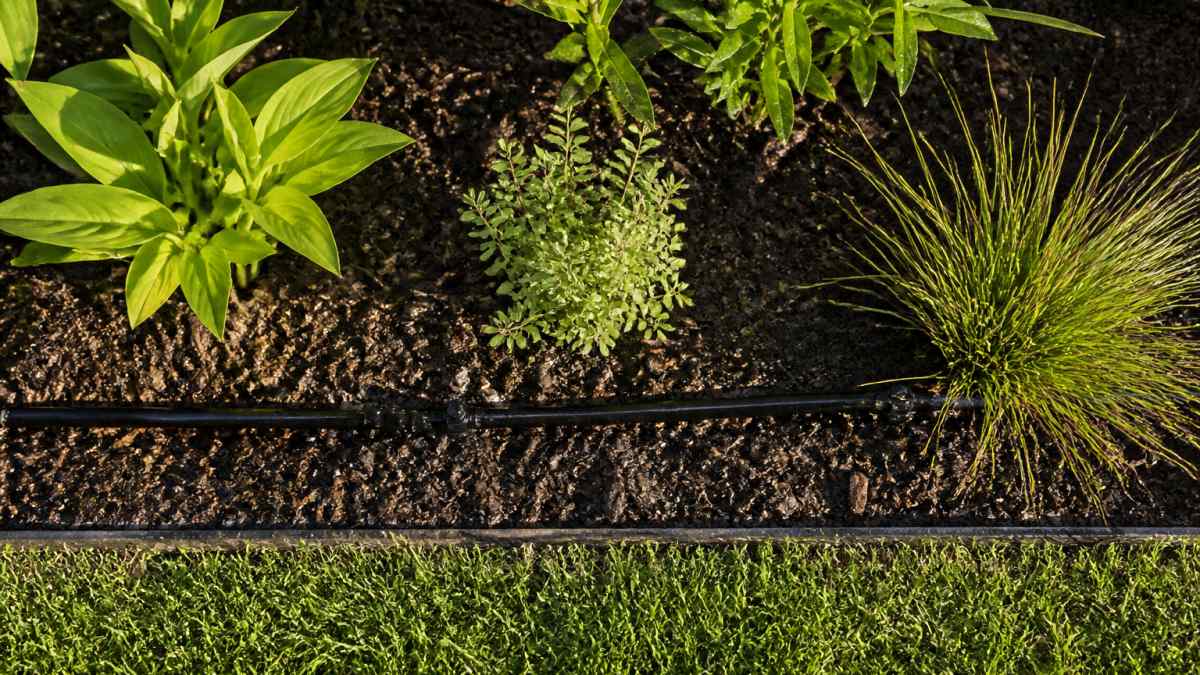
Drip irrigation delivers water directly to plant roots, minimising evaporation and runoff. Water drips slowly from emitters near each plant, using significantly less water than overhead sprinklers while delivering it precisely where needed.
Drip systems suit garden beds, shrub borders and vegetable gardens; sprinklers remain the best option for lawns.
Drip is flexible: adjust emitter flow rates and spacing to match plant needs, with more frequent, lighter watering for new plantings and longer intervals for established plants.
Irrigation system maintenance for long-term performance
Sustainable irrigation systems need regular attention. Inspect lines, connections and emitters monthly for leaks, clogs or damage, small problems caught early prevent major failures.
Flush the system seasonally to clear sediment and mineral deposits.
Clean filter screens regularly, as clogged filters reduce pressure and water delivery.
Check storage tanks annually: remove sediment, inspect walls for cracks or leaks, and protect water quality.
Installing irrigation during landscape construction
The ideal time to install irrigation is during initial landscape construction, when trenches can be dug alongside drainage, concreting and paving excavation, and water and power connections coordinated with broader civil works. Retrofitting is more disruptive and costly because lines must be threaded through existing plants, hardscaping and turf.
Sequencing irrigation with the construction program
A practical sequence on a new estate looks like this:
- Design and set-out. Finalise zoning, tank and pump locations, and controller positions against the landscape and drainage plans before ground is broken. Confirm service locations and any easements.
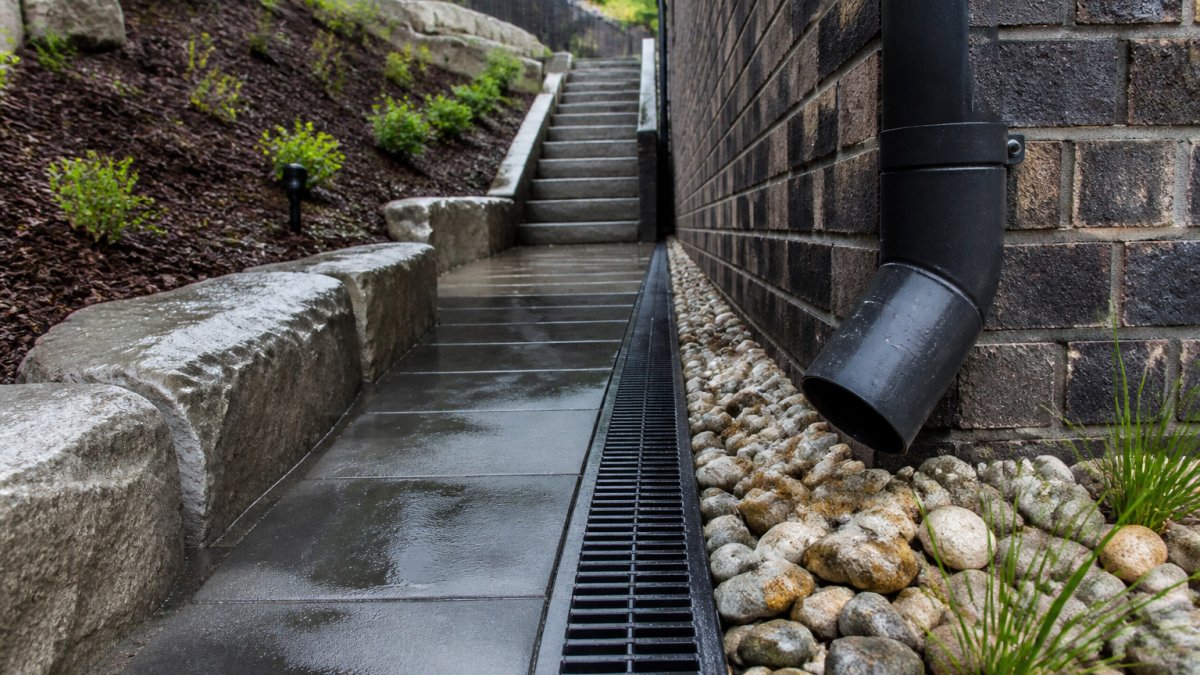
- Bulk excavation and drainage. Install subsurface drainage and stormwater lines first so irrigation trenches do not conflict with them.
- Supply and main lines. Run mains, submains and tank connections while trenches are open. Pressure-test before backfilling.
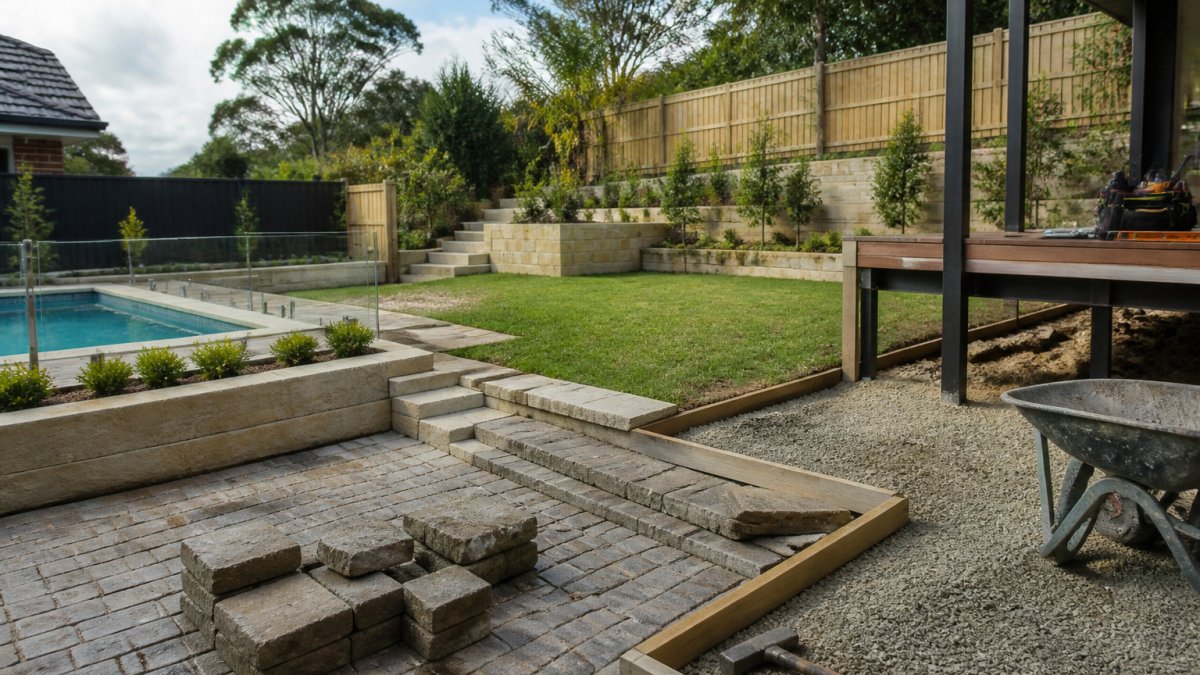
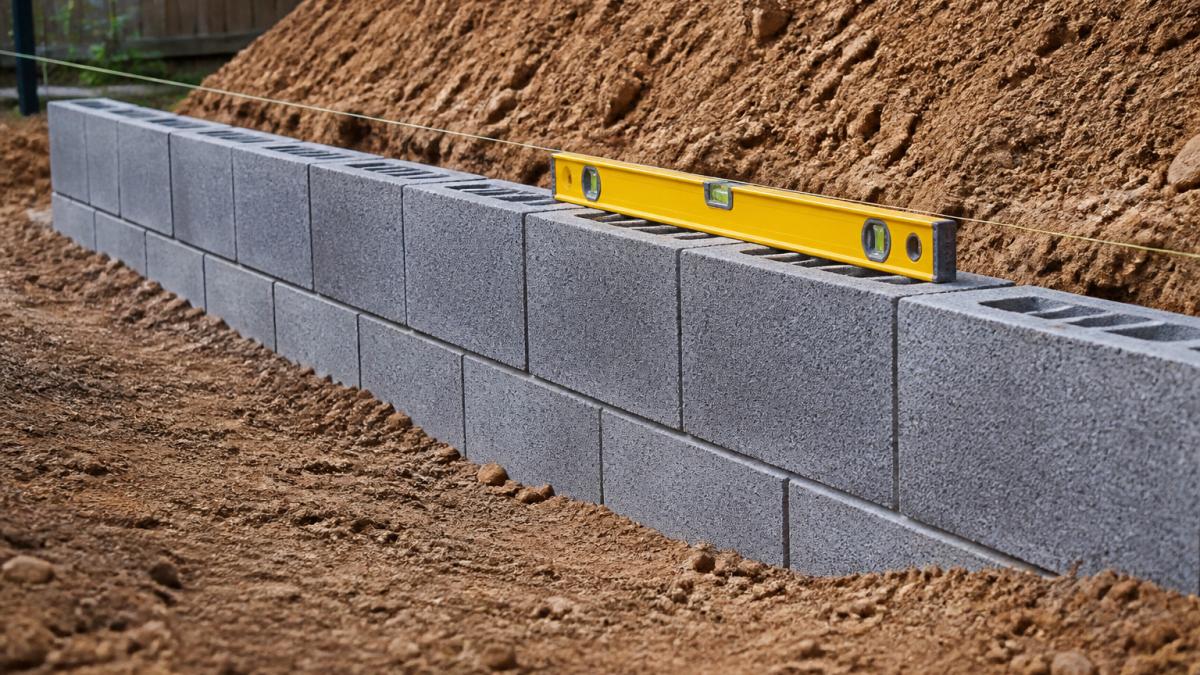
- Hardscaping and retaining. Complete paving, retaining walls and edging, leaving sleeves and penetrations for irrigation where lines must cross.
- Planting and turf. Install drip lines and sprinkler zones, then plant and lay turf. Mulch after drip is in place.
- Commissioning and handover. Test every zone, set schedules, document as-builts and hand over operating instructions.
Staged estates and phased delivery
Estates are rarely built in one pass. Irrigation infrastructure for early stages should be designed so later stages can be connected without re-trenching completed landscape. That means:
- Sizing mains and submains for the ultimate estate, not just stage one.
- Leaving capped connection points and draw-wire or conduit at stage boundaries.
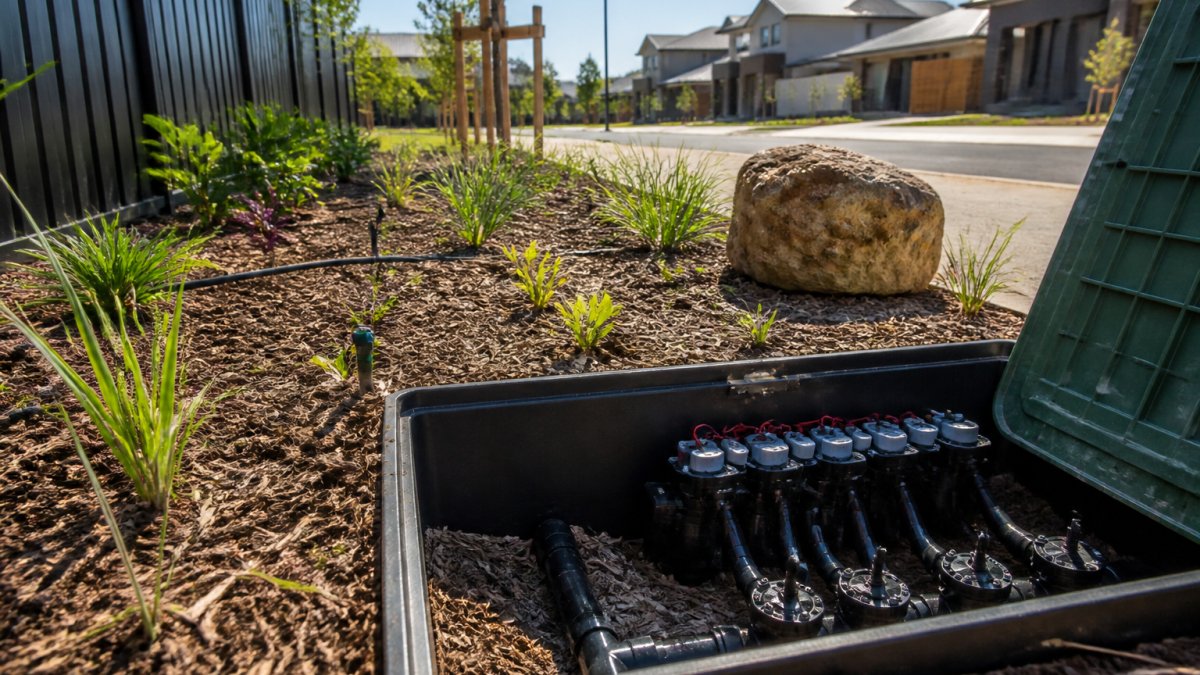
- Keeping controller capacity and valve-box space for future zones.
Commissioning: what to check before handover
Commissioning is where many systems quietly fail. A proper commissioning pass includes:
- Pressure and flow test at the furthest point of each zone, compared against design.
- Zone-by-zone run to confirm coverage, matched precipitation and no overspray onto paving or walls.
- Controller programming with seasonal schedules, rain-sensor or soil-moisture override, and clear zone labels.
Maintenance and performance monitoring after handover
Sustainable performance depends on what happens after the landscapers leave. A simple regime keeps systems efficient:
- Monthly: visual inspection of lines, emitters and sprinkler heads; check for leaks, clogs and misalignment.
- Seasonally: flush lines and clean filter screens; review controller schedules against the season.
- Annually: inspect tank sediment and fittings; check pressure at test points; review water-use data from the controller.
- After any landscape change: adjust emitters, zones and schedules to match new planting.
Smart controllers that log water use make leak detection and performance tracking far easier, because a sudden rise in consumption on a zone usually points to a break or a stuck valve.
Approvals and inspection points
Irrigation works on a new estate sit alongside stormwater, drainage and, in some cases, water-sensitive urban design requirements. What applies depends on the site, the council area and the relevant authority, and requirements should be confirmed for each project rather than assumed. On sloping sites across the Hills District and Western Sydney, retaining and drainage design often determines where irrigation lines can run and how zones should be graded.
Professional installation ensures proper grading, line sizing, pressure regulation and commissioning. A well-installed and properly commissioned system performs reliably for years; poor installation shows up as leaks, pressure issues and uneven coverage long after handover.
Designing for resident ease of use and water savings
A sustainable irrigation system must be easy for residents to understand and operate.
Clear labelling helps: mark each zone with its plant type and watering schedule, provide simple adjustment instructions, and include maintenance contact details.
Educate residents about water-saving practices: explain why plants are grouped together and show them how to read soil moisture or interpret forecasts.
New housing estates that invest in sustainable irrigation solutions from the start gain a competitive advantage. Residents enjoy beautiful, low-maintenance landscapes.
Frequently Asked Questions
What is the most sustainable way to irrigate a new residential landscape?
Sustainable irrigation combines water-efficient irrigation systems with smart controllers and rainwater harvesting where feasible. Start by assessing soil type, plant selection, and microclimate. Drip irrigation for garden beds reduces water use by 50% compared to sprinklers. Pair this with mulching, proper drainage design, and a smart controller that adjusts watering based on rainfall and soil moisture. Underground water storage and natural filtration systems allow you to capture and reuse roof runoff, further reducing mains water demand.
How should irrigation be planned for a new housing estate?
Plan irrigation early during landscape design, not as an afterthought. Work with your landscape designer to map soil conditions, slope, and plant zones across the estate. Determine whether rainwater harvesting and underground storage are viable. Coordinate irrigation installation during the construction phase, before turf, mulch, and hardscaping are laid. This approach reduces costs and ensures proper grading and drainage. Document the system layout and create a maintenance guide for residents so they understand how to operate and care for the installation long-term.
Can rainwater be used for landscape irrigation in a new development?
Yes. Rainwater harvesting from rooftops and hard surfaces is an effective water conservation strategy for new estates. Collected water can be stored underground and filtered through sand and gravel to remove sediment and debris. This filtered water is suitable for garden beds, turf, and ornamental planting. Check with your local council about any requirements for water quality testing or system design approvals. Underground storage keeps water cool and out of sight, and integrates well with landscape design.
How do smart irrigation controllers reduce water use?
Smart irrigation controllers adjust watering schedules automatically based on soil moisture, rainfall, temperature, and plant type. They eliminate overwatering during wet weather and reduce water waste on cooler days. Many systems allow remote monitoring and adjustment via smartphone, so residents can fine-tune settings seasonally. When paired with drip irrigation for garden beds and zone-based sprinklers for turf, smart controllers typically cut water consumption by 20-30% compared to fixed-schedule systems, delivering both water savings and lower utility costs.