 how-to
Install Efficient Irrigation for Sydney Garden Beds
Table of Contents
- Why Efficient Irrigation Matters for Sydney Garden Beds
- Understanding Your Soil, Climate and Water Pressure
- Planning Your Irrigation Layout and System Design
- Step-by-Step Drip Irrigation Installation Guide
- Selecting the Best Irrigation Controllers for Home Gardens
- Water-Wise Landscaping Techniques to Reduce Consumption
- System Maintenance and Troubleshooting
- DIY vs Professional Installation
- Frequently Asked Questions
Last Updated: October 1, 2026
Why Efficient Irrigation Matters for Sydney Garden Beds
Watering your garden beds by hand wastes time and water. Most homeowners either overwater (drowning roots and wasting thousands of litres annually) or underwater (stressing plants during dry spells). Efficient irrigation solves both problems at once.
An automated system delivers water exactly where plants need it, when they need it. You save time, reduce water use, and keep plants healthier. For Sydney properties, where water restrictions are common and summers are hot, efficient irrigation Sydney systems aren't just convenient, they're essential.
FDSS Landscaping Services has experience designing irrigation systems across the Hills District and North-West Sydney. We know how local soil, climate, and water pressure affect what works. This guide walks you through planning and installing efficient irrigation Sydney systems for your garden beds, whether you're doing it yourself or deciding when to call a professional.
Understanding Your Soil, Climate and Water Pressure
Before you buy a single fitting, understand three things: your soil type, your local climate patterns, and your water pressure.
Sydney soils vary widely. Clay-heavy soils in areas like Penrith and Mount Druitt drain slowly and hold moisture longer. Sandy soils around Baulkham Hills and Bella Vista drain fast and need more frequent watering. Loamy soils (a mix) are ideal but rare. Test yours by digging a hole, filling it with water, and watching how fast it drains. Fast drainage (under 2 hours) means sandy soil. Slow drainage (over 4 hours) means clay.
Sydney's climate is predictable but extreme. Summer temperatures often exceed 30°C. Winter rainfall is reliable but light. Spring and autumn are dry. Your irrigation system needs to match this pattern, heavy watering in summer and autumn, lighter in winter and spring.
Water pressure is critical. Most Sydney homes have 2-4 bar of pressure. Check yours by attaching a pressure gauge to an outdoor tap. Low pressure (under 2 bar) limits your options, you'll need a pressure regulator. High pressure (over 4 bar) can damage fittings and cause leaks. A regulator fixes this too.
Planning Your Irrigation Layout and System Design
A good layout saves money and water. A poor one creates dry spots and wastes water on paths.
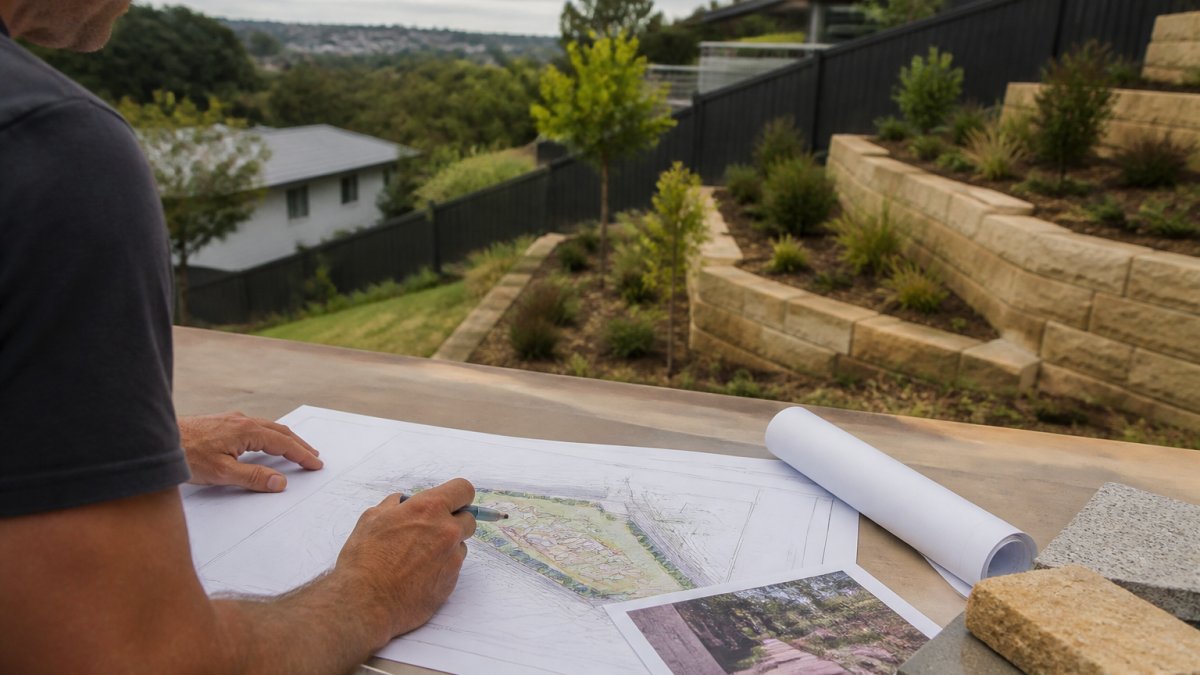
Start by mapping your garden bed. Note where plants are, their size, and their water needs. Shade areas need less water than full sun. Deep-rooted plants (shrubs, trees) need deeper watering. Shallow-rooted plants (annuals, groundcover) need frequent but shallow watering.
Divide the bed into zones based on plant type and sun exposure. Each zone gets its own water line with its own timer or valve. This lets you adjust watering independently, no more overwatering shade plants to keep sun plants alive.
Calculate your water needs. A typical Sydney garden bed in summer needs 25-50mm of water per week, depending on soil and plant type. Drip irrigation delivers about 2-4 litres per hour per emitter. If your bed is 4 metres long and 1.5 metres wide (6 square metres), and you want 40mm of water per week, you need roughly 240 litres per week, or about 34 litres per day in summer. Space emitters 30-45cm apart to deliver this evenly.
Choose your main water source. Most homes use the mains tap. Some use rainwater tanks. Tank water is free but unpressurised, you may need a pump. Mains water is reliable and pressurised but costs more in summer.
Key decisions for your layout:
- How many zones (one per different plant type or sun exposure)?
- Main line material (poly pipe or rigid PVC)?
- Emitter type (drip line, solenoid valves, or spray heads)?
- Controller type (simple timer or smart system)?
Step-by-Step Drip Irrigation Installation Guide
What You'll Need Before Starting
Gather these materials before you start:
- Main poly pipe (16mm or 20mm, depending on flow rate)
- Dripline or drip tape (4mm or 6mm)
- Emitters or drip heads (2-4 litres per hour, depending on plant needs)
- Pressure regulator (if your water pressure exceeds 4 bar)
- Filtration screen (to prevent clogging from sediment)
- End caps and fittings (connectors, tees, elbows)
- Stakes or clips (to hold pipe in place)
- Timer (simple battery-powered or smart WiFi-enabled)
- Spade and hand tools
You'll also need a tape measure, scissors or knife, and a pressure gauge to test your system.
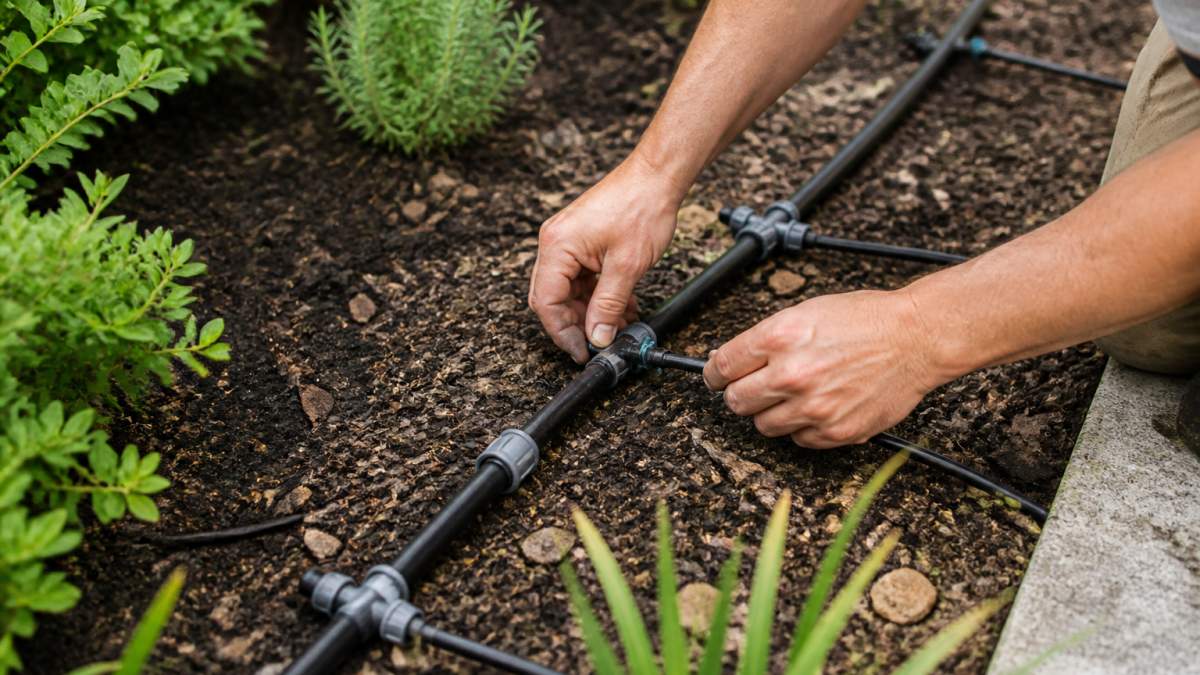
Installation Steps
Step 1: Lay out your main line. Run your main poly pipe from the tap to the far end of your garden bed. Bury it 5-10cm deep to protect it from sun damage and foot traffic. Use stakes to hold it in place while you work. Connect a pressure regulator and filter to the tap end. This protects your system from pressure spikes and sediment clogs.
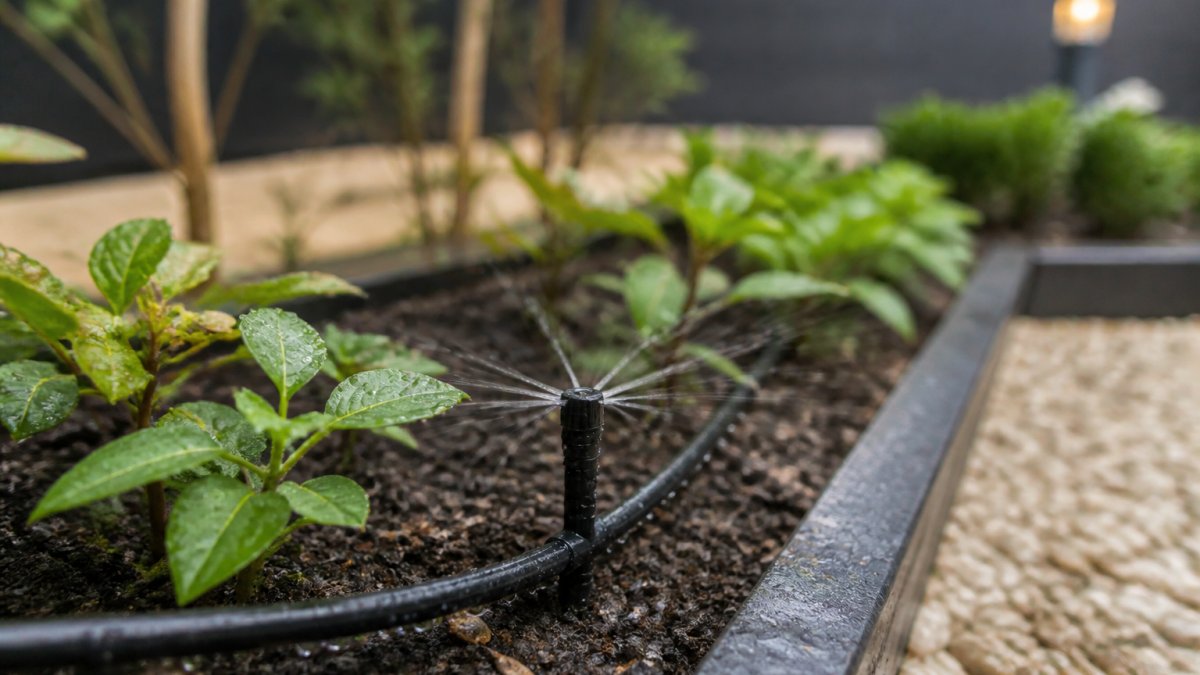
Step 2: Install the dripline. Attach dripline (the thin tubing with built-in emitters) to your main line using connectors. Lay it along the soil surface or bury it 5cm deep. Bury it if you want a cleaner look and extra protection. Surface-laid dripline is easier to adjust and repair. Space dripline 30-45cm apart for even coverage.
Step 3: Space emitters correctly. If using individual drip heads instead of dripline, space them 30-45cm apart along the main line. Closer spacing for clay soils (slower drainage). Wider spacing for sandy soils. Adjust based on plant size, larger plants get more emitters.
Step 4: Test water flow. Turn on the tap slowly. Watch for leaks at every fitting. Check that water reaches the far end of the bed. If pressure is too high, water will spray. If too low, distant emitters won't flow. Adjust the regulator until flow is steady and even.
Step 5: Cap the end. Close the end of your dripline with an end cap. This prevents sediment from entering and water from flowing out the wrong end.
Step 6: Connect the timer. Attach your timer to the tap. Set it to run early morning (5-7am) when temperatures are cool and evaporation is low. This reduces water waste.
Selecting the Best Irrigation Controllers for Home Gardens
A simple battery-powered timer works fine for small beds. Turn it on, set the days and duration, and it runs automatically.
Water-Wise Landscaping Techniques to Reduce Consumption
Irrigation is only half the solution. The other half is smart plant choice and soil management.
System Maintenance and Troubleshooting
Check your system monthly during the growing season (September to April). Look for leaks, clogs, and dry spots.
DIY vs Professional Installation
Do it yourself if:
- Your garden bed is small (under 10 square metres)
- You have simple, uniform soil
- You're comfortable with basic plumbing
- You want to save money upfront
- You have time to troubleshoot and adjust
Hire a professional if:
- Your bed is large or has complex zones
- Soil varies across the bed (clay in one area, sand in another)
- Water pressure is very high or very low
- You want a smart system with weather integration
- You're planning a larger landscaping project and want irrigation designed as part of it
FDSS Landscaping Services designs and installs efficient irrigation systems across the Hills District, North-West Sydney, and Greater Sydney. We assess your soil, water pressure, and plant needs, then build a system tailored to your garden. We also integrate irrigation into larger projects, retaining walls, paving, garden construction, and outdoor living areas. If you're planning a complete garden redesign, we can handle the whole project end-to-end, from 3D design through construction and completion.
Frequently Asked Questions
What is the most water-efficient irrigation method for garden beds?
Drip irrigation and subsurface watering systems are the most efficient, delivering water directly to the root zone with minimal evaporation. Drip systems can achieve 90% water efficiency compared to 50-70% for surface sprinklers. In Sydney's climate, subsurface drip irrigation reduces water loss further by applying moisture below the soil surface, making it ideal for water conservation and lower utility costs.
How do I choose the right irrigation system for my soil type?
Soil type determines water infiltration and retention. Sandy soils drain quickly and need frequent, shorter watering cycles with drip emitters spaced closer together. Clay soils retain moisture longer and suit wider emitter spacing and less frequent watering. Test your soil's water retention by observing how quickly water drains after rainfall. Adjusting your irrigation layout and flow rate to match your soil type prevents both waterlogging and dry patches in garden beds.
What are the benefits of subsurface drip irrigation for garden beds?
Subsurface drip irrigation applies water directly below the soil surface, reducing evapotranspiration loss and weed growth. It protects plants from foliar diseases, improves water penetration to deeper root zones, and creates a cleaner garden appearance without visible pipes. For Sydney gardens with variable rainfall and warm summers, subsurface systems deliver consistent hydration while cutting water consumption by 20-30% compared to surface drip methods.
Are there specific water restrictions I should consider for my garden?
Water restrictions vary by council area across Sydney. Most regions allow unrestricted watering with drip irrigation systems on certain days, as they are highly efficient. Check your local water authority's guidelines for your suburb, as restrictions may limit sprinkler use but typically permit subsurface and drip systems year-round. Installing an automatic timer and efficient dripline setup helps you comply with local rules while maintaining healthy garden beds.
Ready to upgrade your garden bed with efficient irrigation? Contact FDSS Landscaping Services for a no-obligation quote. We'll assess your property, design a water-wise system suited to your soil and plants, and install it professionally. Whether you're in Castle Hill, Baulkham Hills, Norwest, or anywhere across Greater Sydney, we're here to help you create a thriving, low-maintenance garden.