 blog
Paving for Modern Sydney Backyards: Materials Compared
Quick Summary
The best paving for a modern backyard depends on the site, but porcelain, natural stone and concrete pavers are the three main options. Porcelain suits contemporary minimal-joint designs with low maintenance, natural stone adds texture but needs sealing, and concrete pavers offer flexibility and lower budgets. Modern backyard paving should also account for slip resistance, heat and drainage.
- Porcelain pavers resist staining and need little more than water and a soft brush to clean.
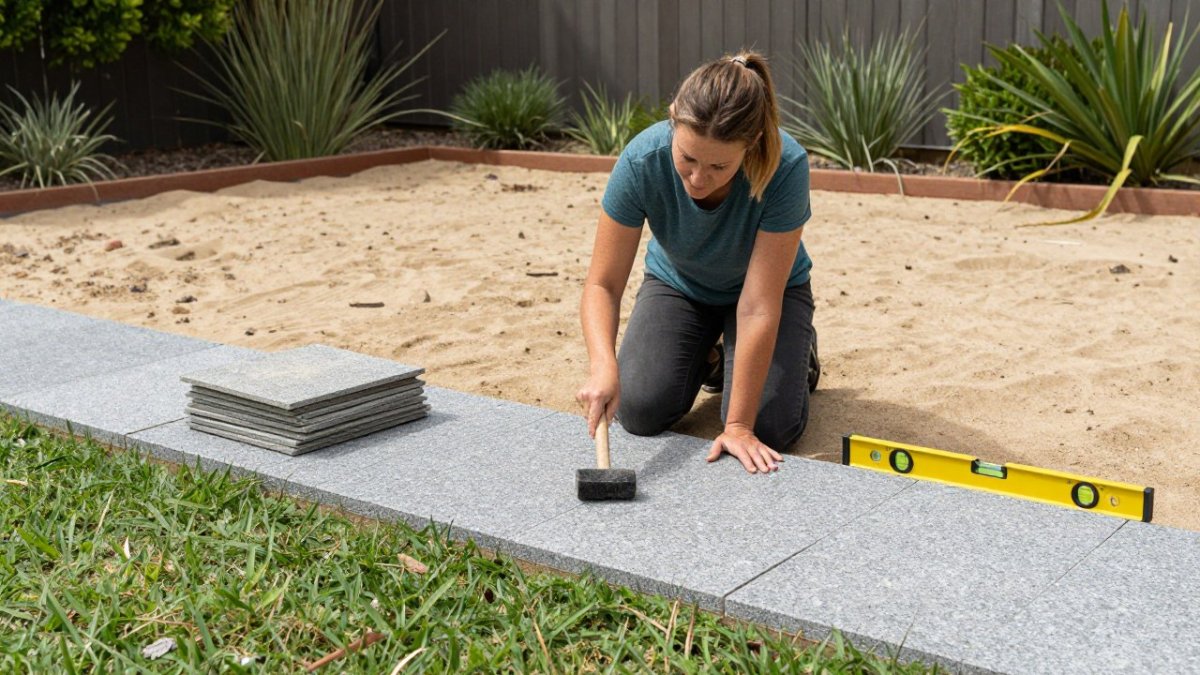
- Large-format porcelain requires accurate sub-base preparation because thin slabs show any unevenness.
- Lighter-coloured natural stone generally stays cooler underfoot than darker options in summer.
- Natural stone often needs sealing, and the schedule depends on the porosity of the stone type.
- Concrete pavers are generally easier to repair than large slabs, and suit tighter budgets.
Table of Contents
- Choosing Paving for a Modern Sydney Backyard
- Porcelain Outdoor Pavers: Large-Format Finish and Low Upkeep
- Natural Stone Pavers: Texture, Character and Heat Considerations
- Concrete Pavers and Modern Paving Ideas for Smaller Backyards
- Slip Resistance, Heat and Sydney Site Conditions
- Planning Outdoor Paving Drainage Before You Lay Anything
- Request a Paving Quote for Your Backyard
- Frequently Asked Questions
Paving for Modern Sydney Backyards: Materials Compared
Last Updated: November 7, 2026
Choosing Paving for a Modern Sydney Backyard
Paving sets the tone for a modern backyard in Sydney more than almost any other element, and choosing the right modern backyard paving is one of the most important early decisions. It shapes how the space looks, how you move through it, and how much upkeep it asks for over the years. At FDSS Landscaping Services, we design and build outdoor spaces across the Hills District and North-West Sydney, and paving choice is one of the first decisions we talk through with homeowners.
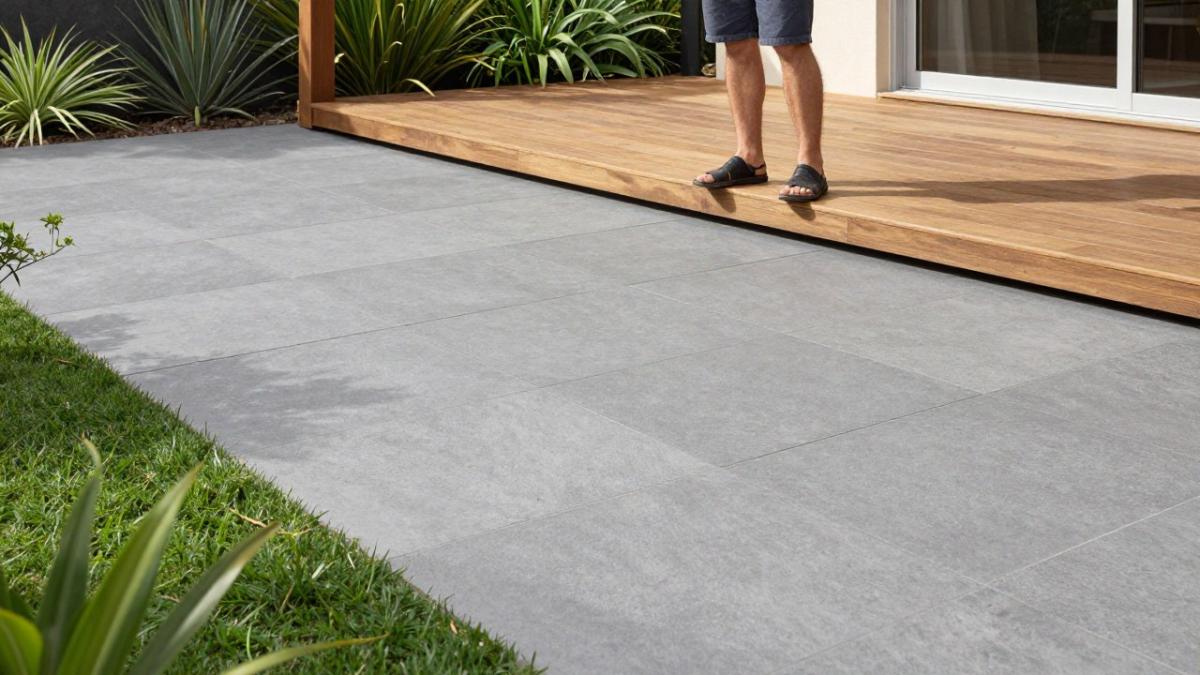
Paving for modern Sydney backyards usually comes down to three materials: porcelain, natural stone and concrete. Each behaves differently in the sun, under foot and after years of weather. Before comparing them, it helps to understand what a modern backyard typically needs. Clean lines, large unbroken surfaces and minimal joints tend to suit contemporary homes. Practical surfaces that handle barbecues, outdoor dining and children's play matter just as much.
Start by asking how you will use the space. A courtyard that you walk across daily needs a different surface from a sheltered entertaining area. Consider how much sun the paving receives, how water drains off the site, and how the material will meet the house, the lawn and any garden beds. These factors narrow the field quickly.
Porcelain Outdoor Pavers: Large-Format Finish and Low Upkeep
Porcelain pavers are a popular choice for contemporary outdoor design and are often the first option considered for modern backyard paving. Their large-format sizes produce fewer joints, which gives a clean, continuous look that many modern homeowners prefer. The surface is typically consistent in colour and finish, which suits minimalist designs.
The main practical advantage is low maintenance. Porcelain resists staining and tends to hold up well against everyday wear. Cleaning usually involves little more than water and a soft brush. Check the slip rating before you choose a finish, because polished surfaces can become slippery when wet, particularly around pools or shaded areas.
Large-format porcelain also demands careful installation. The sub-base must be prepared accurately, because thin, rigid slabs show any unevenness in the ground. Expect the installation to require skilled labour and precise levelling. Our paving services team can manage this preparation, so fit it into your planning early, since it affects both the budget and the programme.
The table below sums up the main trade-offs between the three paving materials discussed in this article.
| Material | Best for | Key difference |
|---|---|---|
| Porcelain | Contemporary, minimal-joint designs | Low maintenance, resists staining |
| Natural stone | Texture and organic character | Needs sealing, varies in tone |
| Concrete pavers | Flexible shapes and tighter budgets | Easier to repair, wide colour range |
Natural Stone Pavers: Texture, Character and Heat Considerations
Natural stone brings texture and visual warmth that manufactured products cannot fully replicate. Each piece varies slightly in tone and veining, which gives a backyard an organic, established feel. This suits homes that lean towards a softer, more natural aesthetic, even within a modern design.
Heat performance deserves close attention. Some stone types absorb more sun and become uncomfortable underfoot in summer. Lighter-coloured stone generally stays cooler than darker options. Ask your builder to advise on how a specific stone performs in a sunny, exposed site.
Natural stone also needs sealing in many cases, and it can require more regular maintenance than porcelain. Porosity varies between stone types, so discuss the sealing schedule before you commit. The upside is longevity and a surface that ages attractively when properly cared for.
Concrete Pavers and Modern Paving Ideas for Smaller Backyards
Concrete pavers offer flexibility in both shape and colour, and they often suit a wider range of budgets. In smaller backyards, they can be laid in interlocking patterns or in a grid with contrasting joints. For more ideas on making a compact outdoor area work, see functional outdoor living areas for small backyards. This adds visual interest without making the space feel busy.
For modern paving ideas in compact areas, consider running one consistent paver size across the whole space. Using a single material and a restrained colour palette helps a small backyard feel larger. Lines of paving can also guide the eye toward a feature such as a tree, a timber deck or a planted bed.
Concrete pavers are generally more forgiving to repair than large slabs. Ask about joint sand and edge restraints, as these affect how well the pavers stay in place over time.
Slip Resistance, Heat and Sydney Site Conditions
Most paving guides treat climate as a footnote. In practice, local site conditions decide whether a beautiful surface still performs three summers and two wet seasons later. The variables that matter most are rainfall intensity and how quickly water leaves the surface, summer heat load on exposed paving, shade and humidity in south-facing or tree-covered courtyards, soil type and slope, and proximity to pools, taps and roof discharge points.
Slip resistance is the first filter. Wet-area performance varies significantly between finishes, so ask for the manufacturer's slip classification for the specific product and finish, not just the range. As a general guide, textured and honed surfaces are usually chosen for pool surrounds, paths that stay damp and areas near doors, while highly polished finishes are better kept to sheltered, covered zones.
Heat is the second filter. Darker materials absorb more solar radiation and can become uncomfortable underfoot on exposed north and west-facing paving in summer. On a courtyard that bakes from midday, a dark charcoal paver laid tight against a west-facing wall will feel very different from the same paver under a pergola or beside a lawn.
Rainfall and drainage behaviour are the third filter. Heavy summer downpours test falls, joints and outlets. Where a surface is laid tight to the house, the fall away from the building, the capacity of the outlet and the path water takes across the site all matter more than the paver itself. On sloping blocks, adding hard surfaces changes how water moves across the site, and that can affect neighbouring properties as well as your own.
Soil and slope sit underneath all of this. Reactive clay soils, common across parts of Western Sydney and the Hills District, move with moisture and can stress a rigid pavement if the sub-base and jointing are not designed for it. Sandy or well-drained soils behave differently again. The right response is site-specific: a geotechnical view, appropriate sub-base depth and compaction, and jointing and edge restraint suited to the material.
Requirements for paving, drainage and any structural work depend on the site, the design and the relevant local council or authority. Check with your council before starting, particularly where levels, boundaries, stormwater or shared property are involved.
Watch out: a surface that looks correct on the sample board can fail in service if the fall, outlet capacity or sub-base is wrong, and correcting drainage after paving is laid is far more disruptive than designing it in from the start.
Planning Outdoor Paving Drainage Before You Lay Anything
Drainage is the most overlooked part of any paving project, and it is the one that causes the most expensive problems later. For practical guidance on managing stormwater on a sloping Sydney block, see how to manage stormwater on a sloping Sydney block. Water that pools on a paved surface can stain it, loosen the pavers, undermine edge restraints and damage nearby structures.
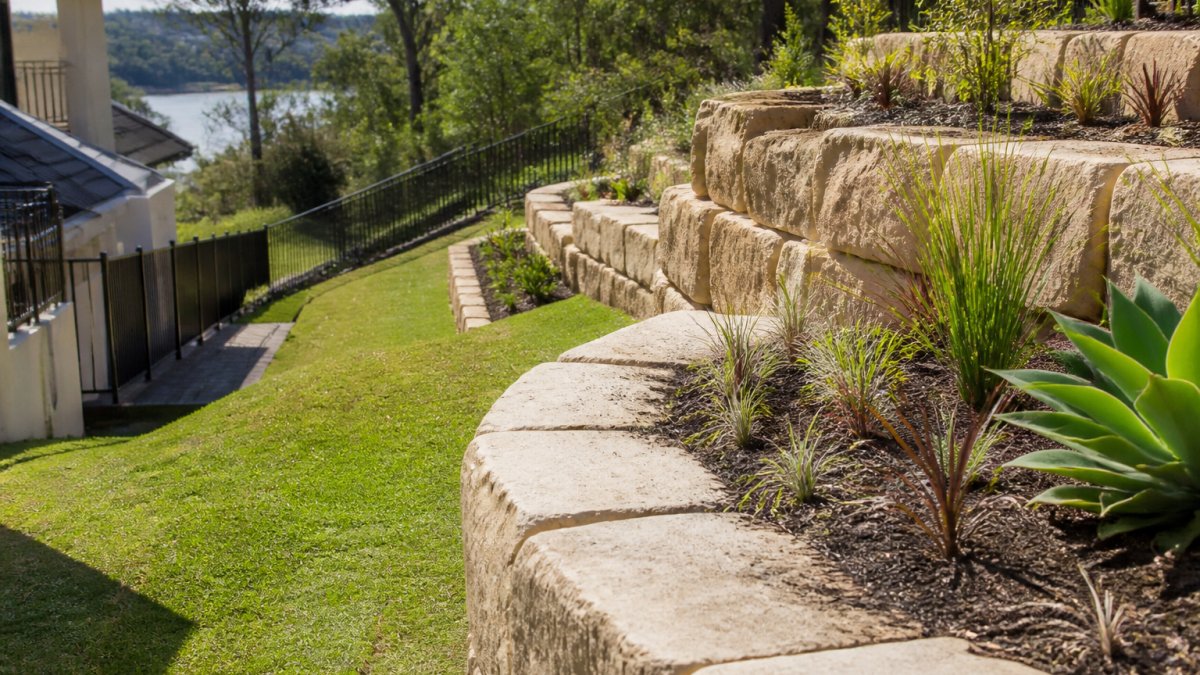
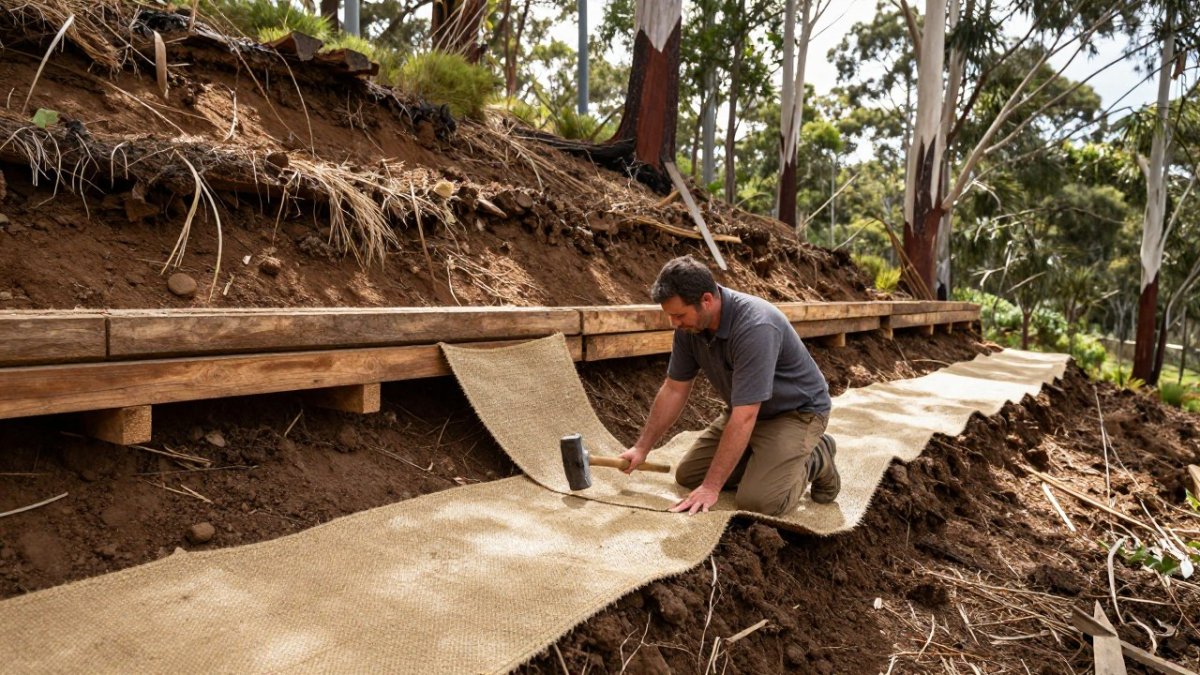
Start with the fall of the land. Paving usually needs a gentle slope away from the house so water moves across the surface and into an appropriate outlet. Where levels need to be reshaped first, excavation services can prepare the ground before paving begins.
Sub-base preparation supports the drainage plan. A well-compacted base appropriate to the paving type helps water move through and away from the surface, and it also protects the surface from movement.
Jointing and surface type change how water behaves. Tight joints shed water across the surface, while wider joints and permeable jointing allow some infiltration. Permeable or partially permeable systems can help manage runoff in some settings, but they need the right sub-base and outlet to work, and they are not a substitute for a properly designed stormwater path.
Material choice and drainage are linked. Porcelain and natural stone typically rely on surface fall and tight joints, so the outlet and fall need to be right. Concrete pavers can be laid with sand or permeable jointing depending on the system, which changes how water moves. Gravel and pebble zones can act as informal drainage, but they also collect debris and need edging to stay in place.
Use the backyard's intended function to test the plan. An entertaining area with a built-in barbecue, a pool surround, a narrow side path and a shaded courtyard each place different demands on drainage. Pool surrounds need falls that keep water away from the pool edge and coping, while paths need cross-falls that do not create puddles at doorways. Walk the design through a heavy-rain scenario before construction starts.
Requirements for paving, drainage and any structural work depend on the site, the design and the relevant local council or authority. We recommend checking with your council before starting, particularly where levels, boundaries, stormwater or shared property are involved. Where we are asked to advise on compliance, we explain what applies to the specific site rather than assume a general rule.
Watch out: adding hard surfaces without reviewing the stormwater path can push water onto neighbouring land or back toward the house, and fixing that after construction is far more costly than designing it correctly from the outset.
Request a Paving Quote for Your Backyard
Choosing the right paving for a modern Sydney backyard involves balancing appearance, durability, heat, slip resistance, maintenance and drainage. The right answer depends on your site, your household and the way you want to use the space.
If you are planning a paving project, FDSS Landscaping Services can help you compare materials, plan the drainage and build the finished space from concept through to completion. Request a paving quote to discuss your backyard and get practical advice for your site. You can also review our natural stone paving options or read how to choose durable paving for Sydney backyards.
Frequently Asked Questions
What is the best paving material for a modern backyard?
There is no single best option, because the right material depends on how the backyard is used, the site's sun exposure and drainage, and the look you want. Porcelain pavers suit clean, minimalist designs and need little upkeep. Natural stone suits softer, textured styles. Concrete pavers offer good value and wide colour choice. FDSS Landscaping Services can assess your site and recommend a material that suits your budget and how you plan to use the space.
Are porcelain pavers suitable for outdoor areas?
Yes, porcelain outdoor pavers are widely used for patios, pool surrounds and entertaining areas in Sydney. They are dense, resist staining and fading, and come in large formats that suit modern designs with fewer joints. Surface finish matters for slip resistance, so ask for a textured or matt finish in wet areas. Suitability for your specific site should be confirmed on inspection.
Do backyard pavers need drainage?
Most paved areas do need planned drainage so water moves away from the house and does not pool on the surface or undermine the base. Falls, base preparation and where water is directed all affect performance. Requirements depend on the site and any relevant council or stormwater conditions, so it is worth having the levels and drainage checked before construction begins.
What is the difference between natural stone and concrete pavers?
Natural stone pavers offer irregular texture and character, but they vary in colour and thickness and often cost more to supply. Concrete pavers are manufactured to consistent sizes, come in a broad range of colours and shapes, and are generally more budget-friendly. Both can perform well when correctly installed. Pricing depends on quantity, selection and delivery, so request a current quote from FDSS Landscaping Services for accurate figures.