 how-to
How to Choose Durable Paving for Sydney Backyards
Table of Contents
- What Makes Paving Durable in Sydney Conditions
- Natural Stone vs Concrete Pavers Durability Compared
- Paving Installation Best Practices for Long-Lasting Results
- Backyard Drainage Solutions for Paved Areas
- Matching Paver Thickness to Traffic Loads
- Maintenance, Lifecycle Costs and Sustainable Drainage
- Frequently Asked Questions
Last Updated: September 24, 2026
What Makes Paving Durable in Sydney Conditions
Choosing durable paving for Sydney backyards comes down to three things: the paver's strength, how it handles local weather, and how well it sits on its base. Get those right and a paved area can look sharp for decades. Get them wrong and you'll be repairing cracks, lifting edges and loose joints within a few years.
Compressive Strength and Load-Bearing Capacity
Compressive strength is the load a paver can carry before it cracks, measured in megapascals (MPa). Match the rating to the traffic the area will see.
- Foot traffic and garden settings: lower-strength pavers are usually fine
- Driveways and vehicle access: you need a much higher rating
- Mixed-use areas: match the rating to the heaviest load
Weather Resistance: UV, Thermal Expansion and Salt Air
Sydney's climate is hard on paving. Look for good UV resistance so colours don't fade, allow for thermal expansion as pavers move with temperature swings, and near the coast choose salt-tolerant materials.
Natural Stone vs Concrete Pavers Durability Compared
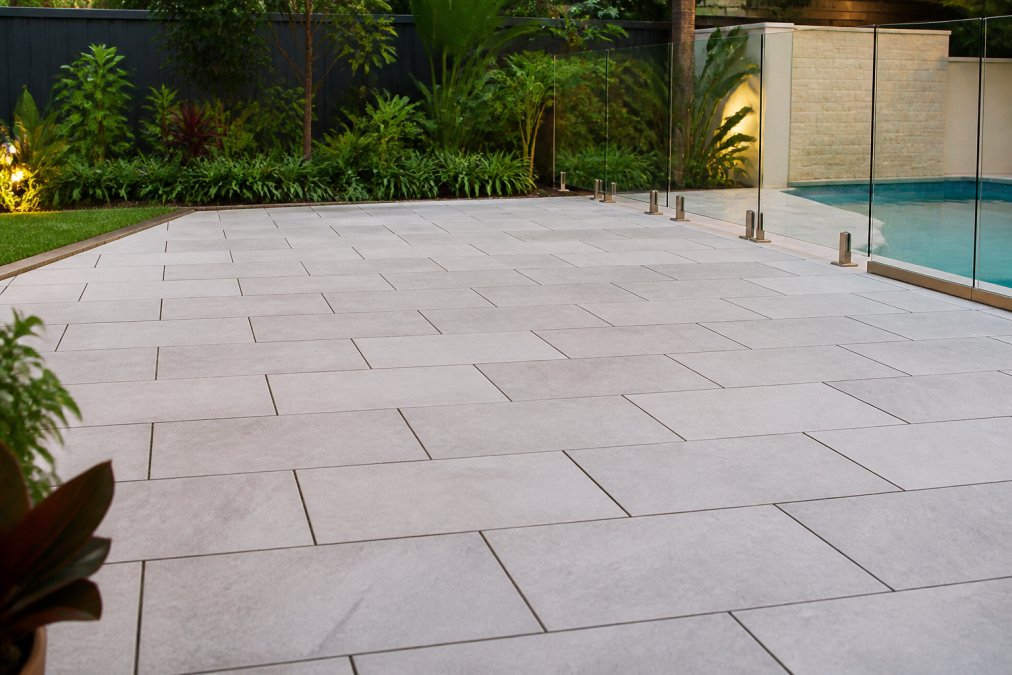
Natural stone and concrete pavers both last well but age differently. Stone holds its colour and character longer; concrete pavers offer more consistent sizing and often cost less upfront. The right pick depends on your site, budget and how you want the space to look in ten years.
| Factor | Natural Stone | Concrete Pavers |
|---|---|---|
| Strength | Very high | High, varies by type |
| Porosity | Varies, often higher | Lower, more consistent |
| Sealing | Often recommended | Depends on finish |
| Look over time | Ages with character | Colour can fade |
| Best for | Feature areas, pools | Driveways, large areas |
Porosity, Sealing and Surface Finish
Porosity is how much water a paver absorbs; higher porosity means more risk of staining and cracking in heavy rain. Sealing helps but won't fix a poor-quality paver. Surface finish matters too: smooth finishes look clean but get slippery when wet.
Slip Resistance and Safety Ratings
Slip-resistant paving is essential around pools, steps and any area that stays damp. Ask about the slip rating before you buy, a shiny paver that looks great dry can be dangerous wet. A slightly textured finish usually balances grip and easy cleaning.
Paving Installation Best Practices for Long-Lasting Results
Most paving failures trace back to installation, not the paver. A premium stone laid on a poor base will move, sink and crack long before a mid-range paver laid properly. It's the part of the job you can't see once it's finished, and where durability is really decided.
Why the Sub-Base Does the Heavy Lifting
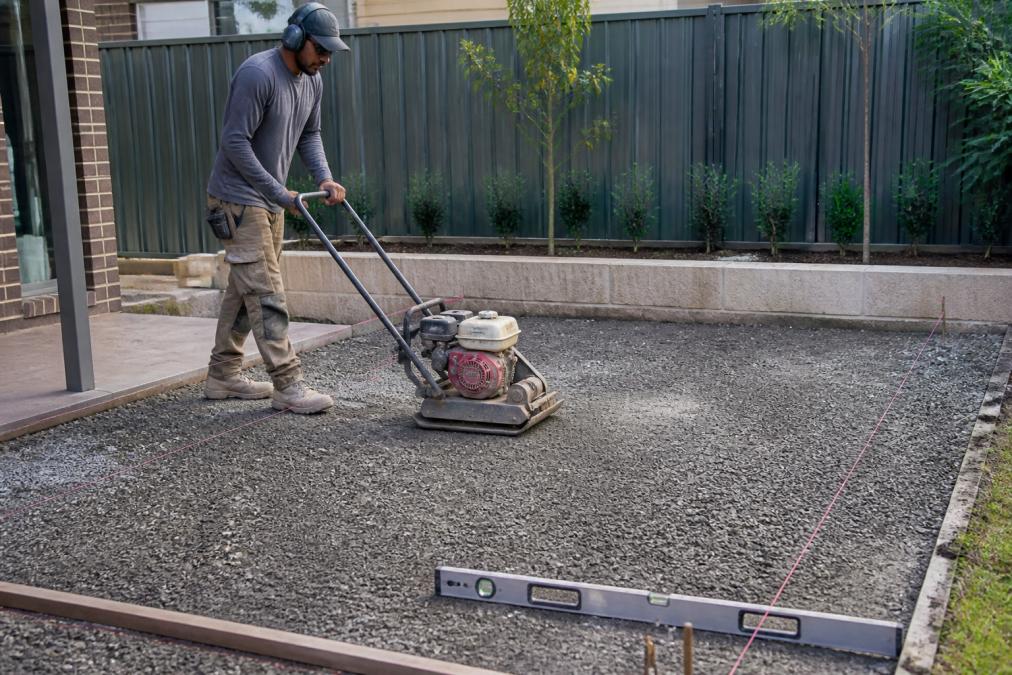
A paver doesn't sit on soil. It sits on a compacted crushed-rock base that spreads load across a much wider area than the paver's footprint. Get the base right and the paver only resists abrasion and point loads; get it wrong and the paver does structural work it was never designed for.
Sub-Base Preparation and Soil Reactivity
Soil reactivity is a real issue across much of Greater Sydney. Reactive clay soils swell when wet and shrink when dry, and that seasonal movement pushes paving out of level, opens joints and cracks bedding. The Hills District, Blacktown, Penrith and Mount Druitt all contain areas of reactive clay, though behaviour varies from block to block.
- Excavate to the right depth. The finished paver level, bedding layer and base thickness all sit inside that depth, so the excavation has to account for all three.
- Compact the subgrade. The exposed soil is proof-rolled or compacted before any base goes down. Loose subgrade undermines everything above it.
- Lay and compact the crushed aggregate base in layers. Base is typically placed in lifts and compacted between each one rather than dumped in a single thick layer, because a thick layer won't compact through its full depth.
- Use geotextile fabric where it earns its place. Fabric separates fine soil from coarse base, stopping the base from silting up over time. It's not needed on every job, but on reactive or wet sites it can make a real difference.
- Set and check drainage falls before anything else goes down. Once pavers are laid, correcting a fall means pulling the whole area up.
Bedding Layer, Jointing Sand and Edge Restraint
The bedding layer is the sand or fine aggregate the pavers sit on. It must be screeded to a consistent depth, because an uneven bed produces rocking, lippage and joint failure. Bedding is a levelling layer, not a structural one, if it's carrying load, the base underneath is too thin.
DIY vs Professional Installation: Where Durability Is Actually Decided
- Compaction. Plate compactors and vibrating rollers are sized to the job. Undersized equipment leaves soft spots that only show up after a wet season.
- Levels and falls. Getting a consistent fall away from the house while keeping the surface visually flat is a skill, not a formula.
- Drainage integration. Base, bedding and surface drainage have to be designed together. Retrofitting drainage under finished paving is expensive and disruptive.
- Cutting and detailing. Poor cuts around drains, steps and edges create weak points that fail first.
If you'd like the base, levels and drainage designed and built as one system rather than pieced together, our paving services cover design through to completion.
Backyard Drainage Solutions for Paved Areas
Water is the enemy of paving. If it can't drain, it pools, seeps into the base and slowly destroys the work underneath.
Start With Falls, Not Products
Before choosing any drainage product, the paved surface needs a fall away from the house and adjoining structures. As a general guide, paving is typically laid to a fall of around 1 to 2 percent, enough to move water without feeling sloped underfoot. The exact fall depends on the surface, the area and where the water needs to go.
Surface Drainage: Falls and Grated Drains
Surface drainage moves water across the top of the paving to a collection point. It's the first line of defence and cheapest to get right at construction stage.
- Falls direct water toward a discharge point, a garden bed, a grated drain or a stormwater connection.
- Grated drains (sometimes called channel drains or trench drains) sit across the fall line and intercept water before it reaches a building, retaining wall or boundary.
- Pits and grates collect water at low points where falls converge.
Subsurface Drainage: Ag Drains and Pits
Subsurface drainage catches water below the paving, water that's already moved through joints, bedding and base. It matters most on:
- Sites with reactive clay that holds moisture
- Blocks where the water table sits high after heavy rain
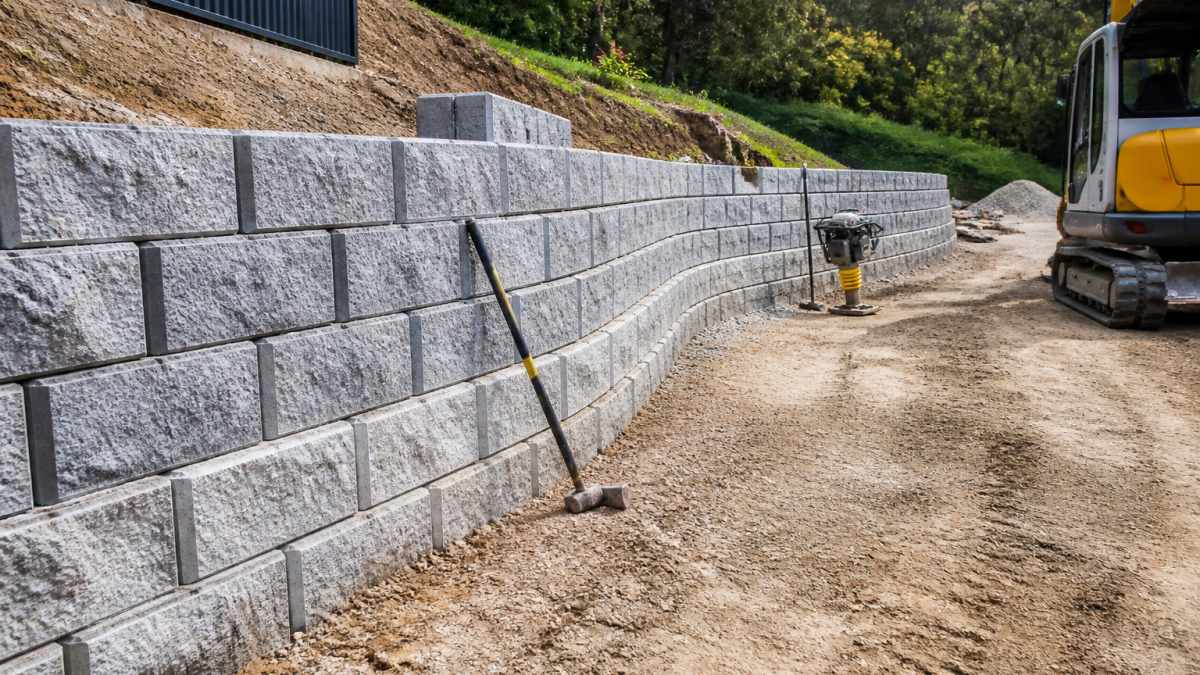
- Areas below retaining walls, where water builds up behind the wall
- Sites where surface falls can't be achieved without an awkward slope
Permeable Paving: An Underused Option
Permeable paving lets water pass through the surface into a designed base and sub-base rather than running off. It's worth a closer look where:
- The block has poor runoff or limited stormwater connection
- You want to reduce the load on the stormwater system
- The area is large enough that runoff would otherwise be a problem
- You want water to reach garden beds or soil rather than being piped away
How Drainage Ties Back to Durability
Every drainage decision affects how long the paving lasts:
- Poor falls mean ponding, which softens bedding and accelerates joint failure.
- No subsurface drainage on reactive clay means seasonal movement that cracks bedding and opens joints.
- Blocked or undersized drains mean water backs up during heavy rain and finds its way into the base.
- Drainage behind retaining walls that isn't managed will push the wall and the paving above it out of alignment.
This is why drainage is best designed at the same time as the base, not after. On a new build or full backyard renovation, it's the cheapest part of the job to get right and the most expensive to fix later.
Matching Paver Thickness to Traffic Loads
Paver thickness should match the load. Too thin and it cracks. Too thick and you're paying for strength you don't need.
| Area | Typical Traffic | Thickness Guide |
|---|---|---|
| Garden paths | Foot traffic | 40-50 mm |
| Patios | Foot traffic, furniture | 40-60 mm |
| Driveways | Cars, 4WDs | 60-80 mm |
| Heavy vehicle access | Trucks, trailers | 80 mm+ |
Maintenance, Lifecycle Costs and Sustainable Drainage
Paving isn't set-and-forget. A simple maintenance schedule catches small problems early:
- Sweep regularly to stop grit scratching the surface
- Re-sand joints every year or two
- Re-seal porous stone as recommended
- Check edges and levels after heavy rain
- Clear drains and pits before storm season
Frequently Asked Questions
Which pavers are best for a backyard in Sydney?
There is no single best paver, but for most Sydney backyards, dense concrete pavers and hard natural stones such as granite or sandstone perform well because they handle UV exposure, thermal expansion and heavy rain. The right choice depends on your soil, slope, traffic load and how much maintenance you will accept. A site assessment and correct sub-base preparation matter more than the paver brand itself.
How does professional installation impact the lifespan of backyard paving?
Professional installation has a bigger effect on lifespan than the paver material alone. Correct excavation depth, compacted sub-base, a consistent bedding layer, proper jointing sand and secure edge restraint all prevent movement, sinking and premature failure. DIY installation often skips or under-does these steps, which leads to uneven surfaces and costly repairs within a few years.
What factors should be considered for drainage when installing backyard paving?
You need to plan the drainage slope so water flows away from your home, usually a minimum fall of around 1 to 2 percent. Consider permeable paving, agri-drain or channel drains for low spots, and how stormwater will connect to your existing system. In areas with reactive clay soils, drainage design is especially important to prevent water pooling and sub-base movement. A landscaper can assess your site and recommend the right solution.
How do I choose between natural stone and concrete pavers for durability?
Natural stone such as granite offers excellent compressive strength and weathering resistance, but it costs more and some stones need sealing. Concrete pavers are consistent, widely available in slip-resistant finishes and easier to replace if damaged. Both can last decades when installed on a properly prepared sub-base. Compare porosity, surface finish and maintenance needs for your specific backyard conditions before deciding.
Durable paving is really about the system, not just the surface. The right paver on a poor base will fail, while a modest paver on a properly built base can last for decades. If you're planning paving for a backyard in the Hills District or across Greater Sydney, FDSS Landscaping Services can help you get the design, base and drainage right from day one. Request a quote and we'll walk you through the best options for your site, lifestyle and budget.