 ultimate-guide
Drought Tolerant Landscaping Tips for The Hills District
Table of Contents
- Why Drought Tolerant Landscaping Suits The Hills District
- Micro-Climate Mapping: The Step Most Garden Plans Skip
- Soil Preparation and Drainage: Fixing Clay-Heavy Ground First
- Native Plant Landscaping Ideas for Water-Wise Garden Beds
- Drought Resistant Turf Installation and Lawn Alternatives
- Water-Wise Irrigation: Drip vs Spray and Seasonal Planting
- Slope Stabilisation, Retaining Walls and Council Approvals
- Frequently Asked Questions
Last Updated: September 28, 2026
Why Drought Tolerant Landscaping Suits The Hills District
Drought tolerant landscaping means designing and building gardens that survive on rainfall and minimal supplementary watering, using plants, soil preparation and irrigation matched to the local climate. Here, it is the sensible default.
Clay-Heavy Soil, Slopes and a Warm Temperate Climate
Clay-heavy soil and undulating blocks create two problems at once. Clay holds water in winter and turns rock-hard in summer, so roots struggle in both seasons. Slopes make it worse: water runs off before it soaks in, taking topsoil and mulch with it.
Micro-Climate Mapping: The Step Most Garden Plans Skip
Micro-climate mapping records how sun, shade, wind and moisture behave across your block before you choose a single plant. It takes an afternoon and prevents the most expensive mistake in landscaping: planting the right species in the wrong spot.
Here is how to do it:
- Walk the yard at 9am, midday and 4pm and note full sun, part shade and deep shade.
- Mark where water pools after rain and where it runs off fastest.
- Note which fences, walls or buildings radiate heat in the afternoon.
- Identify frost pockets in low corners and exposed ridges that catch wind.
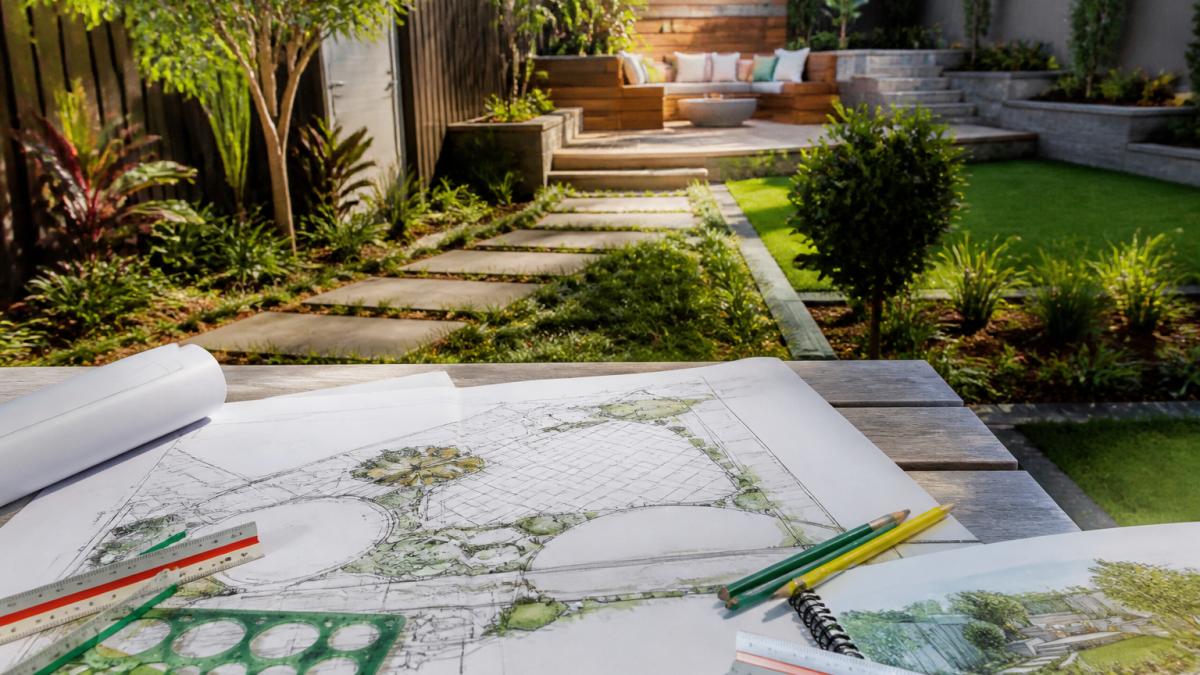
- Sketch the block and shade it in: full sun, part shade, full shade, wet, dry.
Soil Preparation and Drainage: Fixing Clay-Heavy Ground First
Soil preparation is the highest-return task in a drought tolerant garden, because clay-heavy ground cannot absorb or drain water properly until its structure is improved. Skip it and even the toughest plants will struggle.
Soil Amendment and Organic Matter
Soil amendment means working organic matter into the existing soil rather than replacing it. In clay, compost, aged manure and coarse mulch open the structure and improve both drainage and moisture retention. Blend amendment into the top 200-300mm rather than layering it on top, and avoid mixing sand into clay, which can create a concrete-like layer.
Mulch Beds and Moisture Conservation
Mulch is the cheapest moisture conservation tool available. A 75-100mm layer of coarse mulch reduces evaporation, suppresses weeds and keeps soil temperature steadier through summer. Keep it clear of stems and trunks to avoid collar rot, and top it up annually.
Native Plant Landscaping Ideas for Water-Wise Garden Beds
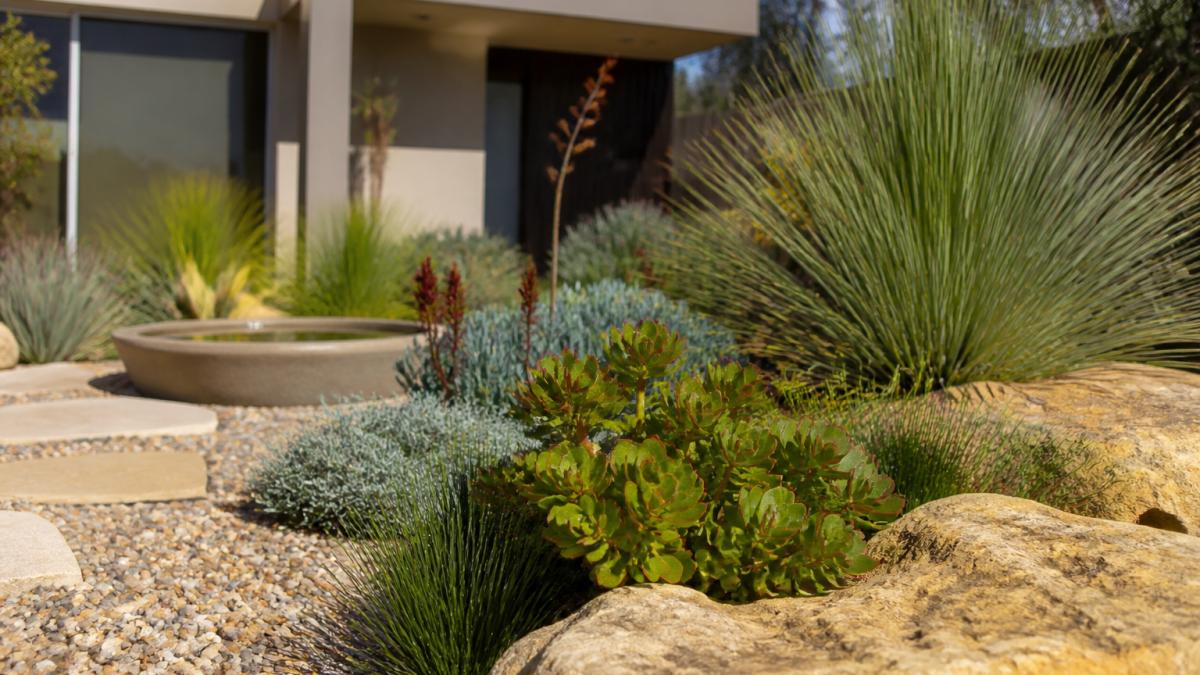
Native plant landscaping works here because indigenous species are already adapted to local rainfall, soil and heat. The trick is grouping plants by water need rather than scattering them randomly, a technique called hydro-zoning.
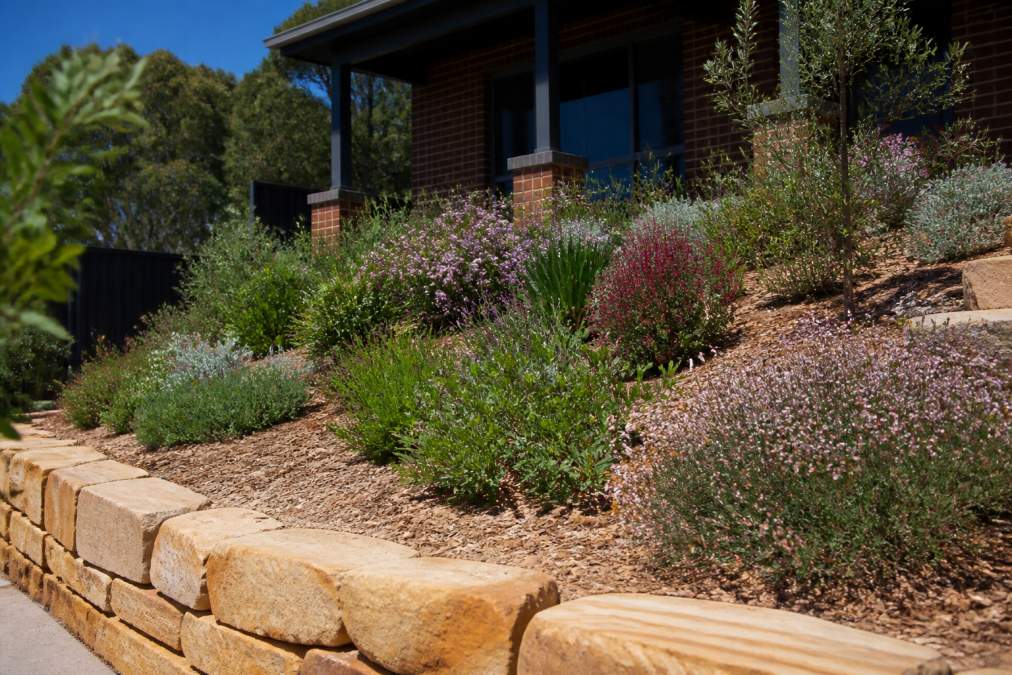
Structure a water-wise bed in three layers:
- Groundcover: native violets, dichondra or lomandra for weed suppression and soil cover
- Mid-layer: native shrubs such as westringia, correa or grevillea for colour and habitat
- Upper layer: small gums or dwarf fruit trees for shade and screening
Drought Resistant Turf Installation and Lawn Alternatives
Drought resistant turf installation starts with choosing a warm-season variety suited to local conditions, then preparing the sub-base so roots establish quickly. Even the most drought-tolerant lawn will fail on compacted clay with poor drainage underneath.
- Replace narrow side strips with groundcover or gravel
- Convert difficult slopes to planted beds or terraced levels
- Keep a functional lawn area for kids or pets and shrink the rest
Water-Wise Irrigation: Drip vs Spray and Seasonal Planting
The usual advice, "use drip irrigation and water deeply", is fine until you run drip lines through heavy clay, where water travels sideways along the surface instead of soaking down to the roots. Getting irrigation right on clay-heavy ground is a design problem, not a product choice, and it is where many home installations quietly fail.
Drip vs Spray: What Actually Suits Clay-Heavy Beds
Drip irrigation delivers water at low pressure directly to the root zone through emitters or inline dripper tube, so little is lost to evaporation or wind. Spray and micro-spray heads cover a wider area faster, but on a hot afternoon much of that water never reaches the soil. For garden beds, drip is almost always more efficient; for lawn, subsurface drip or well-zoned spray usually remains the practical choice for even coverage.
Zoning, Controllers and Rain Sensors
Zone the garden by water need, not convenience. Hydro-zoning means grouping thirstier plants on one station and tough, established natives on another, so you are not overwatering the toughest plants to keep the thirstiest alive. A controller with a rain sensor and seasonal adjustment avoids the most common waste in established gardens: watering through a wet week because the timer was never touched.
A Seasonal Planting and Maintenance Calendar
Planting timing does more for survival than any fertiliser. The goal is to establish roots while the soil is warm and evaporation is low, so plants enter their first summer with a working root system.
| Season | Best garden tasks | Why it works |
|---|---|---|
| Autumn | Plant trees, shrubs and turf; improve soil | Warm soil, lower evaporation, winter rain ahead |
| Winter | Prune, mulch, plan beds, service irrigation | Dormant plants handle disturbance well; bare soil shows levels and drainage |
| Spring | Plant natives, install or audit irrigation, top up mulch | Growth resumes, soil still moist from winter |
| Summer | Maintain, water deeply and less often, deadhead | Avoid new planting in peak heat; focus on keeping established plants steady |
Slope Stabilisation, Retaining Walls and Council Approvals
On the undulating blocks common through Castle Hill, Glenhaven and the hillier pockets around Box Hill and Rouse Hill, slope is usually the biggest factor in how a garden performs. Runoff takes topsoil, mulch and nutrients with it, and can undermine paving, turf and fence lines over time. Slope stabilisation combines structural and planted measures to hold soil in place and slow water long enough for it to soak in.
Reading the Slope Before You Build
Two slopes that look similar from the street can behave very differently. What matters is gradient, soil depth, and where water comes from and goes. Practical checks: estimate the fall across the block (a gentle 1:10 behaves very differently to a steep 1:3 batter); watch the block during heavy rain and note where water concentrates, ponds or scours channels; check whether the slope is cut or filled, since filled ground is generally less stable; and look for existing cracks, leaning fences, exposed roots or slumping turf, which can indicate movement.
Terracing, Planting and Surface Treatment
Not every slope needs a wall. On gentler grades, terracing into planted levels, deep-rooted species and dense groundcover can hold surface soil effectively. Options that work together: terrace the slope into shallower planted levels to reduce runoff velocity; use deep-rooted native shrubs and grasses to bind soil, with groundcover filling gaps; install a shallow swale or contour drain above planted beds to divert concentrated flow; and use coarse or gravel mulch on steep faces where standard mulch would wash away.
Retaining Walls: Types, Drainage and What Triggers Approval
Retaining walls range from low garden walls to engineered structures. Common types include timber and concrete sleeper walls, segmental block, sandstone and masonry walls, and on larger sites engineered systems such as reinforced soil or piled walls. The right choice depends on height, load, soil type, access and finish.
Where Professional Design Pays Off
On a sloping block, drainage, levels, retaining, paving, turf and planting all interact. Get one wrong and the others suffer. FDSS Landscaping Services handles retaining walls, excavation, drainage, paving and garden construction as part of a complete design-and-build service, so the structural work and the planting plan are designed together rather than pieced together. If your block sheds water and soil every storm, that is usually a design problem before it is a planting problem, worth assessing the site, soil and slope before committing to a direction.
Frequently Asked Questions
What are the best drought-tolerant plants for Sydney's climate?
Look for indigenous species that evolved in local soils and rainfall patterns. Native shrubs such as westringia, grevillea and callistemon, hardy groundcovers like dichondra and myoporum, and clumping grasses such as lomandra all handle dry spells well. Add depth with perennial plants and dwarf fruit trees suited to a warm temperate climate. Group plants by water need so you irrigate one zone heavily and leave the rest almost untouched, which is the principle behind hydro-zoning.
How can I improve soil water retention in my garden?
Clay-heavy soil in The Hills District often repels water when dry and waterlogs when wet. Spread a soil amendment such as gypsum or aged compost, dig it through the top 150 to 200 mm, and avoid working wet ground, which causes soil compaction. A 75 to 100 mm layer of coarse mulch over garden beds slows evaporation and keeps soil temperature steadier. If drainage is poor, a drainage line or raised bed may be needed before planting.
Do I need council approval for major landscaping changes in The Hills District?
It depends on the site and the scope of work. Retaining walls over certain heights, excavation, changes to drainage and work near boundaries or easements can all trigger approval requirements, and rules vary between councils. Before starting, check with your local council or a qualified professional. A landscape design and construction team can help you understand what applies to your property and prepare the right documentation.
Is drought resistant turf installation cheaper to maintain than a traditional lawn?
Maintenance needs vary with the turf variety, soil and irrigation setup. Warm-season types suited to a warm temperate climate generally need less water than cool-season lawns, and a well-prepared base with efficient irrigation reduces waste. Many homeowners also shrink the lawn area and use groundcover, mulch beds or hardscaping instead. For a realistic comparison, ask for a site evaluation and a quote based on your block.