 blog
Courtyard Landscaping Ideas for Small Sydney Spaces
Last Updated: November 22, 2026
Quick Summary
The most effective way to make a small courtyard look bigger is to give the eye somewhere to travel, and good courtyard landscaping does this through lines, layers and a clear focal point. Run paving in one direction, keep a consistent material palette, and leave generous clear floor space. Sydney courtyards also vary widely in sun and shade, so observe the space before choosing plants.
- Run paving in one direction so long lines pull the eye along the yard.
- Use two materials at most, in similar tones, to avoid a broken look.
- Keep boundary planting layered, with taller plants at the back and lower plants in front.
- Place a single focal point off-centre to draw attention away from the edges.
- Observe where the sun falls at 9am, midday and 3pm before finalising your plan.
Table of Contents
- How Do You Make a Small Courtyard Look Bigger in Sydney?
- Courtyard Paving Ideas That Suit Sydney Homes
- Reading Your Courtyard's Sun, Shade and Microclimate
- Shaded Courtyard Plants for Sydney Conditions
- Courtyard Drainage Solutions and Waterproofing Considerations
- Privacy, Screening and Low-Maintenance Options
- Planning Your Courtyard Project and Requesting a Quote
- Frequently Asked Questions
How Do You Make a Small Courtyard Look Bigger in Sydney?
The most effective way to make a small courtyard feel bigger is to give the eye somewhere to travel, and good courtyard landscaping does this through lines, layers and a clear focal point. Lines, layers and a clear focal point do more than any single feature.
Start by drawing the courtyard to scale and marking what must stay: the access path, the bin area, the air conditioning unit and any existing trees. Then decide what the space needs to do.
Several techniques consistently help small spaces feel more open:
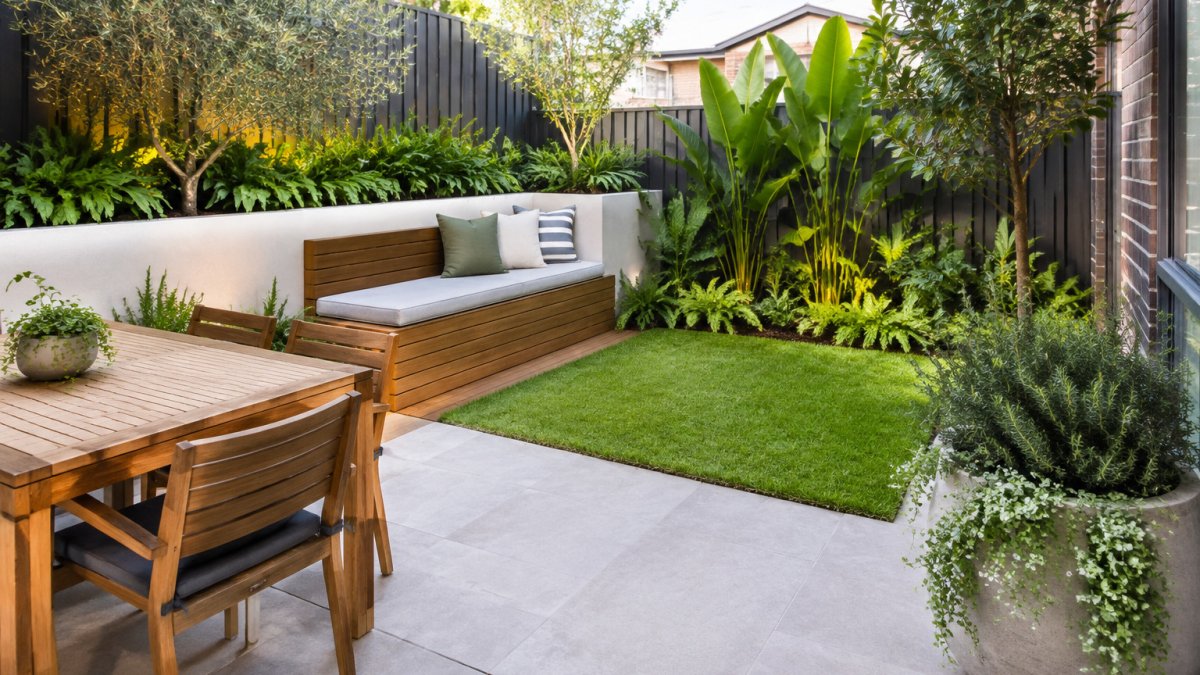
- Run paving in one direction. Long lines pull the eye along the length of the yard. Set the paving diagonally only where the space is wide enough to carry it.
- Use a consistent material palette. Two materials at most, in similar tones, stop the space from looking broken into pieces.
- Keep the boundary planting layered. Taller plants at the back and lower plants in front create depth without taking up floor area.
- Place a focal point off-centre. A single feature wall, a water bowl or a container tree draws attention away from the edges of the yard.
- Leave clear floor space. One generous seating area reads as more spacious than several small ones.
A common mistake is filling every corner. Each added pot or chair shrinks the usable space, so edit before you add.
Courtyard Paving Ideas That Suit Sydney Homes
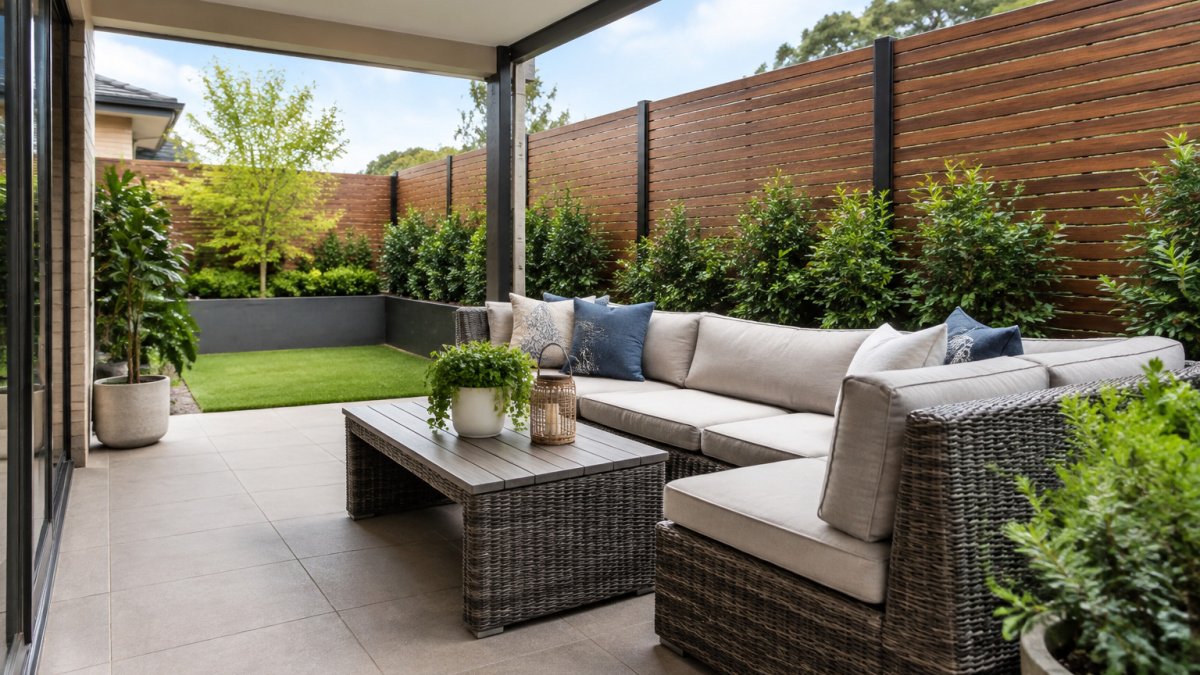
Paving sets the tone of a courtyard more than any other element in courtyard landscaping, and it is also the most expensive to change later. Light-toned pavers reflect light into shaded courtyards and make a small space feel brighter.
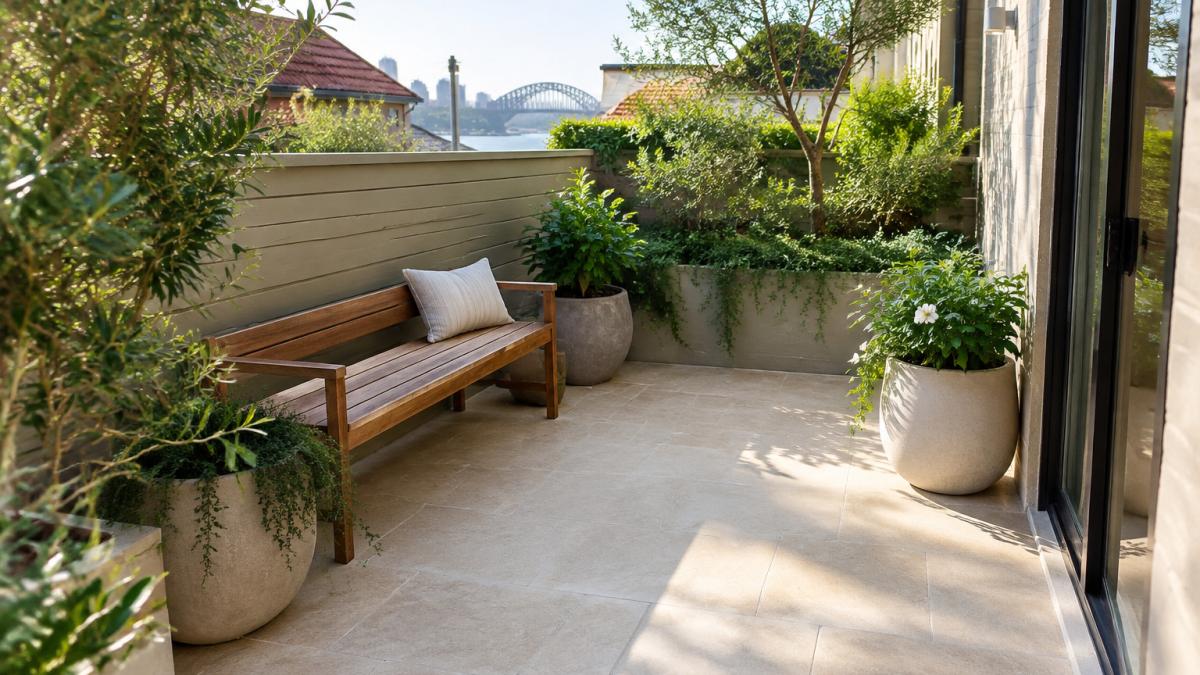
Timber-look porcelain and concrete pavers are both common choices for Sydney homes. Porcelain and concrete offer different strengths in colour, texture and upkeep, while natural stone suits heritage-style properties but needs sealing and more regular maintenance.
Whatever material you choose, the sub-base matters more than the surface. Poor base preparation causes settling, uneven pavers and weed growth within a few years. Paving work involves proper excavation, compaction and drainage falls, which is the part of the job that is hardest to see once it is finished.
Reading Your Courtyard's Sun, Shade and Microclimate
Sydney courtyards vary more than many people expect. A north-facing yard in Box Hill can receive full afternoon sun for most of the year, while a south-facing courtyard in Glenhaven may get only a few hours of direct light in winter.
Spend a day observing the space before you finalise any plan. Note where the sun falls at 9am, midday and 3pm across the seasons, and where water pools after rain.
Heat also builds up against brick and paved surfaces, so a courtyard enclosed on several sides can run noticeably warmer than the rest of the garden. Planting, shade cloth and lighter-coloured hard surfaces can soften that effect. For more on structures that provide shade, see our pergolas service.
Shaded Courtyard Plants for Sydney Conditions
Most courtyard planting advice stops at 'use shade-tolerant plants'.
Start by matching plants to the light the space actually receives, not the light you wish it received.
Deep shade (south-facing, narrow gaps between buildings)
- Clivia miniata, evergreen clumping plant, roughly 60-80 cm high and wide, with orange or yellow flowers in late winter and spring. Tolerates dry shade once established.
- Dicksonia antarctica (soft tree fern), a trunked fern that reaches several metres over many years; needs consistent moisture and shelter from hot wind, so it suits a shaded corner with irrigation.
- Nephrolepis (Boston fern and relatives), low, spreading ferns to about 60 cm, useful as a filler under taller plants. They dry out quickly in pots, so group them or use larger containers.
- Liriope muscari (lily turf), strappy, clumping groundcover to about 40 cm, tolerant of dry shade and root competition, and effectively weed-suppressing once dense.
Part shade (east-facing, or shaded for part of the afternoon)
- Camellia sasanqua, evergreen shrub or small tree, typically 2-4 m depending on cultivar and pruning, with autumn-to-winter flowers. Prefers shelter from harsh afternoon sun and consistent moisture.
- Michelia figo (port wine magnolia), rounded evergreen shrub to around 2-3 m, with highly fragrant cream-and-purple flowers in spring. Works well as a screen or backdrop in a courtyard.
- Philodendron and monstera species, climbing or clumping foliage plants for sheltered, frost-free courtyards; they need support or a wall to climb and regular water in the warmer months.
Full sun (north- and west-facing courtyards)
- Westringia fruticosa (native rosemary), dense grey-green shrub, commonly 1-1.5 m high and wide, extremely heat- and wind-tolerant and a reliable low-water choice.
- Callistemon (bottlebrush), dwarf cultivars, compact forms stay around 1-1.5 m, flower in spring and summer, and attract birds. They cope with heat and reflected glare from paving.
- Lomandra longifolia (mat rush), clumping strappy plant to about 1 m, tolerant of heat, drought and poor soil, and useful for softening hard edges.
- Agave and other succulents, architectural form with very low water needs; they demand sharp drainage and should not sit in wet soil over winter.
Coastal or exposed courtyards
Where salt wind is a factor, choose plants with tough, leathery or narrow leaves.
Low-water courtyards
Group succulents, Westringia, Lomandra and native grasses together on a separate irrigation zone, and water them deeply but infrequently once established.
Plant in layers: a structural shrub or small tree at the back, mid-height plants through the middle, and groundcover along the edge.
For a fuller guide to species that suit low-maintenance gardens in the area, see our article on best native plants for low maintenance Sydney gardens.
The article groups plant choices by the light a courtyard receives, with the key traits for each.
| Light condition | Plant example | Key trait |
|---|---|---|
| Deep shade | Clivia miniata | Evergreen, 60-80 cm, tolerates dry shade |
| Deep shade | Liriope muscari | Groundcover to 40 cm, weed-suppressing |
| Part shade | Camellia sasanqua | Shrub 2-4 m, autumn to winter flowers |
| Part shade | Michelia figo | Shrub 2-3 m, fragrant spring flowers |
| Full sun | Westringia fruticosa | Grey-green shrub 1-1.5 m, heat-tolerant |
| Full sun | Lomandra longifolia | Clumping to 1 m, drought-tolerant |
| Coastal or exposed | Westringia, Lomandra, Correa | Tough, narrow or leathery leaves |
Courtyard Drainage Solutions and Waterproofing Considerations
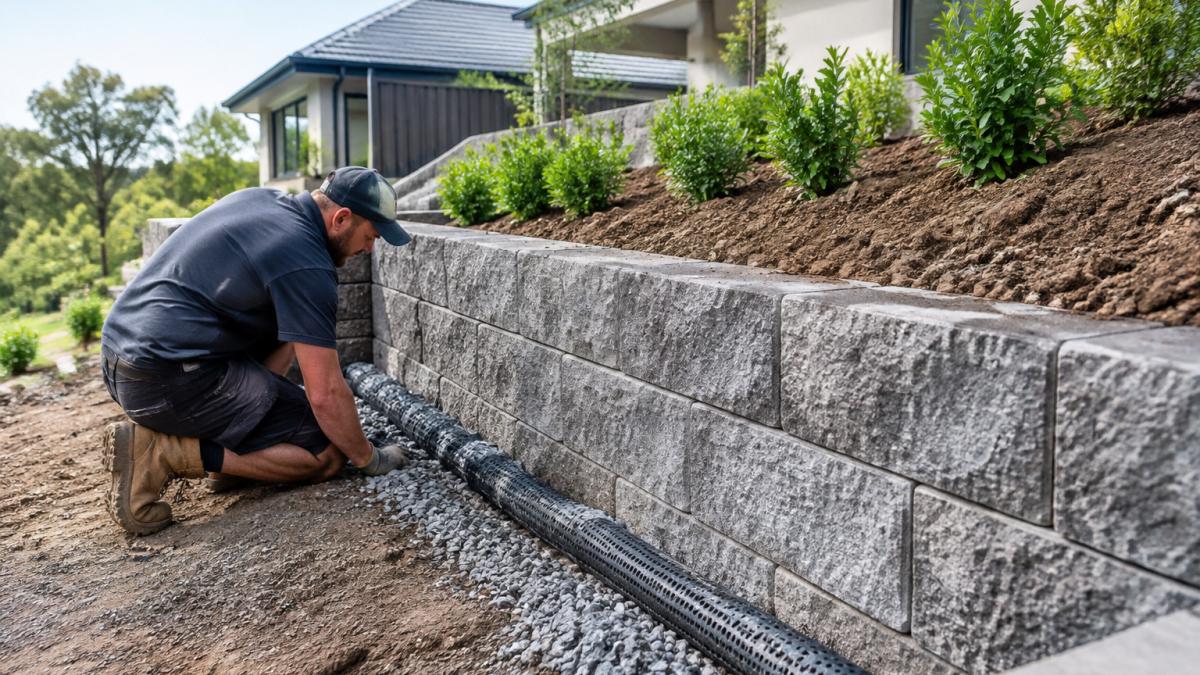
Drainage is the most overlooked part of courtyard design, and the most costly to fix afterwards. Water that pools against a house wall can cause damp, staining and movement in paving. Courtyards enclosed by buildings often collect runoff from roofs and neighbouring land, so the fall of the surface needs careful planning.
Good drainage relies on consistent falls directed away from the building, properly placed grates or channels, and a sub-base that lets water pass through. Where a courtyard sits above habitable space or against a boundary wall, waterproofing and drainage design become more specialised.
When water is directed correctly, the courtyard stays usable after rain and the surfaces last longer.
Privacy, Screening and Low-Maintenance Options
Privacy and light often pull in opposite directions in a small courtyard. Solid fencing blocks views but can make the space feel enclosed and can cut light to the plants behind it, while open screening keeps light moving.
Screening options and how they behave
- Slatted timber or aluminium screens, gaps let light and air through while breaking up sightlines. Horizontal slats at eye height are effective against a neighbouring window; vertical battens suit narrow spaces. Timber needs periodic oiling or staining; powder-coated aluminium needs little beyond occasional cleaning.
- Battens with climbing plants, a trellis or cable system behind battens lets vines fill the gaps over time. Choose climbers suited to the light: star jasmine and trachelospermum for sun to part shade, and climbing fig or monstera for sheltered shade. Vines need training and occasional pruning to stay off neighbouring structures.
- Hedging in raised planters, a dense hedge gives a soft, green screen, but it needs root space, irrigation and regular trimming. In a courtyard, raised planters let you control soil and drainage, at the cost of floor area.
- Freestanding or fixed planter boxes with tall grasses or bamboo, quick screening, but clumping bamboo is essential; running bamboo will spread and is difficult to remove once established.
- Privacy film, louvres and operable screens, useful on windows and upper levels where planting cannot reach. Louvres and operable panels let you adjust privacy and airflow through the day.
The trade-offs to weigh
A solid screen gives immediate privacy but blocks light and can trap heat against a wall. A slatted screen gives less immediate privacy but keeps the courtyard brighter and cooler.
Keeping maintenance realistic
Low maintenance is a design decision, not a plant choice. Fewer varieties, larger beds, mulch to suppress weeds, and irrigation on separate zones by water need all reduce ongoing work.
A realistic seasonal rhythm for most courtyards looks like this:
- Spring, feed established plants, top up mulch, check irrigation and clean paving after pollen and leaf drop.
- Summer, monitor watering, especially pots and new plantings; prune anything shading paths or blocking light; check drainage after heavy rain.
- Autumn, the main planting window; prune hedges and climbers after flowering, clear gutters and drains before winter rain.
- Winter, light pruning, tidy spent foliage, and check screens, fixings and paving for movement or water pooling.
For more practical ideas, read our guide to low-maintenance garden ideas for busy families, and for choosing durable surfaces, see how to choose durable paving for Sydney backyards.
Planning Your Courtyard Project and Requesting a Quote
A good courtyard project starts with a clear brief: how you will use the space, what must stay, what can change, and what budget you have in mind.
FDSS Landscaping Services provides landscape design, 3D design and full construction, so one team can take the project from concept through to completion. That reduces the back-and-forth between separate designers and builders, and it means the drainage, paving and planting are planned together.
If you are ready to take the next step, you can request a landscaping quote from FDSS Landscaping Services. Share your courtyard measurements, photos and what you want the space to do, and we will prepare a considered proposal for your property.
Frequently Asked Questions
How do you make a small courtyard look bigger?
Use a consistent paving colour to run the eye across the space, keep the layout simple and avoid crowding the edges with large pots. Vertical planting on walls adds greenery without taking floor area, and a light-coloured fence or wall reflects more daylight. Clear sightlines from the main living area also make the space feel more open. Results depend on aspect and the size of the existing courtyard, so a site inspection helps confirm the best approach.
What plants are best for a shaded courtyard?
Shade-tolerant species such as ferns, clivia, liriope and many native groundcovers generally perform well where direct sun is limited. Sydney courtyards often receive different light levels across the day, so it helps to observe the space for a few days before choosing plants. Layering taller shrubs with lower groundcovers adds interest. Plant performance varies with soil, drainage and exposure, so local advice is worth seeking before planting.
How do you improve drainage in a courtyard?
Good drainage starts with grading the surface so water moves away from the house and towards a suitable outlet. Permeable paving, gravel beds and well-placed agricultural drains can help manage runoff, particularly on clay soils common across parts of Sydney. Waterproofing near building walls needs careful detailing. Requirements depend on the site and the relevant council, so drainage plans should be confirmed for each project.
Can you put a lawn in a small courtyard?
A lawn can work in a small courtyard if there is enough sunlight, as turf generally needs several hours of direct light each day. Shade, foot traffic and drainage all affect how well it establishes. A smaller lawn panel paired with paving or garden beds often suits compact spaces and reduces maintenance. Turf installation should be planned around the site conditions and the intended use of the area.