 listicle
7 Low-Maintenance Garden Ideas for Busy Families
Table of Contents
- 7 Low-Maintenance Garden Ideas for Busy Families
- 1. Reduce Lawn Area and Ditch High-Maintenance Grass
- 2. Install Artificial Turf Installation for Year-Round Green Space
- 3. Choose Hardy Perennials and Native Plants
- 4. Create Defined Entertainment Areas with Hardscaping
- 5. Implement Garden Drainage and Mulching for Soil Health
- 6. Build Retaining Walls to Define Spaces and Reduce Maintenance
- 7. Automate Watering with Smart Irrigation Systems
- Why Professional Design and Installation Matter
- Key Takeaways
- Frequently Asked Questions
Last Updated: August 21, 2026
7 Low-Maintenance Garden Ideas for Busy Families
Maintaining a beautiful garden while juggling work, kids, and everything else feels impossible. Most families either spend weekends pulling weeds or watch their outdoor space become overgrown. The good news: you don't have to choose between a functional backyard and your free time.
Low-maintenance garden design shifts focus from constant upkeep to smart planning. At FDSS Landscaping Services, we work with families across the Hills District and Greater Sydney to create outdoor spaces that look great without demanding hours of maintenance each week. The key is combining the right plants, hardscaping, automation, and soil management from the start.
Quick Reference: 7 Best Low-Maintenance Solutions
- Reduce lawn area - Replace high-maintenance turf with hardscaping and ground cover
- Install artificial turf - Year-round green without mowing, watering, or fertilising
- Choose hardy perennials - Native plants and drought-tolerant varieties thrive with minimal care
- Create entertainment areas - Defined paved spaces reduce garden bed maintenance
- Implement drainage and mulch - Protect soil health and suppress weeds naturally
- Build retaining walls - Define spaces, reduce erosion, and lower maintenance zones
- Automate irrigation - Smart watering systems handle schedules you'd otherwise manage manually
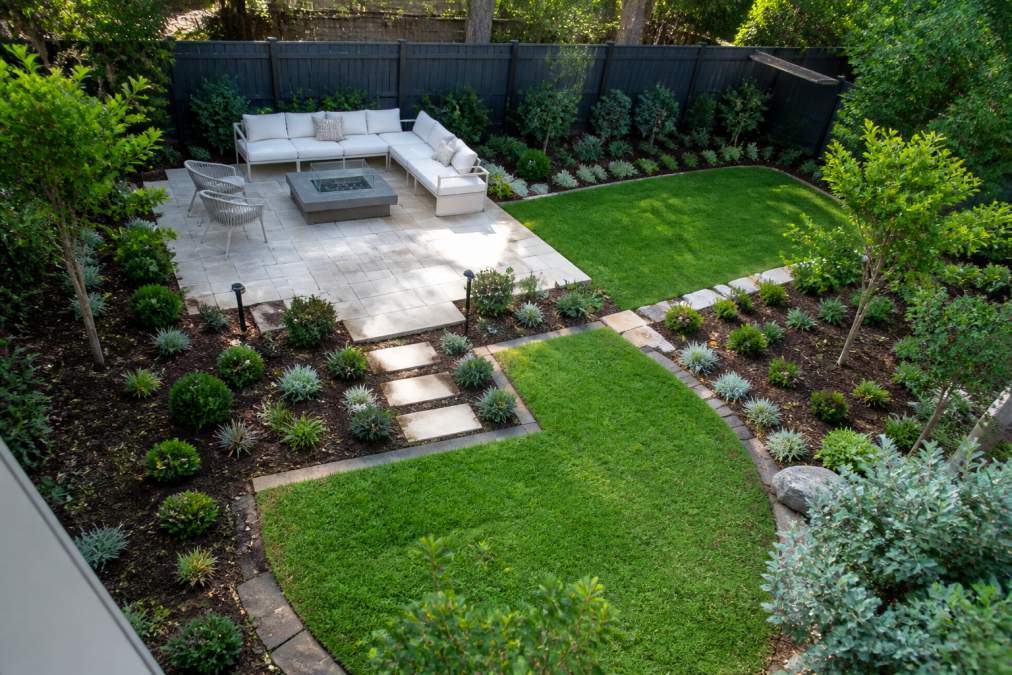
1. Reduce Lawn Area and Ditch High-Maintenance Grass
Lawn is the biggest maintenance drain in most backyards. Grass demands regular mowing, watering, fertilising, and weed control, tasks that multiply during growing season.
Be strategic about which spaces your family actually uses. The patch behind the shed that nobody walks through? The narrow strip between the fence and pathway? These are prime candidates for removal. Replace unused lawn with ground cover plants like creeping thyme or native species, hardscaping with natural stone or pavers, or mulched garden beds.
For properties in Castle Hill, Baulkham Hills, and surrounding areas, this approach reduces water consumption, a real benefit in Sydney's climate where summer drought can stress traditional turf.
Start by mapping your yard and marking areas your family actually uses versus areas that are just "there." That's where your redesign should begin.
2. Install Artificial Turf Installation for Year-Round Green Space
Modern artificial turf looks and feels substantially different from plastic-looking versions of a decade ago. Quality products now include realistic colour variation, proper drainage, and UV stability that holds up through Sydney's intense summer sun.
The appeal is straightforward: no mowing, no watering, no fertilising, no seasonal die-back. Your yard stays green and usable 365 days a year.
Installation quality matters significantly. Poor drainage leads to waterlogging and odour issues. Uneven base preparation causes uneven wear patterns. Professional installation ensures proper site preparation, correct underlayment, secure edging, and appropriate infill materials that determine whether your synthetic lawn performs well or starts degrading.
Artificial turf works best when combined with other low-maintenance elements: hardscaping, mulched garden beds with hardy perennials, and defined entertainment areas deliver both low-maintenance benefits and visual appeal.
3. Choose Hardy Perennials and Native Plants
Plant selection determines whether your garden thrives or becomes a constant battle. Hardy perennials and native plants are fundamentally different from high-maintenance annuals or exotic species that demand specific conditions to survive.
Native plants are adapted to local climate, soil, and rainfall patterns. They've evolved to thrive in Sydney's conditions without supplementary watering, fertilising, or pest management beyond what the local ecosystem provides naturally. A native ground cover like creeping boobialla or a hardy shrub like native rosemary handles dry periods, poor soil, and temperature swings that would stress imported plants.
Perennials return year after year without replanting. Once established, they develop deep root systems that access soil moisture more effectively than shallow-rooted annuals. That resilience reduces your watering burden significantly.
The key is choosing perennials suited to your specific site conditions. A shaded corner needs different plants than a north-facing bed in full sun. Wet, poorly drained soil requires different species than sandy, fast-draining soil. When plant selection matches site conditions, maintenance drops dramatically.
Hardy performers for Sydney gardens include drought-tolerant shrubs like native rosemary, westringia, and grevillea varieties; ground covers such as creeping thyme and native violet; perennial flowers like salvias and daylilies; and evergreen structure plants including photinia and pittosporum.
4. Create Defined Entertainment Areas with Hardscaping
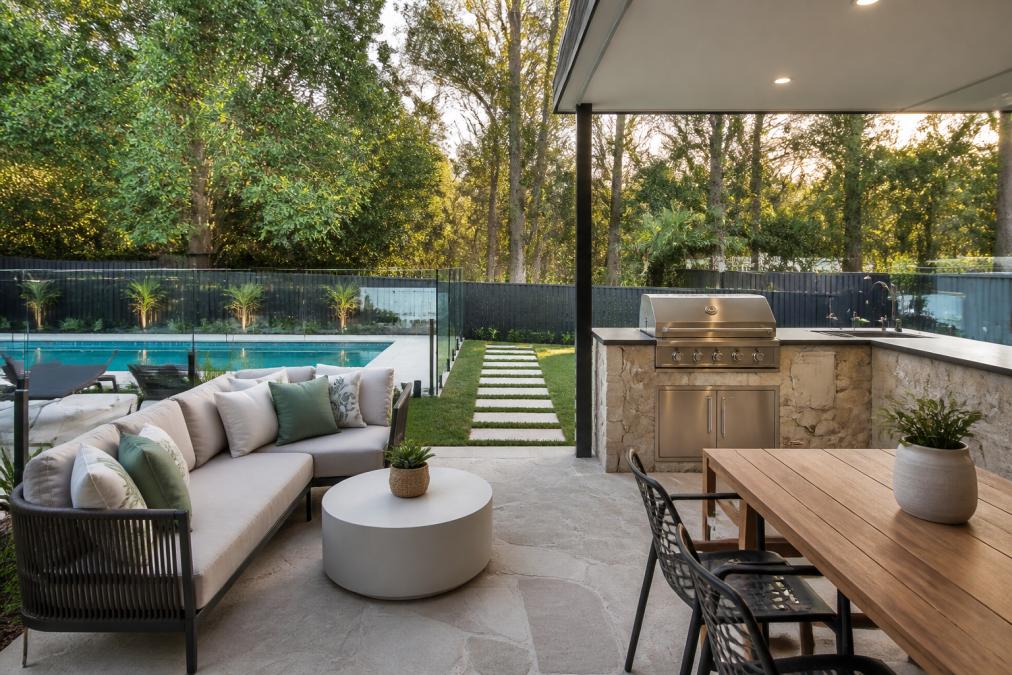
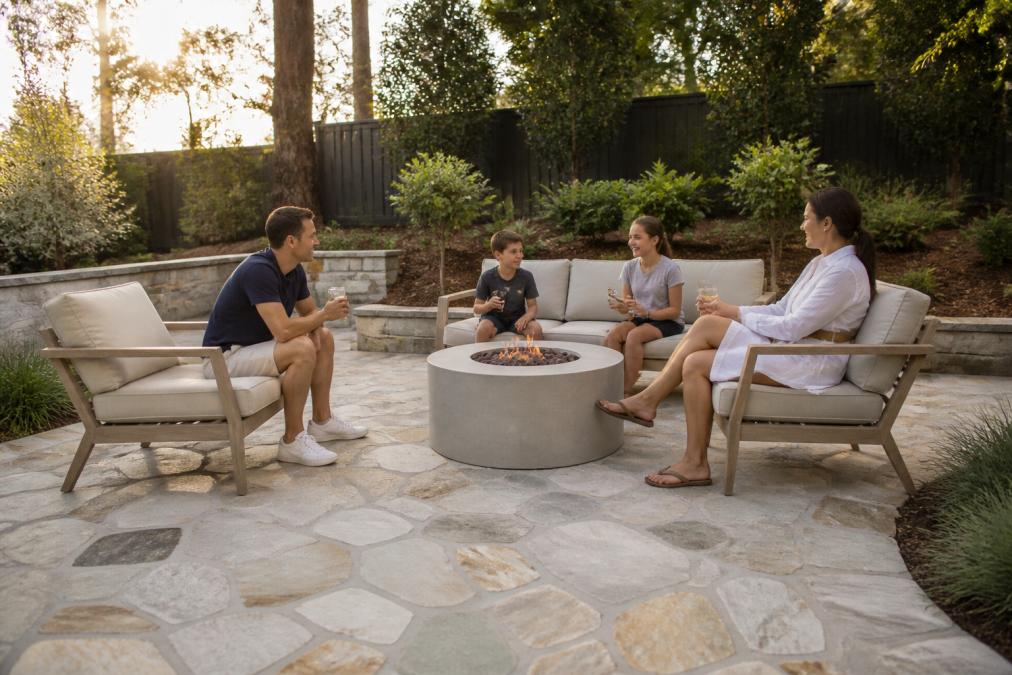
One of the most effective low-maintenance strategies is shifting your garden's purpose from "space to maintain" to "space to use." Defined entertainment areas accomplish this by creating functional zones that reduce the total area needing maintenance while increasing the yard's actual utility.
A paved entertaining area with seating and a small table transforms how your family uses the backyard. Instead of a sprawling lawn and multiple garden beds requiring constant attention, you've got a defined space where people actually gather. The rest of the yard can be simplified accordingly.
Hardscaping materials, natural stone, pavers, gravel, or composite decking, require minimal ongoing maintenance. Unlike lawn, they don't need mowing. Unlike garden beds, they don't need weeding or seasonal pruning.
A well-designed entertainment area connects logically to the house, catches afternoon sun or shade depending on your preference, and feels like a natural extension of your living space. For properties in Norwest, Kellyville, and surrounding suburbs, hardscaping also handles Sydney's challenging site conditions. Sloped terrain, clay-heavy soil, and intense summer sun all favour well-designed hardscaping solutions over extensive garden beds that might struggle with drainage or water stress.
5. Implement Garden Drainage and Mulching for Soil Health
Poor drainage and exposed soil are hidden reasons many gardens become maintenance nightmares. When water doesn't move through the soil properly, plants either drown or dry out unpredictably. When soil is exposed, weeds germinate constantly and soil structure deteriorates.
Proper garden drainage starts with understanding your site. Clay-heavy soil common in many Sydney properties doesn't drain quickly. Water pools, roots rot, and the garden becomes muddy after rain. Adding organic matter, creating slight slopes, and installing drainage solutions like French drains or permeable paving allows water to move through the system rather than sitting on the surface.
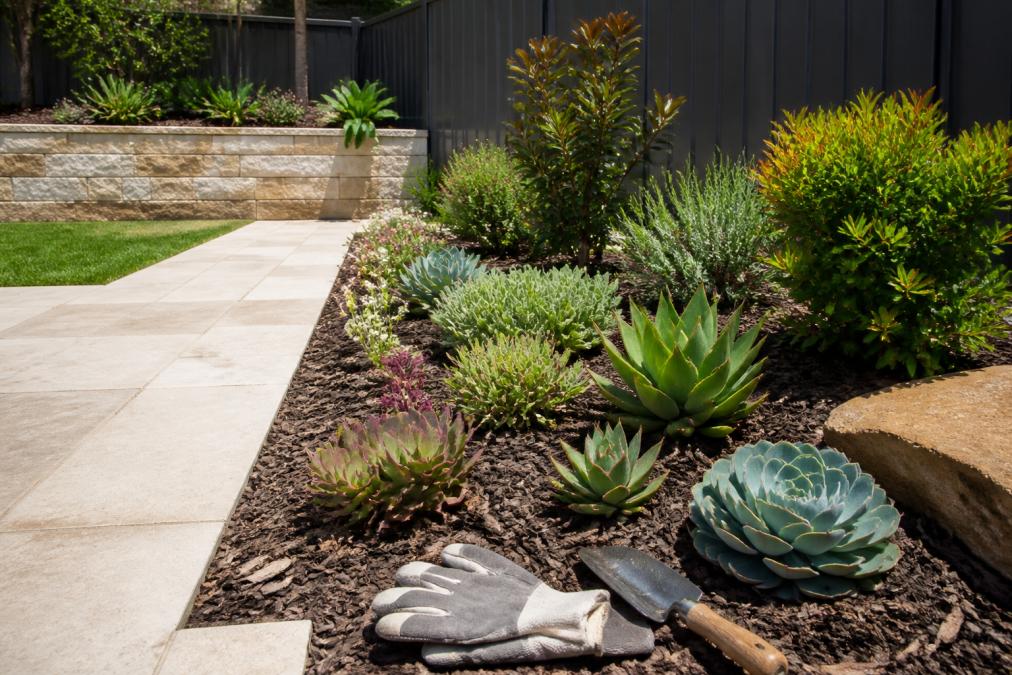
Mulching is equally important. A 50-75mm layer of mulch over garden beds suppresses weed germination dramatically (peer-reviewed research). Fewer weeds means less weeding. Mulch also moderates soil temperature, retains moisture during dry periods, and breaks down over time to improve soil structure.
The combination works: good drainage prevents waterlogging and allows roots to access moisture effectively, while mulch retains that moisture and prevents weed pressure. Quality mulch, composted bark or native wood chips, provides consistent benefits over multiple seasons. Replace mulch annually or as needed to maintain effectiveness.
6. Build Retaining Walls to Define Spaces and Reduce Maintenance
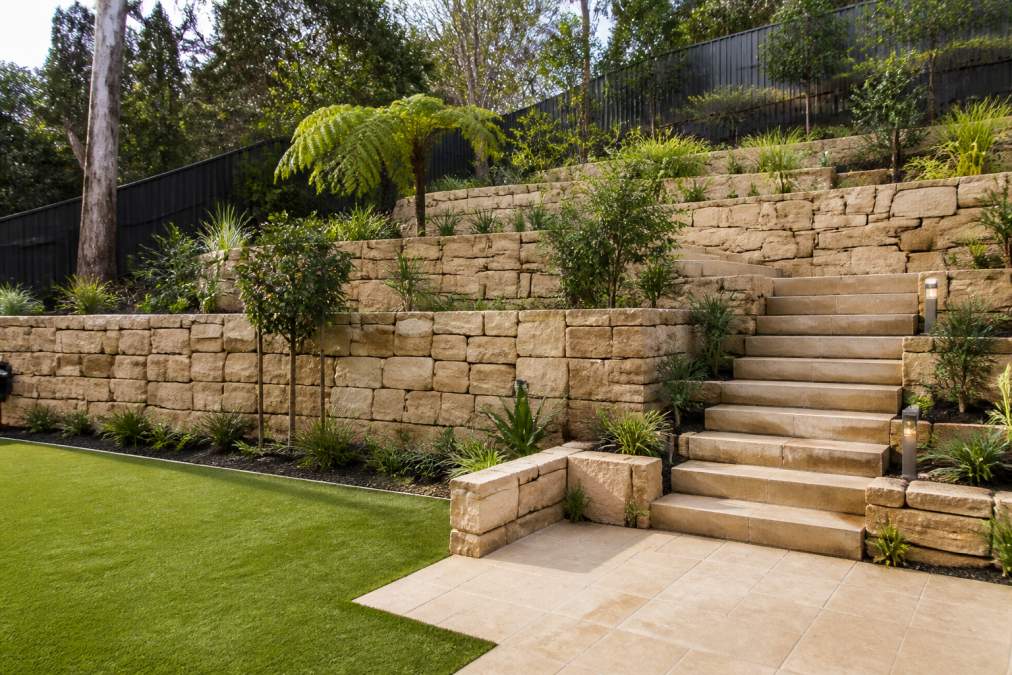
Retaining walls serve multiple purposes in low-maintenance garden design. They manage sloped terrain, define different levels, create raised garden beds, and reduce the total area that needs active maintenance.
On sloped properties, common in the Hills District and surrounding areas, retaining walls transform challenging terrain into functional space. Instead of fighting erosion on a slope or trying to maintain plants on uneven ground, a well-designed retaining wall creates flat, usable areas that are far easier to manage.
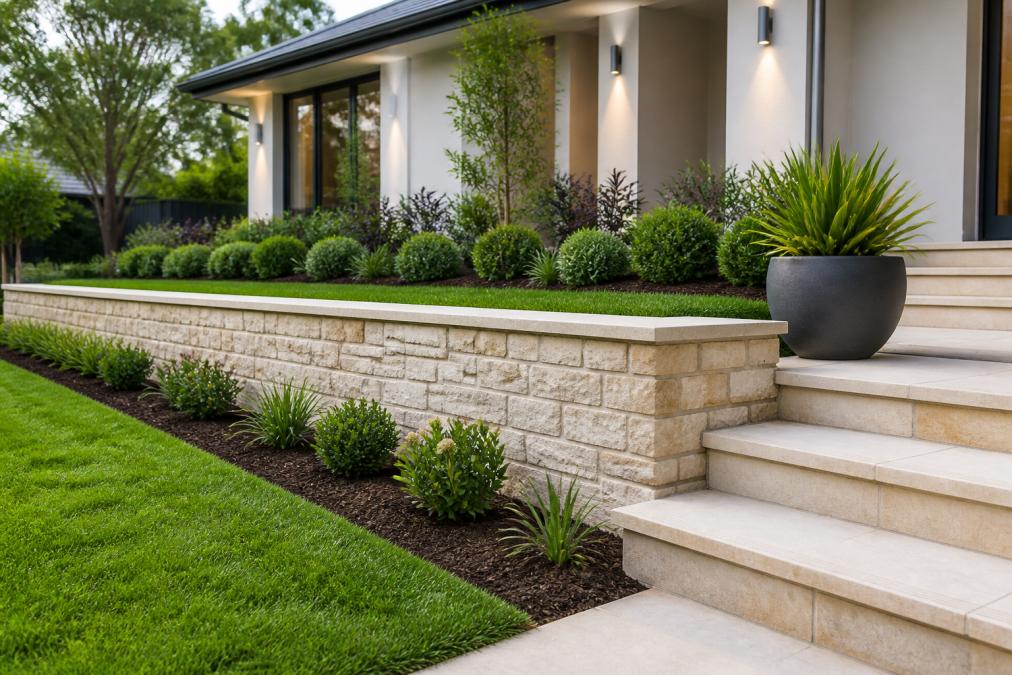
Raised garden beds created with retaining walls offer practical advantages. You control the soil quality completely, which means better drainage and fewer problems with poor native soil. You can position plants at comfortable working height, reducing bending and strain. And you can fill the bed with plants chosen for low maintenance.
Material choices affect both appearance and maintenance. Natural stone retaining walls develop character over time and blend beautifully into most garden settings. Concrete block retaining walls offer durability and clean lines. Timber retaining walls create warmth but require more maintenance to prevent rot and insect damage in our climate.
Professional design and construction matter significantly. Retaining walls must handle water pressure, soil movement, and load forces correctly. Poorly designed walls fail, creating expensive repairs and potential safety issues. Proper engineering, correct material selection, and skilled installation ensure your retaining walls perform reliably for decades.
7. Automate Watering with Smart Irrigation Systems
Manual watering is one of the biggest time drains in garden maintenance. Smart irrigation systems eliminate this entirely by handling watering schedules based on weather, soil moisture, and plant needs.
Modern automated irrigation adapts to seasonal changes, rainfall, and temperature fluctuations. During dry spells, it increases watering frequency (waternsw.com.au). After rain, it skips cycles to avoid overwatering. The result is healthier plants and zero manual intervention.
Drip irrigation delivers water directly to plant roots, reducing waste and ensuring moisture reaches where it's needed. Smart controllers connect to weather services and soil moisture sensors, learning your garden's patterns and optimising watering accordingly. You can monitor and adjust settings from your phone, making it easy to manage watering even when you're away from home.
Installation quality affects system reliability. Poor layout means some plants get overwatered while others stay dry. Professional installation ensures your system actually delivers the performance you're paying for.
For Sydney properties, automated irrigation is particularly valuable during summer when water demand is highest and restrictions sometimes apply. A well-designed system uses water efficiently, delivers consistent results, and requires almost no manual maintenance once installed.
Why Professional Design and Installation Matter
Implementing these low-maintenance garden ideas effectively requires more than just knowing what they are. Site conditions vary significantly across the Hills District and Greater Sydney. Soil type, drainage patterns, sun exposure, slope, and existing infrastructure all affect which strategies work best for your property.
A garden designed without understanding these factors often fails to deliver the low-maintenance benefits you're after. Plants struggle in unsuitable conditions, drainage problems persist, and hardscaping doesn't integrate properly with the existing landscape.
This is where professional landscape design and construction makes a tangible difference. Experienced landscape professionals assess your site, understand your family's actual needs and how you use outdoor space, and design solutions that work with your property's strengths rather than fighting against its challenges.
FDSS Landscaping Services provides complete landscape design and construction throughout Greater Sydney, including the Hills District and North-West Sydney. Our integrated approach means you work with the same team from initial concept and 3D design through to final construction and completion. We handle site assessment, design development, material selection, drainage solutions, hardscaping, planting, irrigation, and project management.
Whether you're planning a complete garden transformation or targeting specific maintenance challenges, a professional consultation clarifies what's actually possible on your property and what approach delivers the best results for your situation.
Key Takeaways
| Strategy | Primary Benefit | Best For |
|---|---|---|
| Reduce lawn area | Cuts mowing and watering time dramatically | Families wanting more usable space, less maintenance |
| Artificial turf | Zero lawn maintenance, year-round green | Properties where traditional lawn struggles, busy families |
| Hardy perennials | Thrives with minimal care once established | Building sustainable, beautiful garden beds |
| Entertainment areas | Defines space, reduces total maintenance zone | Families who actually use their backyard |
| Drainage and mulch | Prevents weed pressure, improves soil health | Problem areas with poor drainage or constant weeding |
| Retaining walls | Manages slope, creates raised beds, reduces erosion | Sloped properties, creating defined zones |
| Smart irrigation | Eliminates manual watering, optimises water use | Sydney's climate, busy schedules, water efficiency |
Low-maintenance garden ideas work best when tailored to your specific property, climate, and how your family actually uses outdoor space. Generic approaches often miss the mark because every garden has different challenges and opportunities.
If you're considering a landscaping project in the Hills District, North-West Sydney, or Greater Sydney, FDSS Landscaping Services can help you create an outdoor space that's beautiful, functional, and genuinely low-maintenance. We'll assess your site, discuss your priorities and budget, and design a solution that works for your family's lifestyle.
Request a landscaping quote from FDSS Landscaping Services today. Our team will walk through your property, understand your goals, and show you exactly how these low-maintenance strategies can transform your garden.
Frequently Asked Questions
What are the best low-maintenance plants for Sydney gardens?
Hardy perennials and native plants thrive in Sydney's climate with minimal fuss. Drought-tolerant species like lavender, rosemary, grevilleas and banksias require less watering once established. Ground covers such as creeping juniper reduce weeds and maintenance burden. Evergreen shrubs provide year-round interest without seasonal pruning demands. Choosing plants suited to your soil type and sun exposure means they'll flourish with basic care.
How can artificial turf installation reduce garden maintenance?
Artificial turf eliminates mowing, watering and fertilising, the most time-consuming lawn tasks. Modern synthetic turf looks natural and lasts with occasional rinsing and brushing. It stays green year-round regardless of weather, making it ideal for busy families. Installation requires proper drainage and base preparation to prevent waterlogging. Professional artificial turf installation ensures correct laying and longevity.
Why is garden drainage important for low-maintenance landscaping?
Proper garden drainage prevents waterlogging, root rot and weed growth, all maintenance nightmares. Well-drained soil reduces disease pressure and means less corrective work later. Mulching over quality drainage improves soil health and suppresses weeds naturally. Poor drainage forces constant intervention; good drainage lets plants thrive independently. Professional assessment ensures your garden's drainage matches your soil type and slope.
Do I need council approval for retaining walls and hardscaping?
Requirements depend on wall height, location and your local council's regulations. Retaining walls over 1 metre typically require engineering certification and approval in most Sydney councils. Hardscaping near property boundaries or in flood-prone areas may also need assessment. Your landscaper should verify requirements with your local council before work begins. Professional landscape design includes compliance planning as part of the service.
What's the difference between DIY and professional landscape installation for low-maintenance gardens?
DIY suits smaller projects like planting or mulching; professional installation handles complex work like retaining walls, drainage and hardscaping. Professionals bring expertise in soil preparation, drainage design and material selection that directly impacts long-term maintenance. Poor installation, especially drainage, creates expensive problems later. For whole-garden renovations, professional design and build ensures the low-maintenance features work together as a system.