 blog
7 Ways to Add Privacy Beside a Patio
Last Updated: November 24, 2026
Quick Summary
The fastest way to add privacy beside a patio is a fixed screen, such as a timber or lattice panel, placed on the side facing the neighbour. The 7 ways to add privacy beside a patio work best when you combine two or three options rather than relying on one.
- Check sightlines from a seated position, a standing position and any upper-level windows before choosing a screen height.
- Solid timber panels give instant sightline blocking but need proper footings and may need council approval.
- Lattice and slatted panels break up the view and let light and airflow through a narrow side space.
- Evergreen plants give year-round cover but need watering and pruning, and many take years to reach screen height.
- Check the mature width of screening plants so they do not crowd the strip or lift paving.
Table of Contents
- How Can I Add Privacy Beside a Patio?
- Assessing the Sightlines Before You Choose a Screen
- Privacy Screening Plants for Side-of-Patio Coverage
- Outdoor Privacy Screens: Lattice, Timber and Bamboo
- Tall Planters and Living Walls for Tight Spaces
- Small Patio Privacy Ideas: Curtains and Freestanding Screens
- Using a Retaining Wall Garden Design for Built-In Privacy
- Request a Landscaping Quote for Your Patio Privacy Project
- Frequently Asked Questions
How Can I Add Privacy Beside a Patio?
The fastest way to add privacy beside a patio is a fixed screen, such as a timber or lattice panel, placed on the side that faces the neighbour, since these are often the first thing to try when reviewing 7 ways to add privacy beside a patio. Most homeowners get the best results by combining two or three of these options rather than relying on one.
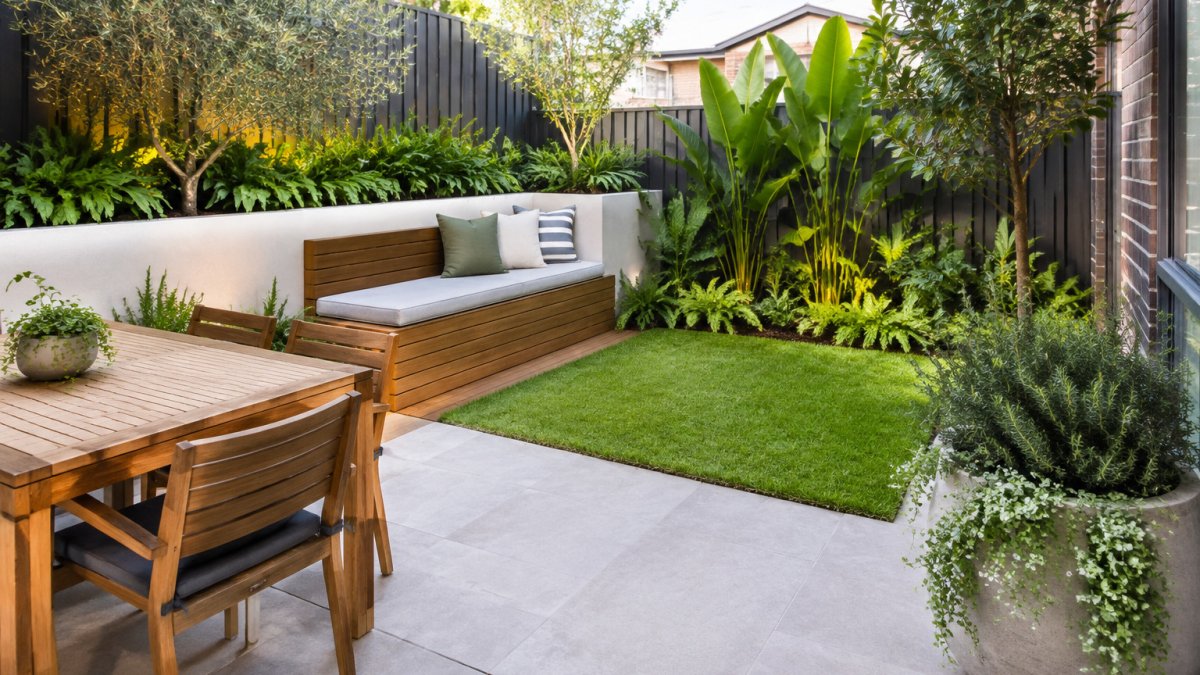
Side-of-patio privacy is a different problem from backyard privacy. The space is usually narrow, the view is close, and the screen often needs to sit within a few metres of seating. That means the right choice depends on how much room you have, how much height you need, and how quickly you want results.
This guide covers 7 ways to add privacy beside a patio, with the pros and cons of each. Every site is different, so treat these as starting points for planning rather than a finished design.
Assessing the Sightlines Before You Choose a Screen
Before buying anything, stand where you normally sit and look toward the neighbour's windows, deck or driveway. Note the height of the gaze. A screen that blocks a seated view may not block a view from a standing position on a balcony above.
Walk the side of the patio at different times of day. For more compact outdoor layout ideas, see Courtyard Landscaping Ideas for Small Sydney Spaces. Morning sun, afternoon glare and evening lights can reveal sightlines you missed. Take photos from the seating position and mark where the sightline crosses the boundary.
A common mistake is screening only the height of a chair. Check the view from a standing adult and any upper-level windows nearby. This check shapes whether you need a 1.8-metre screen or a lower planter-based solution.
The article's main options compare on a few practical points, summarised below.
| Option | Best for | Key difference |
|---|---|---|
| Privacy screening plants | Natural look, habitat, lower upfront cost | Slow to mature in many species; needs watering and pruning |
| Timber or solid panels | Instant privacy in small spaces | Higher upfront cost; needs proper footings and possibly approval |
| Lattice panels | Breaking up a view without closing in | Blocks less than solid panels; suits partial screening |
| Bamboo and reed screening | Relaxed garden look, quick install | Weathers faster in full sun; less effective at blocking a sightline |
| Tall planters and living walls | Tight spaces and rentals | Heavy when filled; needs regular watering |
| Curtains and freestanding screens | Occasional privacy, low cost | Less solid; needs securing in wind |
| Retaining wall with planting | Sloping blocks with dual use | Higher cost; needs engineering and approval depending on height |
Privacy Screening Plants for Side-of-Patio Coverage
Match the plant to the job. For year-round cover, evergreen shrubs and clumping bamboo are the usual choices because they hold foliage through winter.
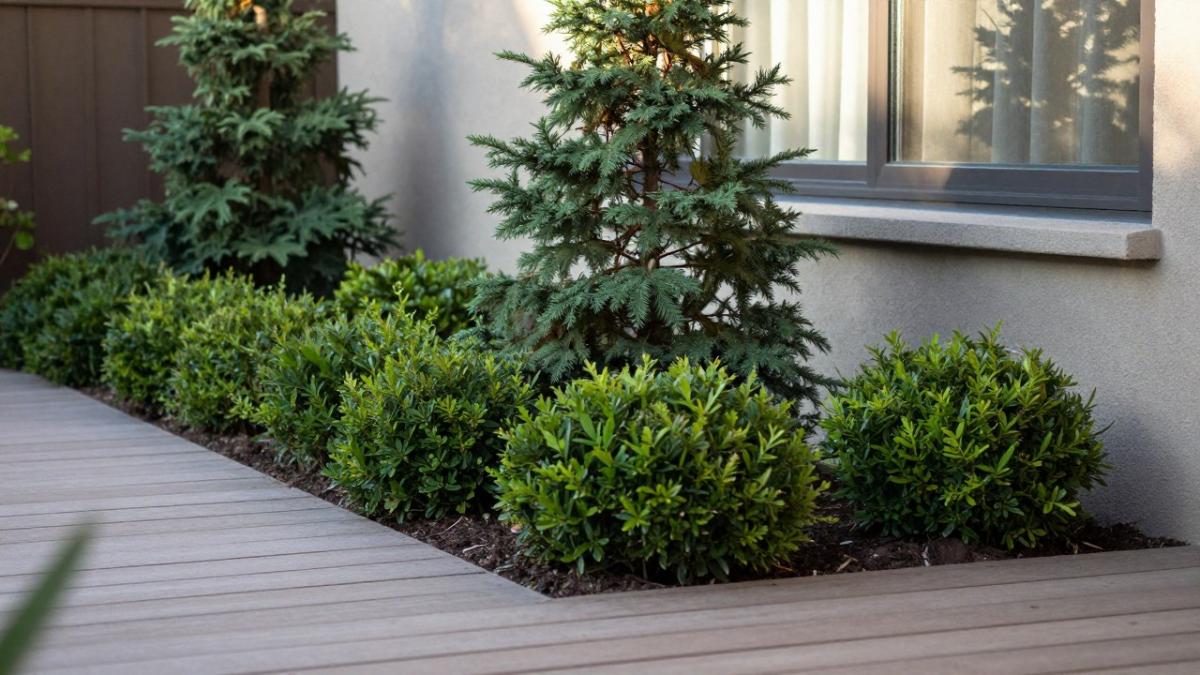
Growth speed is the real trade-off. Most practitioners group screening plants into three rough bands: fast fillers that put on useful height within a season or two, mid-rate shrubs that take a few years, and slow, dense hedges that can take several years to reach screen height. Fast growth often comes with looser habit, more pruning and, in some species, aggressive roots. Slow growth usually means denser, tidier cover once established. If you need privacy this summer, planting small stock and waiting is not a plan, either buy advanced stock or combine planting with a temporary screen.
Species worth discussing with a designer (subject to your site, soil and climate):
- Clumping bamboo, fast, evergreen and dense, but choose clumping rather than running types and allow for mature width; running bamboo is a liability near paving and boundaries.
- Lilly pilly, evergreen, responds well to hedging, and suits many local gardens; some varieties are used for screening and topiary.
- Photinia, fast, evergreen and colourful on new growth, but needs regular pruning to stay dense.
- Pittosporum, tidy, evergreen and widely used for hedges; moderate growth and good density.
- Viburnum, reliable evergreen hedge with a softer look; moderate growth.
- Callistemon and grevillea, tough, bird-attracting evergreens that suit many local conditions, though habit varies by cultivar.
Space and root considerations. Check the mature width, not the nursery-pot width. A plant that spreads two metres will crowd a one-metre strip, lift paving or push into footings.
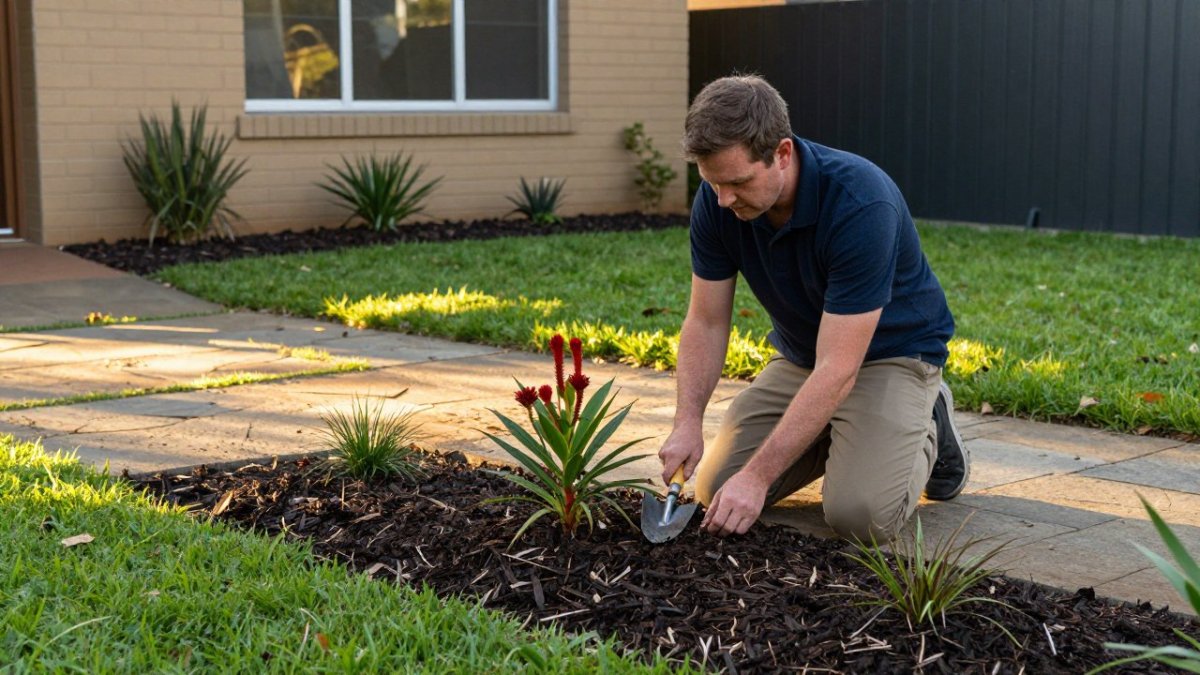
Watering and establishment. New screens need consistent watering through the first summer or two, and drip irrigation on a timer is the most reliable way to keep a hedge dense.
Watch out: planting a fast grower right against the boundary to solve a sightline quickly often creates a maintenance and root problem within a few years, check mature size and root habit before committing.
If the strip is too narrow or the soil too poor for in-ground planting, tall planters or a raised bed may be the better route, and a designer can tell you which suits your site.
Outdoor Privacy Screens: Lattice, Timber and Bamboo
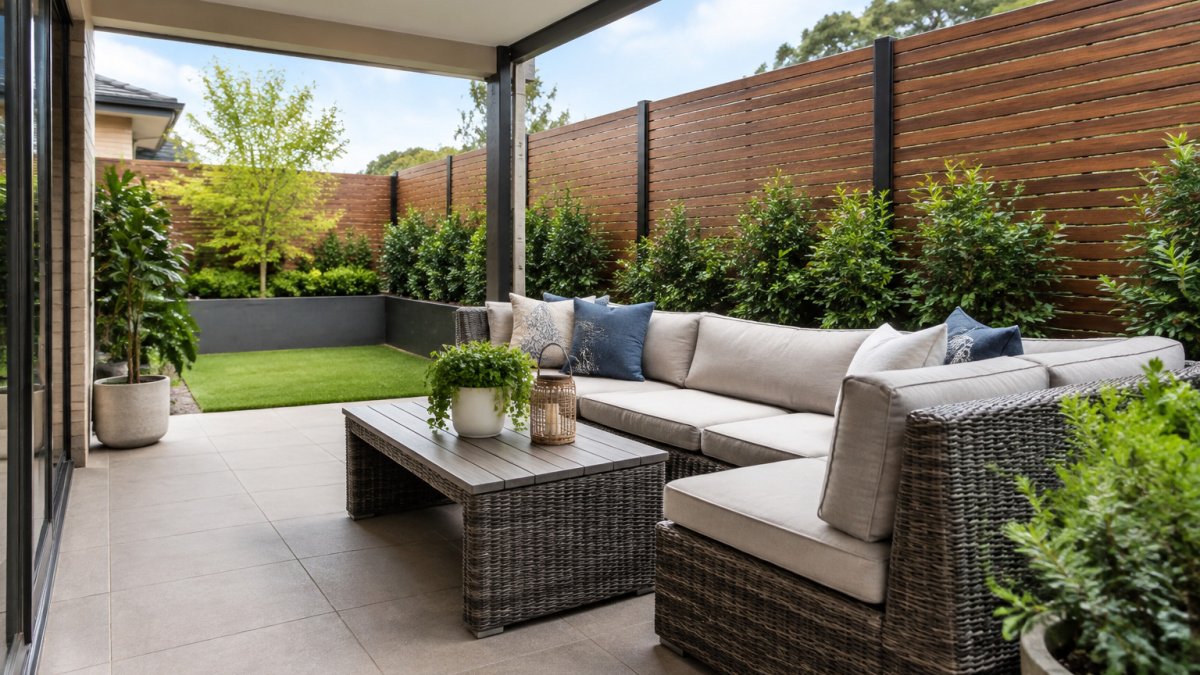
Fixed panels are the fastest route to privacy beside a patio because they work from day one.
Size the screen to the sightline, not to the fence. Before choosing a panel, work out the height you need.
Compare the panel types on what matters:
- Timber slat and solid panels, warm look, strong sightline blocking, and good wind resistance when properly fixed. Solid panels block light and air, which can make a narrow side feel enclosed; slatted panels let light and breeze through while still breaking up the view. Timber needs periodic sealing or staining to stay in good condition.
- Lattice panels, lighter and more open, good for breaking up a view without closing in a small patio, and often used as a fence topper. They block less than solid panels, so they suit partial screening rather than a full sightline fix.
- Bamboo and reed screening, relaxed garden look and quick to install, but it weathers faster in full sun, can fray, and is less effective at blocking a determined sightline than a solid panel. It also needs a frame or posts to stay taut.
Wind, footings and fixing. Tall solid screens catch a lot of wind, and the footings matter as much as the panel. Posts need adequate depth and concrete, and the panel needs clearance from the ground for drainage and airflow.
Height and boundary rules. Screen height, setback from the boundary and whether the screen counts as a fence or a structure all affect whether approval is needed.
Watch out: a tall solid screen fixed to a light fence or shallow posts is the most common wind failure, confirm footings and fixing before installation, not after the first storm.
If you are unsure whether a screen needs council approval or how it should be fixed, a landscape designer or builder can assess the site and advise on an approach that suits your council's requirements.
Tall Planters and Living Walls for Tight Spaces
Tall planter boxes suit a side-of-patio strip where ground planting is not practical. Choose planters at least 600 millimetres deep for shrubs, and make sure there is drainage and room for roots. Grouped planters create a screen without a fixed wall.
Living walls are more involved. They use modular panels or trellis systems with climbing plants or vertical planting. They look striking, but they need irrigation and regular maintenance, so budget for both.
Pros: Flexible, movable, good for rentals or tight spaces, adds colour. Cons: Heavy when filled, needs regular watering, and can dry out quickly in full sun or wind.
Small Patio Privacy Ideas: Curtains and Freestanding Screens
If you need privacy only some of the time, outdoor curtains and freestanding screens are the simplest option. Weather-resistant fabric on a track or pole can be drawn across the side of a pergola or patio for evenings and weekends. Freestanding screens can be moved as the sun or your seating changes.
These options are quick to install and cost less than fixed structures. They are less durable in strong wind, though, and need to be taken down or secured during storms.
Pros: Easy to install, adjustable, low cost, no permanent build. Cons: Less solid, needs wind securing, fabric can fade or mould in damp areas.
Using a Retaining Wall Garden Design for Built-In Privacy
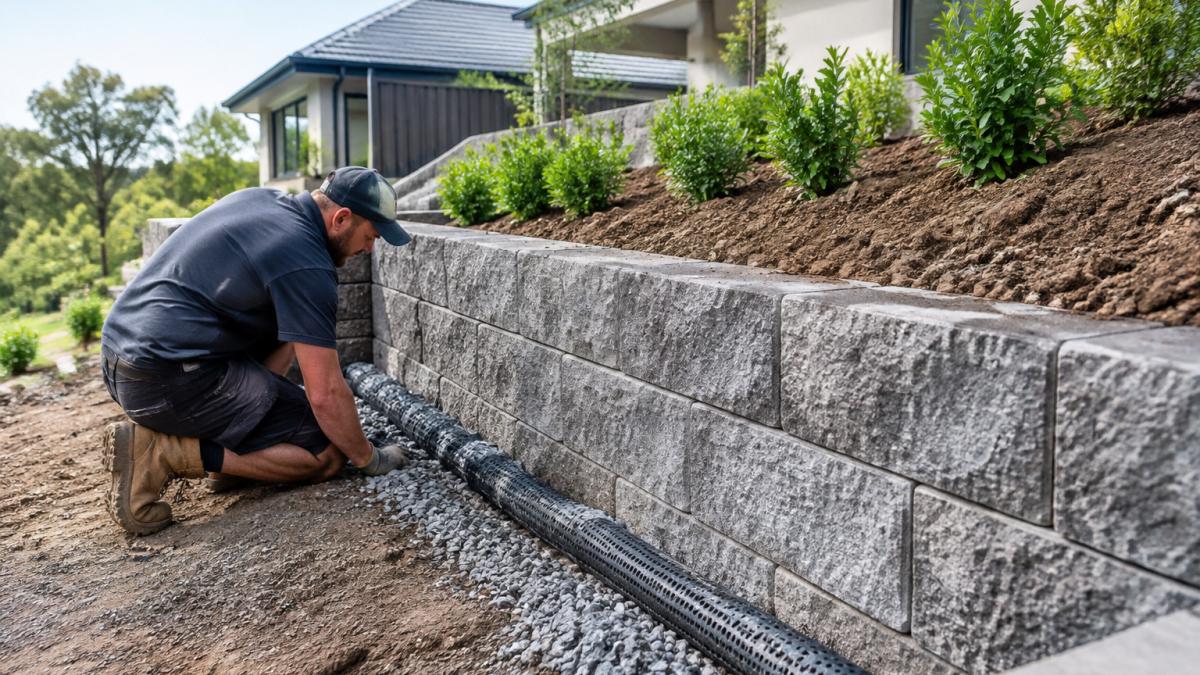
On a sloping block, a retaining wall can do double duty. It holds back soil and creates a raised planting bed along the top, which puts plants at eye level with a neighbouring deck. Combining a wall with tall planting can screen the patio without a separate structure.
Retaining walls over a certain height often need engineering and council approval, depending on the site and the relevant authority. The height, drainage behind the wall and the load from soil and surcharge all affect design. Do not build a wall to a height you have not had checked.
Pros: Doubles as structure and screening, adds usable garden space, can look very polished. Cons: Higher cost, requires engineering and drainage planning, and needs approval depending on height and location.
If you are considering this option, FDSS Landscaping Services offers retaining wall construction, and our team can assess whether a wall suits your site.
Request a Landscaping Quote for Your Patio Privacy Project
Choosing the right side-of-patio screen comes down to your sightlines, the space you have, how fast you need coverage, and your budget. Many homeowners find that a combination, such as a timber screen with layered planting, gives the most reliable result.
Pricing depends on the size of the area, materials, access and whether engineering or approvals are needed, so a standard figure cannot be given here. For an accurate assessment of your patio, you can request a landscaping quote from FDSS Landscaping Services. A quote request is the best way to get your sightlines, site conditions and options assessed.
Australian Standard for timber structures NSW planning and council approval guidance Retaining wall guidance for homeowners
Frequently Asked Questions
How can I add privacy beside a patio?
The most common approaches are planting a row of shrubs or evergreen trees, installing a timber, lattice or bamboo screen, using tall planters, or fitting outdoor curtains. The right choice depends on how much space you have, how quickly you need coverage and your budget. A landscape designer can assess the sightlines from your patio and recommend a combination that suits your site. Pricing varies with materials and installation, so request a quote for an accurate figure.
What plants make a good privacy screen beside a patio?
Dense, upright evergreen shrubs and small trees tend to work best beside a patio because they provide year-round coverage. Plant maturity and growth rate matter, so check the expected mature height and width before planting. Choose plants suited to your soil and aspect, and allow enough space so they do not crowd the patio or footings. Grouping plants in staggered rows gives a fuller screen than a single line.
Are hedges or screens better for patio privacy?
Hedges give a softer, more natural look and can take time to fill in, while screens provide immediate coverage and suit tight spaces. Many homeowners combine both, using a screen for instant privacy and planting in front to soften it over time. Wind and weather affect durability, so a well-built screen with solid fixings tends to last longer in exposed areas. The best option depends on your timeframe and the size of the space.
What should I consider before installing a privacy screen?
Consider the height you need to block sightlines, the direction of prevailing wind, and how the screen will affect light and airflow. Check property boundaries and any requirements that apply through your local council, as these depend on the site. Think about maintenance, such as timber treatment or plant pruning, and how the screen will look from both sides. A landscape designer can help you weigh these factors before you commit to a design.