 blog
12 Landscape Designs for Your Front Yard in Sydney
Last Updated: November 18, 2026
Quick Summary
The best front yard designs match the layout to the frontage width, use layered planting suited to your sun and soil, and keep maintenance low with mulch and grouped plants. A measured concept plan helps you test the design before any construction starts. Start by asking what the front yard should say about your home and how you will move through it.
- Narrow frontages under about 10 metres suit a single direct path and one sunny planting bed.
- Place the tallest planting at the back of the bed and keep the front edge low to add depth.
- Use mulch to reduce weeds and help soil hold moisture.
- Group plants with similar watering needs together to avoid overwatering.
- Spend a week noting sun exposure and drainage before choosing plants.
Table of Contents
- Why Your Front Yard Design Matters for Curb Appeal
- Small Front Yard Landscaping Ideas That Make a Space Feel Larger
- Low Maintenance Front Garden Ideas for Busy Households
- Front Yard Landscaping for Sloping Blocks
- Front Yard Paving Ideas and Pathway Layouts
- Planting Choices, Sun Exposure and Climate Considerations
- Planning a Front Yard Design: From Concept to Quote
- Frequently Asked Questions
Why Your Front Yard Design Matters for Curb Appeal
Your front yard is the first thing visitors, neighbours and future buyers see. A well-planned landscape design makes a home look cared for and welcoming.
Good front yard design is about more than plants.
Start by asking three questions:
- What do you want the front yard to say about your home?
- How will you walk to the front door, park and move around the space?
- How much time and budget do you want to spend on upkeep?
Your answers shape every decision that follows. A front garden built around the way you actually live is far more likely to look good for years.
Small Front Yard Landscaping Ideas That Make a Space Feel Larger
Small front yards are common on many newer and infill blocks, where the buildable area between the boundary, driveway and house can be tight. The goal in a compact front yard is not to cram in more features but to make the space feel deliberate and easy to move through.
Start With the Frontage Width
The width of your frontage drives the layout more than any other factor:
- Narrow frontages (under about 10 metres). A single, direct path to the door, one planting bed on the sunniest side and a slim screen or low hedge along the boundary usually work best. Keep the driveway clear and avoid a second path that splits the space.
- Mid frontages (10-15 metres). There is room for a defined entry path, a lawn or planted area and a small feature such as a specimen tree or a low retaining wall that doubles as seating.
- Wider frontages (over 15 metres). Break the space into zones, entry, lawn, garden bed, so it does not read as one flat expanse. A gently curved path can slow the eye and make the garden feel deeper.
Use Depth, Not Clutter
A small yard feels larger when the eye is drawn back and up rather than side to side. Place the tallest planting at the back of the bed against the fence or house, step down in height toward the path, and keep the front edge low.
Light-coloured paving, gravel or mulch reflects light and makes a shaded or narrow frontage feel more open. Dark surfaces absorb light and can make a small space feel tighter, particularly on south-facing frontages.
Keep Movement Simple
In a compact yard, the path should be the clearest line in the design. A straight path suits modern homes and narrow blocks because it uses space efficiently and reads as intentional.
Watch out: overcrowding is the most common small-yard mistake. Planting beds too densely to fill them quickly leads to constant pruning, root competition and plants that outgrow their space within a season or two.
Reduce What You Do Not Need
In a small front yard, every element competes for space. A large lawn, a second vehicle space or an oversized letterbox can dominate a compact frontage. Replacing part of the lawn with planted beds or gravel reduces mowing and watering and gives the garden more visual depth. Where parking is essential, keep the hardstand tight and use the remaining space for layered planting.
Get the Layout Right Before You Build
Small yards are less forgiving of layout mistakes because there is no spare space to absorb them. A measured plan showing the path, beds, driveway, services and mature plant sizes will show whether the design actually fits before any paving is cut or soil is moved.
The width of your frontage shapes the layout more than any other factor, so the table below sets out how to approach each size.
| Frontage width | Suggested layout | Key note |
|---|---|---|
| Under about 10 metres | Single direct path, one sunny bed, slim screen or low hedge | Keep the driveway clear and avoid a second path |
| 10-15 metres | Defined entry path, lawn or planted area, small feature | A specimen tree or low wall can double as seating |
| Over 15 metres | Entry, lawn and garden bed zones with a gently curved path | Zones stop the space reading as one flat expanse |
Low Maintenance Front Garden Ideas for Busy Households
Low maintenance does not mean no planting. It means choosing plants and materials that suit your site and need little regular work.
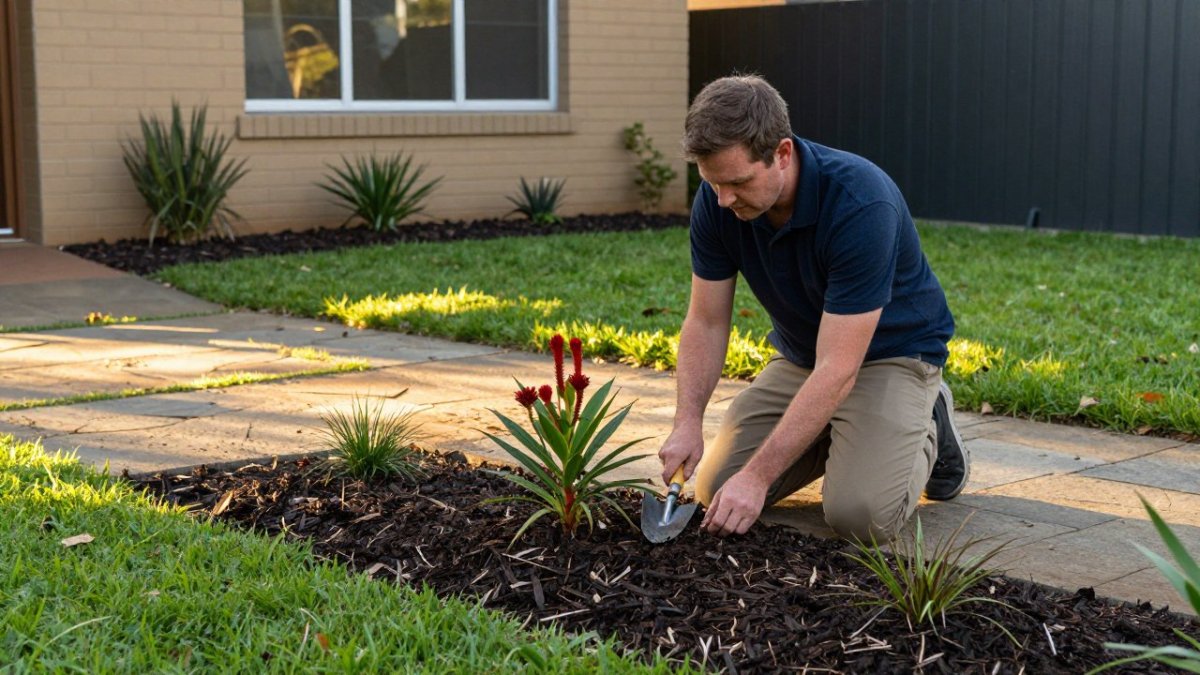
- Use mulch to reduce weeds and help soil hold moisture.
- Group plants with similar watering needs together.
- Choose hardy ground covers instead of large areas of lawn.
Turf needs regular mowing, watering and feeding. For some households, a smaller lawn or a planted bed is the more practical choice. Your site conditions, including sun, shade and soil, will decide which options work best.
Front Yard Landscaping for Sloping Blocks
Sloping blocks are common across the Hills District and North-West Sydney. A slope adds character, but it also affects access, drainage and how the garden can be used. The right structure makes a sloping front yard both safe and attractive.
Retaining Walls and Terracing on Slopes
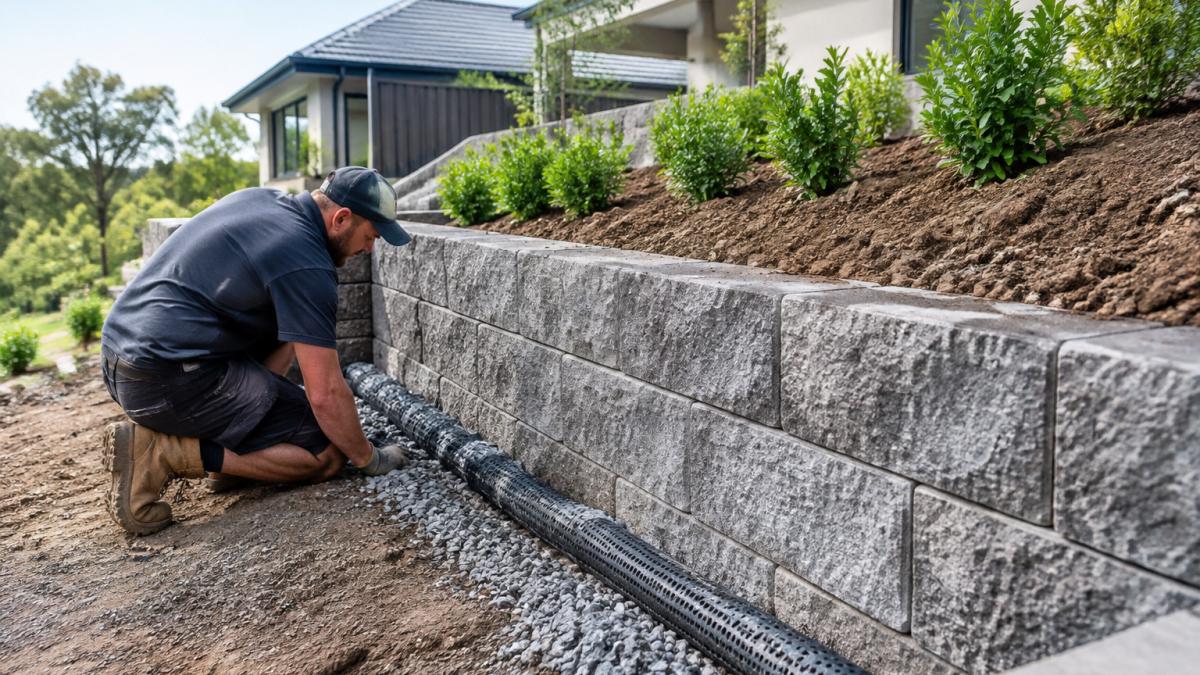
Retaining walls hold back soil and create level areas for planting, paths or seating. Terracing breaks a steep slope into a series of flatter steps, which can make the garden easier to plant and walk through.
Retaining walls and terraces are generally a structural matter, so the right design depends on the site and your local council's requirements. Our Retaining Walls service covers design and construction for sloping front yards.
Drainage Considerations for Sloped Front Gardens
Water runs downhill, so drainage needs careful planning on a slope. Without it, soil can wash out, and paths or planting can be damaged. Good drainage keeps your garden stable and healthy.
Planning should consider where runoff will go and how surface water will be directed away from the house. Our guide on structural landscaping for sloping blocks explains the drainage and terracing principles in more detail.
Front Yard Paving Ideas and Pathway Layouts
Paving defines the entry, guides movement and sets the tone of the front yard. The right pathway makes arrivals feel easy and the space feel finished.
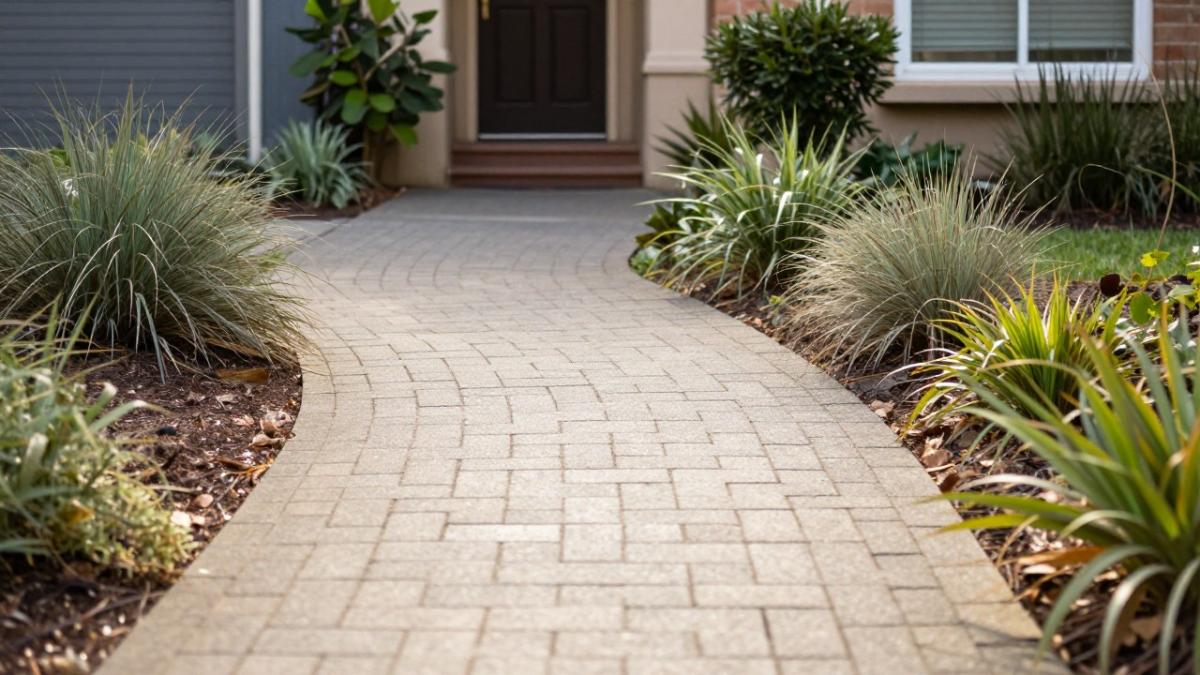
- Curved paths feel relaxed and suit larger frontages.
- Straight paths suit modern homes and narrow blocks.
- Stepping stones add informal charm in garden beds.
A pathway should be wide enough for comfortable walking and clear of plants at maturity. Our Paving Services team can help you choose materials and layouts that suit your home and budget.
Planting Choices, Sun Exposure and Climate Considerations
Plant selection is where most front yard designs succeed or fail. A plant that thrives in one front garden can struggle a street away if the aspect, soil or irrigation is different. The practical approach is to match plants to the conditions your site actually has, not the conditions you wish it had.
Read Your Site Before You Choose
Spend a week noting how your front yard behaves. Check which beds receive morning sun, which are shaded by the house or a neighbouring tree in the afternoon, and where water pools after heavy rain.
Soil matters as much as sun. Much of the local soil is clay or clay-loam, which drains slowly. Compacted builder's fill is common in newer estates around Box Hill, The Ponds and North Kellyville, and it behaves very differently from established garden soil in Castle Hill or Glenhaven.
A Workable Planting Framework
Build the front garden in layers rather than buying individual plants:
- Canopy layer. One small-to-medium tree gives height, shade and a sense of establishment. Choose a species with a mature size that suits the frontage and keep it clear of the driveway, powerlines and the house footings.
- Mid layer. Shrubs form the bulk of the planting and screen the house from the street. Repeat two or three species rather than many one-offs.
- Ground layer. Ground covers and strappy plants knit the bed together and suppress weeds.
- Accent plants. A small number of contrasting foliage or flowering plants add interest without clutter.
Species That Suit Local Conditions
For sunny, exposed frontages, water-wise Australian natives are a reliable starting point: westringia, grevillea, callistemon (bottlebrush), lomandra and dianella all tolerate heat and periods of dry weather once established.
For households wanting a lawn, warm-season turf such as buffalo or couch suits full sun, while shade-tolerant varieties are needed under trees or on the south side of the house.
Watch out: avoid planting large-growing shrubs and trees close to the house, driveway or boundary, because mature size, not nursery-pot size, determines how much pruning, root disturbance and future removal work you will face.
Watering, Mulch and Establishment
New plantings need consistent watering through their first summer or two, even for drought-tolerant species. Group plants with similar water needs on the same irrigation zone so you are not overwatering one bed to keep another alive.
Plant selection is best confirmed on site with a designer who can see the aspect, soil and surrounding structures. Planting plans can be considered as part of a landscape design process, so the species list suits your block rather than a generic template.
Planning a Front Yard Design: From Concept to Quote
A good front yard project starts with a plan. A clear concept helps you compare options, set a budget and avoid expensive changes later.
- Measure and assess the site. Note the slope, sun exposure, drainage and access points.
- Set priorities. Decide what matters most, such as parking, privacy, low maintenance or curb appeal.
- Prepare a concept. Sketch the layout of paths, beds, lawn and structures.
- Review a 3D design. A visual plan helps you see how the finished space will look.
- Get a quote. A detailed quote lets you compare scope, materials and timing.
FDSS Landscaping Services offers landscape design and construction from concept through to completion. When you are ready to move forward, you can request a landscaping quote and we will talk through your front yard plans with you.
Frequently Asked Questions
How do I design a landscape for my front yard?
Start by measuring the space, noting sun and shade patterns, and identifying existing features such as driveways, trees and drainage paths. Decide how you want the front yard to be used, whether that is access, visual appeal or a small entertaining area, then sketch a layout that keeps pathways clear and planting zones defined. A 3D concept plan helps you test proportions before construction begins. FDSS Landscaping Services can prepare concept and 3D design options that take your site conditions and budget into account, so you can review the layout before committing to works.
What are low maintenance front yard landscaping ideas?
Low maintenance front gardens rely on fewer, hardier plants, mulched planting beds, and hard surfaces such as paving or gravel in place of large lawn areas. Groundcovers, clumping grasses and shrubs with a compact habit need less pruning and watering than high-maintenance species. Efficient irrigation and well-drained soil also reduce upkeep over time. The right mix depends on your site, so a professional assessment can help identify suitable plants for your conditions.
How do I landscape a sloping front yard?
Sloping blocks usually benefit from terracing, retaining walls and stepped paving, which create level planting areas and safer access. Drainage must be planned early so water is directed away from the house and retaining structures. Requirements for retaining walls depend on the height, site conditions and relevant council or authority, so it is worth confirming these before construction. FDSS Landscaping Services can assess slope conditions and propose a construction approach that suits your block.
What should I include in a front yard landscape plan?
A useful front yard plan includes the property boundaries, the house footprint, driveway and pathway locations, sun exposure, existing trees, drainage paths and the planting zones you want. It should also note lighting, fencing, edging and any hardscape features such as paving or retaining walls. Including a rough budget and phasing approach helps you prioritise works. Pricing depends on materials, site access and the scope of works, so contact FDSS Landscaping Services for a quote based on your specific project.