 how-to
How to Fix Drainage Under Artificial Grass Step by Step
Last Updated: October 26, 2026
Quick Summary
Fix artificial grass drainage by first finding where water pools, then checking the base beneath the turf for compaction or clay. Clear blocked outlets first, then lift and rebuild affected sections with free-draining crushed rock, re-grade for a fall, or add an edge drain.
- Start by clearing leaves, sand and silt from the outlets and perforations, which often restores flow on its own.
- Lift one section at a time to check whether the base is compacted or clay-heavy.
- Rebuild the base with free-draining crushed rock and re-check the surface with a straight board.
- Confirm where collected water will discharge so it does not flow onto a neighbour's property.
- Clear outlets every few months and keep soil and mulch from washing onto the turf.
Table of Contents
- Why Artificial Grass Drainage Problems Happen
- Step 1: Diagnose Where the Water Is Sitting
- Step 2: Assess the Base Beneath the Turf
- Step 3: Choose a Repair That Fits the Problem
- Preventing Water Pooling and Recurring Blockages
- When to Bring in a Landscaper for Drainage Repairs
- Frequently Asked Questions
Why Artificial Grass Drainage Problems Happen
Artificial grass drains through its backing, not through soil. When water pools on the surface, the problem usually sits underneath. A compacted or poorly graded base holds water where it lands.
Most artificial grass drainage problems come from a few common causes:
- Poorly prepared or compacted sub-base. Water cannot pass through clay or compacted ground fast enough.
- Insufficient slope or incorrect grading. Flat areas give water nowhere to go.
- Blocked or missing drainage outlets. Debris and silt can seal off the exit points.
- Sunken or settled sections. Low spots collect water and stay wet.
Knowing which cause applies to your yard decides the repair. Start by finding exactly where the water sits.
Step 1: Diagnose Where the Water Is Sitting
Before you dig or buy any materials, map the problem. Find a broader guide to fixing drainage problems covering the common methods and when to DIY or call a professional. Hose the area after a dry spell and watch where the water travels and where it stops.
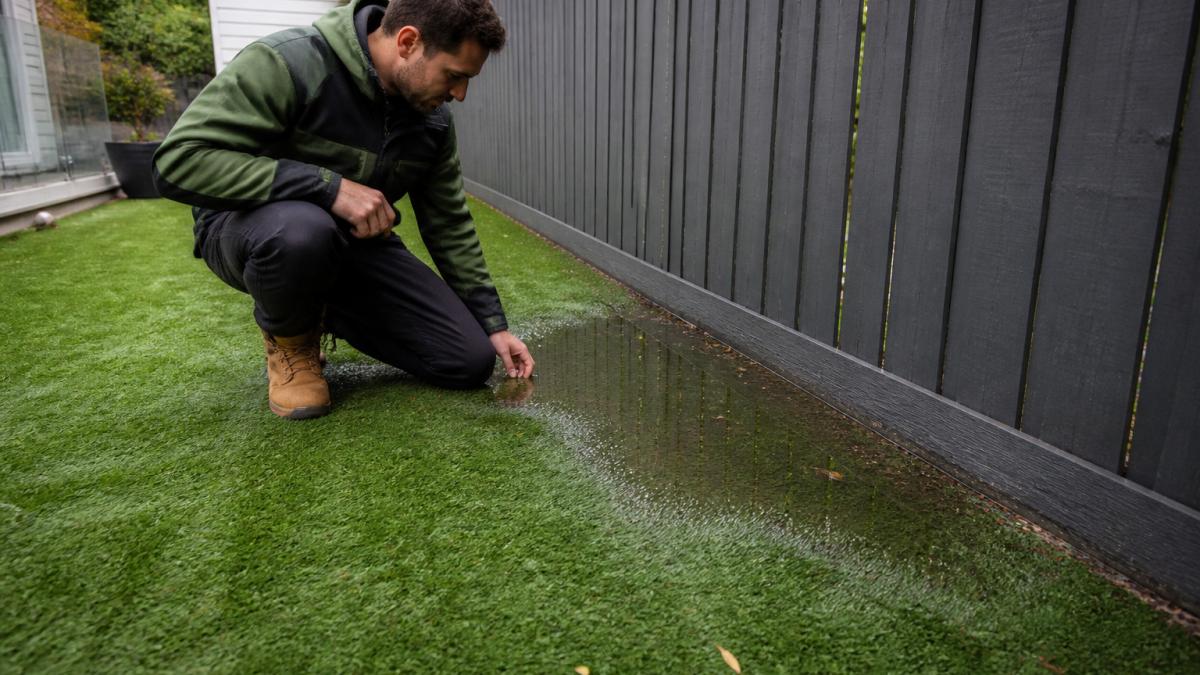
Checking for Low Spots and Sunken Turf
Walk the lawn after rain or after hosing. Look for dips, soft patches and sections that stay wet long after the rest has drained.
Run a straight board or a long level across the surface. Gaps underneath show where the turf has settled. A gap of more than a few millimetres under the board means the base has sunk in that spot.
Mark each low point with a stake. This gives you a map for the repair.
Testing Drainage Holes and Outlets
Check the perforations in the turf backing and any drainage outlets along the edges. Pour a bucket of water over a suspected blocked area and time how long it takes to clear.
If water backs up at an outlet, the problem sits in the drain line or the outlet itself. If water pools across the middle of the turf, the base is the likely cause.
Tip: Clear leaves, sand and silt from the outlets first. Many pooling problems disappear once the exits are open.
Step 2: Assess the Base Beneath the Turf
The base decides whether water moves through or stays put. Lift a small section at the edge of the pooling area to see what sits underneath.
Look for these signs:
- Fine clay or dense fill that holds water
- Crushed rock that has washed out or thinned
- Soil that has compacted over time from foot traffic
- Organic matter, roots or debris trapped in the base
A healthy base is free-draining crushed rock laid over a firm, graded subgrade. If you find clay or compacted fill, the base needs rebuilding in that section.
Watch out: lifting too much turf at once makes it hard to re-lay the surface evenly. Work one section at a time.
Step 3: Choose a Repair That Fits the Problem
Match the fix to what you found in steps one and two. The right repair depends on whether the turf is already installed, how the site slopes, and what sits under the surface. Work through the options below in order of least disruption first.
Repairs for Installed Turf Without Replacement
If the turf is in good condition, you may not need to replace it. Common options, from lightest to heaviest, include:
- Clear the outlets and perforations. Remove leaves, sand, silt and infill that have sealed the exit points. This is the first thing to try and often restores flow on its own.
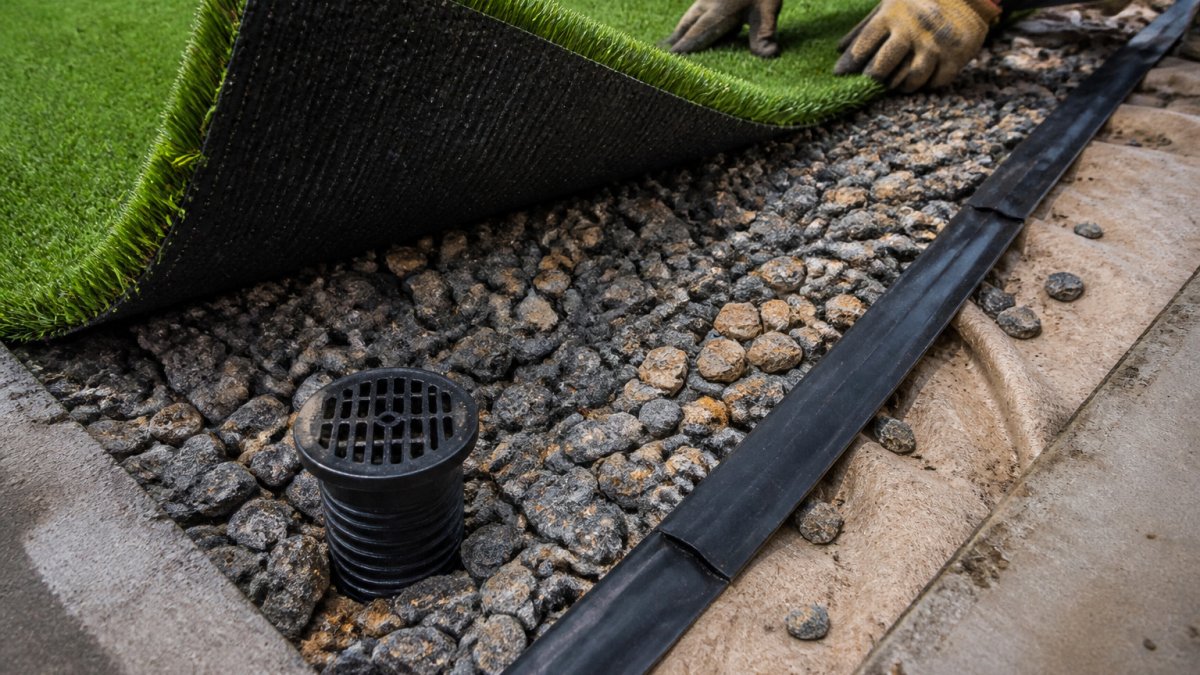
- Lift the affected section and add a layer of crushed rock. Open the turf only over the low spot, top up the base with free-draining crushed rock, and re-lay. Keep the lift to one manageable section at a time so the surface re-lays evenly.
- Re-grade the base to create a gentle fall toward an outlet. Even a small fall helps water move rather than sit. Check the finished surface with a straight board before re-laying.
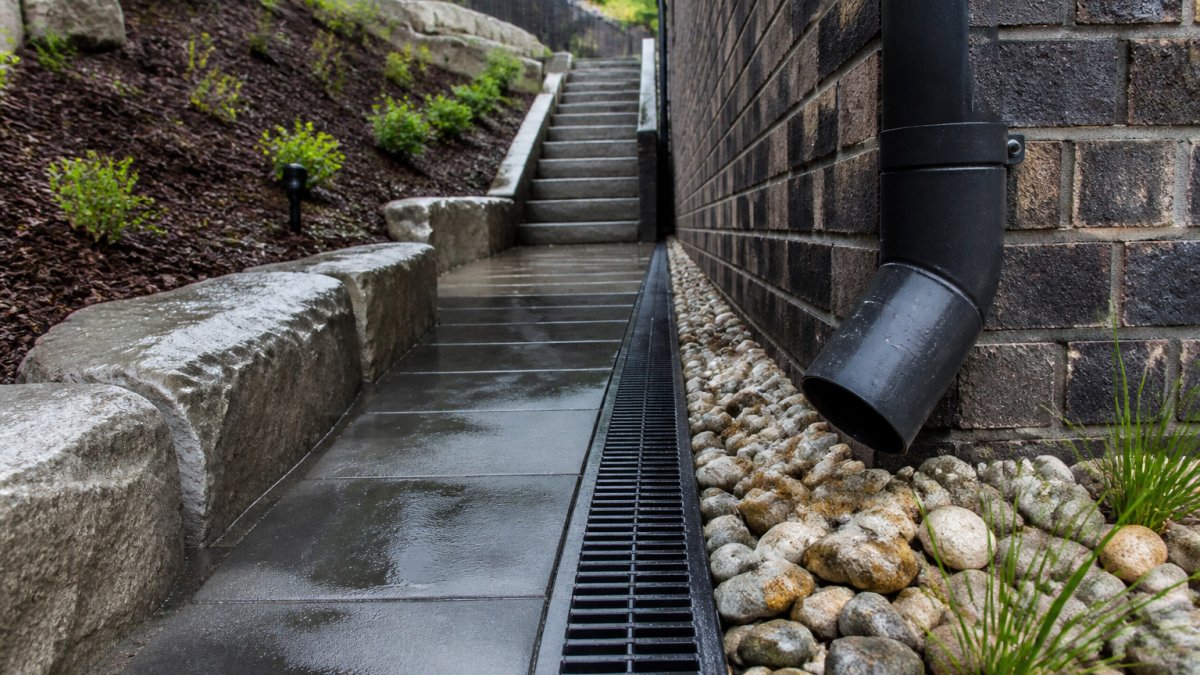
- Add an edge drain along the low side of the lawn. A shallow trench filled with gravel and a slotted pipe, wrapped in geotextile, gives water a defined path to an outlet.
Re-lay the turf carefully, brush the pile back up and check the surface with the board again. If the turf has stretched or the backing has torn, a partial replacement may be the cleaner option.
Fixes by Surface and Site Conditions
Different surfaces and site conditions need different fixes. Use the list below to narrow your options before you commit to a repair.
- Heavy clay yards. Clay holds water and drains slowly. The usual fix is to rebuild the base in the affected area with free-draining crushed rock, and to add a drainage line or edge drain so water has somewhere to go. In some cases a sub-surface drain running to a stormwater outlet is the only reliable long-term solution.
- Flat yards. Flat ground gives water nowhere to go. A new drainage line with a fall toward a stormwater outlet, or a shallow edge drain, is usually needed. Re-grading the whole lawn is a bigger job and best planned with the drainage line.
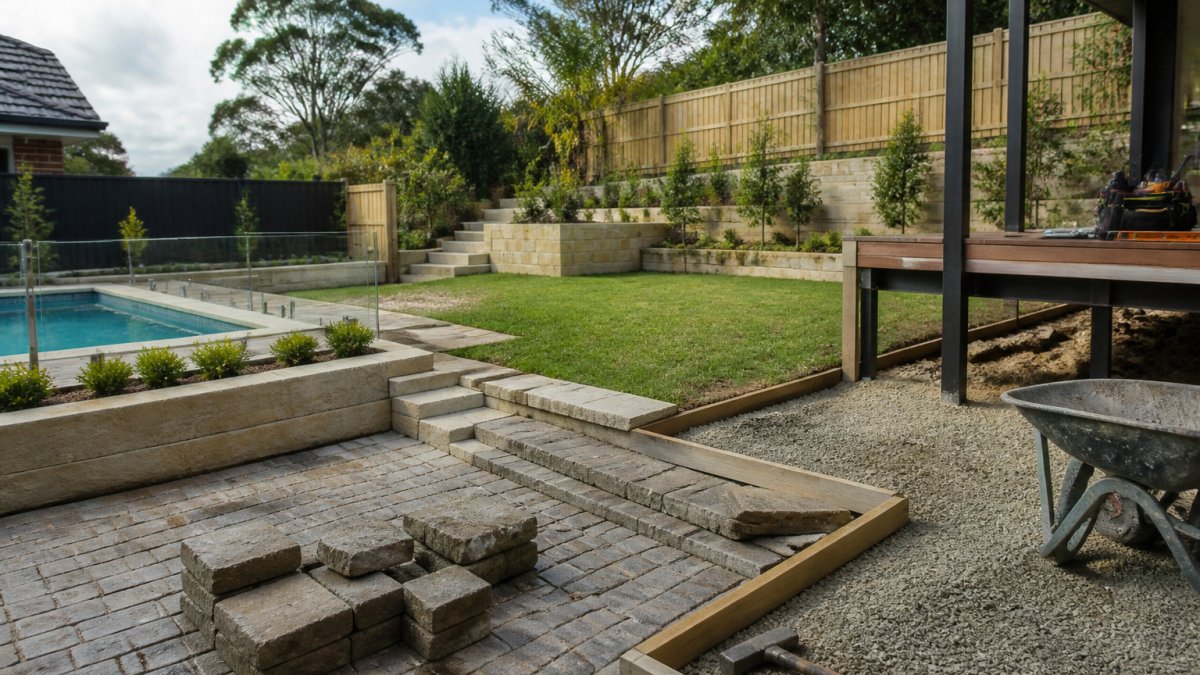
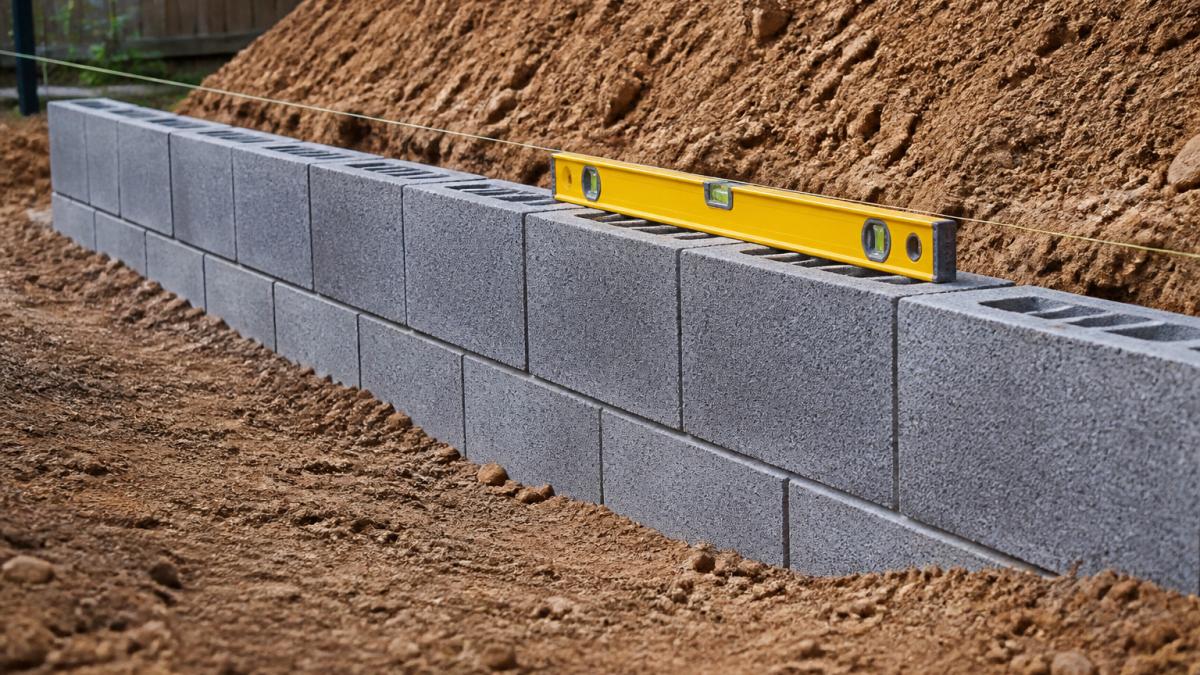
- Sloped yards. Water runs downhill and can pool at the low side or against a retaining wall. Sub-surface drainage and grading usually help, and a retaining wall may be needed to hold the base in place. See how these repairs are applied to sloped sites. Check that water is not being directed onto a neighbour's property.
- Paved or concrete surrounds. Hard surfaces shed water quickly and can direct runoff onto the turf. Redirecting that water, or adding a drain at the edge of the paving, can solve the problem without touching the lawn.
- Balconies and roof terraces. These need a drainage layer and outlet that suit the structure, and the fix usually depends on the building's design. Get advice before altering any outlet.
- Pet areas. Urine and waste can clog fibres and affect drainage over time. Rinse the surface regularly and check that the base still drains freely.
Where water runs off neighbouring land, the fix may involve the boundary and a conversation with your neighbour or council. Requirements depend on the site and the relevant council or authority, so check before you alter any stormwater path.
Deciding Between a Localised Repair and a Full Lift-and-Relay
A localised repair suits a single low spot, a blocked outlet or a small area of settled base. A full lift-and-relay is usually the better call when the base is compacted or clay-heavy across most of the lawn, when the slope is wrong across the whole area, or when the turf has been down long enough that the backing and seams are failing.
The table below sums up which repair suits which situation, using the options covered in this section.
| Site condition | Suggested repair | Key point |
|---|---|---|
| Blocked outlets or perforations | Clear outlets and perforations | Try this first; often restores flow |
| Low spot with compacted base | Lift section and add crushed rock | Work one section at a time |
| Surface lacks a fall | Re-grade base toward an outlet | Check finished surface with a straight board |
| Water runs along a low side | Add an edge drain | Gravel trench with slotted pipe and geotextile |
| Heavy clay yard | Rebuild base and add drain line | Sub-surface drain may be the long-term fix |
| Flat yard | New drainage line with a fall | Re-grading the whole lawn is a bigger job |
| Sloped yard | Sub-surface drainage and grading | Check water is not directed onto a neighbour |
| Paved surround sheds water onto turf | Redirect runoff or add paving-edge drain | Can solve the issue without touching the lawn |
Preventing Water Pooling and Recurring Blockages
Most repeat problems come from a few avoidable habits. The aim is to keep the exits open and stop material from migrating into the base.
- Clear leaves, sand and debris from the outlets every few months. Outlets are the first thing to block. Check them after heavy storms and at the start of each season.
- Avoid heavy top-dressing that clogs the turf fibres. A light dressing is fine, but thick layers of sand or soil can seal the surface and slow drainage.
- Rinse the surface after cleaning products or pet use. Residue and waste can build up in the fibres and affect how water moves through.
- Check the lawn after heavy storms and fix small dips early. A small dip that holds water will grow as the base settles further.
- Keep soil and mulch from washing onto the turf. Soil migration from garden beds is a common cause of blocked perforations and silted outlets. A edge or a small drain between the bed and the lawn helps.
- Inspect the base at the edge of the lawn once or twice a year. Lift a small section and check that the crushed rock is still free-draining and has not been contaminated with fines. Learn how to install garden edging for ground covers to help keep the base stable.
A quick inspection twice a year catches most issues before they grow. If water starts pooling again in the same spot after a repair, the cause is usually still there, a blocked outlet, a settled base or a slope that directs water back to the low point. Re-check the diagnosis before repeating the same fix.
When to Bring in a Landscaper for Drainage Repairs
Some drainage problems are simple to fix yourself. Others need professional equipment and experience. Consider getting help if:
- The base needs excavating and rebuilding across a large area
- The site has a steep slope or a retaining wall is involved
- Water is running onto your property from elsewhere
- You are unsure where the drain line should run
Request a landscaping quote from FDSS Landscaping Services to discuss your landscaping project.
Frequently Asked Questions
Does artificial turf have drainage?
Most artificial turf has drainage perforations in its backing that allow water to pass through the turf itself. The turf is only part of the system, though. The base beneath it, typically compacted crushed rock, must also drain freely, and the ground needs enough fall to carry water away. If the sub-base is compacted poorly or the site is nearly flat, water can sit on the surface even when the turf is perforated. Drainage performance therefore depends on the whole installation, not the turf alone.
Can you improve drainage under artificial grass without replacing it?
In many cases, yes. Whether a repair without full replacement is practical depends on the turf condition, the base and the site layout.
How can you tell whether artificial grass drainage holes are blocked?
Pour a bucket of water onto a small section and watch how quickly it clears. If water pools for a long time while the surrounding area drains, the perforations or the base beneath them may be blocked by fine sediment, leaf matter or compacted infill. Lifting a corner of the turf to check whether the base is wet or muddy often confirms the cause. Clearing debris from the perforations is a simple first step before assuming a deeper fault.
When should a drainage problem under artificial grass be assessed by a landscaper?
Get a professional assessment if water stays on the surface for more than a short time after rain, if the turf feels spongy or sunken, or if you can see mud or staining coming through the turf. Also seek advice if the area sits against a wall, slab or boundary where water may be running in from elsewhere. Requirements for drainage works can depend on the site and your local council, so confirm those with the relevant authority before major work.