 how-to
How to Fix Drainage Problems: A Step-by-Step Guide
Table of Contents
- Identify the Source of Your Drainage Problem
- Assess Grading and Slope Correction
- Install French Drains and Subsurface Drainage
- Installing Ag Pipe for Landscape Drainage
- Retaining Wall Drainage Requirements
- Landscape Drainage Solutions: Swales, Rain Gardens and Dry Creek Beds
- Manage Downspouts and Extend Drainage Away from Foundations
- DIY vs. Professional Drainage Work
- Frequently Asked Questions
Last Updated: August 31, 2026
Identify the Source of Your Drainage Problem
Water pooling in your garden, damp patches near the house, or soggy lawn after rain signal drainage failure. Before fixing the problem, you need to understand its cause. The issue might be poor grading around your home, or deeper subsurface drainage failures requiring professional intervention.
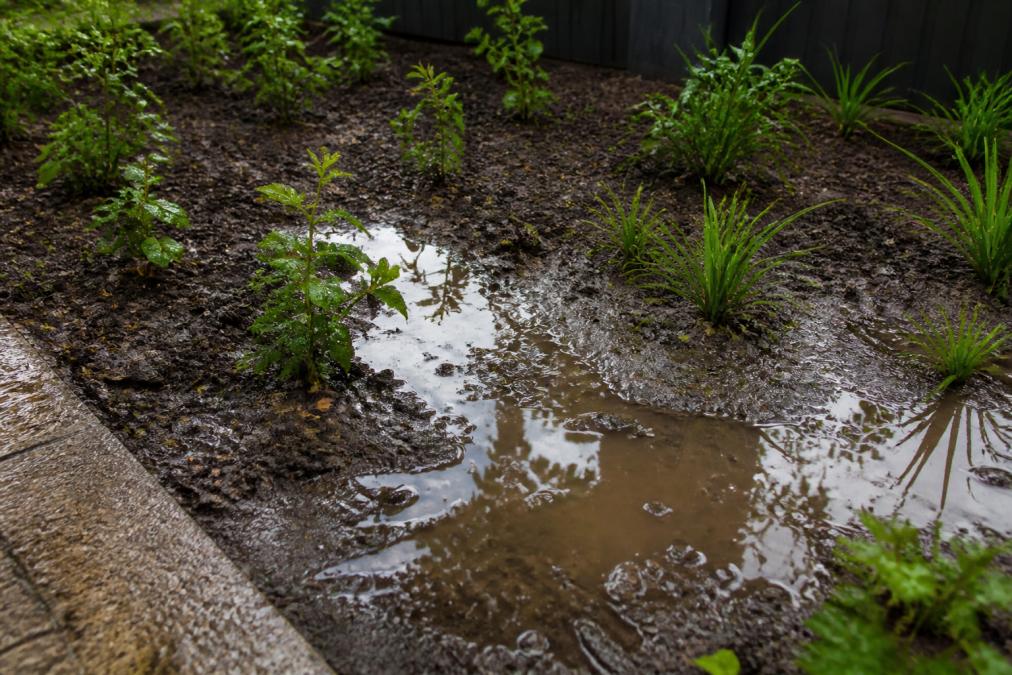
Common signs of poor drainage
Standing water is the most obvious indicator. If puddles remain hours after rain, your soil isn't absorbing water fast enough. Clay-heavy soil is common in many Sydney properties, it compacts easily and resists water infiltration. You might also notice soft, muddy patches that never dry out, or grass yellowing despite regular watering.
Foundation issues often follow poor drainage. Water pooling against your home's perimeter creates hydrostatic pressure that can cause seepage into basements or crawl spaces. Cracks in your foundation, efflorescence (white mineral deposits), or musty smells in lower levels indicate water saturation in surrounding soil.
Erosion is another red flag. If soil washes away from garden beds or topsoil disappears after heavy rain, surface runoff is moving too quickly. This typically means your grading is too flat or sloped in the wrong direction.
Pinpointing water pooling and saturation
Walk your property after rain and note where water collects. Check soil saturation by digging a small test hole in a problem area. If the hole fills with water and drains slowly, you have subsurface saturation. If water pools on the surface immediately, you have a surface runoff issue.
Observe how water moves across your property. Does it flow toward your house or away from it? Does it collect in specific low spots, or is the entire yard waterlogged? Understanding the water's path tells you whether you need grading adjustments, surface drainage solutions like swales or dry creek beds, or subsurface systems like French drains and agricultural pipe.
Assess Grading and Slope Correction
Grading is foundational to any drainage solution. Your property's slope determines whether water moves away from structures or pools against them. Most building codes require a minimum slope of 1:20 (a 1-metre drop over every 20 metres of horizontal distance) sloping away from buildings, though steeper grades improve drainage significantly.
How slope affects surface runoff
A properly graded property naturally directs surface runoff away from the house and toward designated drainage areas. If your grading is flat or slopes toward your home, water has nowhere to go except into the soil beneath your foundation.
Fixing grading means regrading the soil around your property through excavation to raise soil level near the house and lower it further away, creating a gentle slope. The scope depends on your property size and the degree of slope correction needed. Slope correction also improves the effectiveness of other drainage solutions, a French drain or swale installed on flat ground won't work as well as one where gravity helps water move through the system.
Install French Drains and Subsurface Drainage
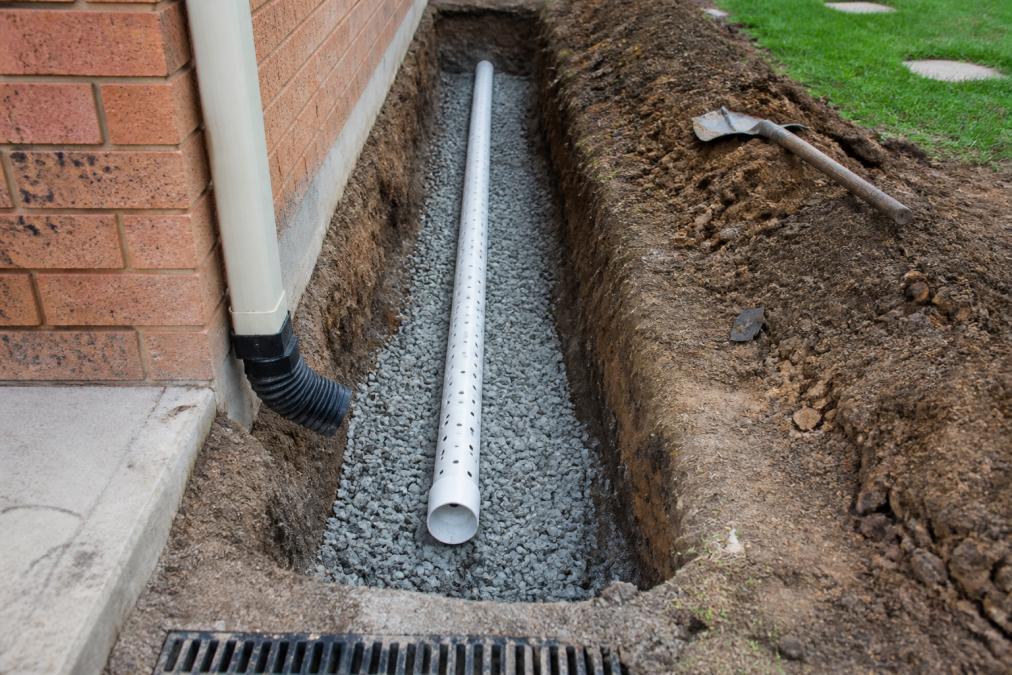
A French drain is a gravel-filled trench containing perforated pipe that intercepts groundwater and redirects it away from problem areas. It's one of the most effective solutions for managing subsurface saturation and hydrostatic pressure around foundations.
Materials and installation steps
You'll need perforated drainage pipe (typically 100mm diameter), landscape fabric, gravel, and soil for backfilling. The pipe sits in a bed of gravel wrapped in landscape fabric to prevent soil from clogging the perforations.
Installation begins with excavation. Dig a trench at least 600mm deep, sloped gently downhill toward your drainage outlet. The slope should be at least 1:100 to ensure water flows through the system. Place gravel in the trench bottom, lay the perforated pipe on top, wrap the entire system in landscape fabric, and backfill with more gravel. Top with soil and plant as needed.
The critical detail is the outlet. Your French drain must discharge somewhere, a stormwater outlet, a lower part of your property, a dry creek bed, or a rain garden. Without a functioning outlet, the system will eventually saturate and fail.
For properties in areas like Castle Hill, Bella Vista, or Box Hill where clay soil is prevalent, French drains are often essential. The subsurface system bypasses the soil's poor drainage characteristics entirely.
Installing Ag Pipe for Landscape Drainage
Agricultural pipe, or ag pipe, is perforated plastic pipe designed for subsurface drainage. It's similar to French drain pipe but often used in larger-scale applications or as part of integrated drainage systems combining surface and subsurface solutions.
Perforated pipe layout and gravel backfill
Ag pipe typically comes in 100mm or 150mm diameters. The perforations allow water to enter the pipe while the solid core directs it downslope. Layout depends on your property's topography and the problem you're solving.
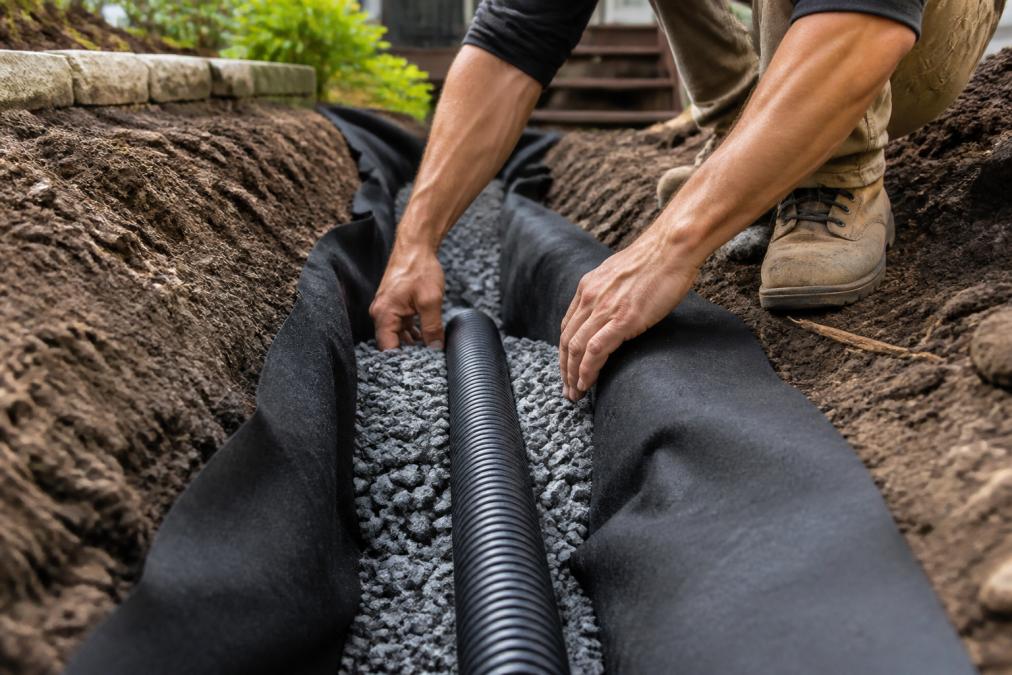
Installation mirrors French drains. Excavate to the required depth and slope, bed the pipe in gravel, wrap with landscape fabric, and backfill. The landscape fabric is crucial, it prevents soil particles from entering the perforations and reducing flow capacity. Gravel backfill should extend at least 300mm above the pipe to ensure adequate water infiltration. Coarse gravel (20-40mm) works better than fine gravel because it maintains void space and allows water to move freely.
The ag pipe must slope continuously toward its outlet. Any low spots or reversals in slope will trap water and reduce system effectiveness. This is where professional installation or careful surveying becomes important.
Retaining Wall Drainage Requirements
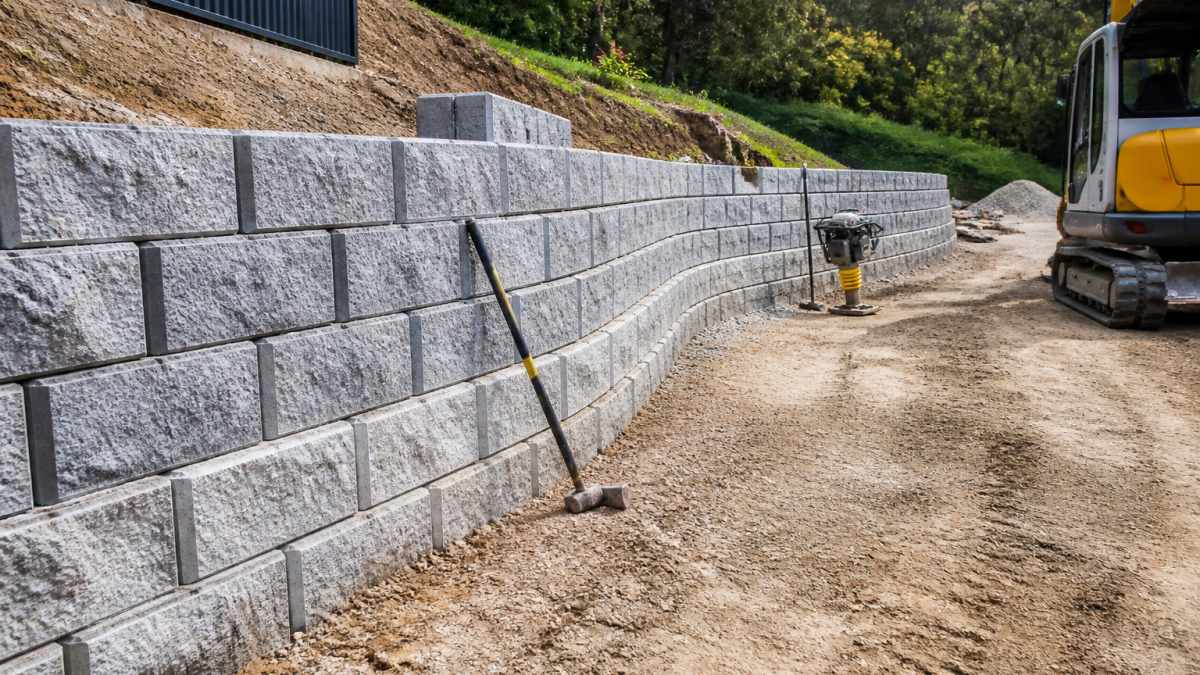
Retaining walls, whether timber, concrete, or modular blocks, must manage water pressure from soil behind them. Without proper drainage, hydrostatic pressure builds up, pushing against the wall and potentially causing failure.
Weepholes, landscape fabric and hydrostatic pressure management
Weepholes are small openings (typically 100mm diameter) placed near the base of a retaining wall to allow water to escape. They're essential for any wall more than 1 metre high, spaced roughly 1.5 metres apart horizontally and positioned at the lowest point so water can drain freely.
Behind the wall, landscape fabric separates the soil from a gravel drainage zone extending from the base up to at least 300mm below the top. Water percolates through the soil, hits the landscape fabric, and flows downward through the gravel to the weepholes. Without this system, water saturates the soil behind the wall, and hydrostatic pressure builds until the wall fails.
For walls built on clay soil or in areas prone to saturation, consider installing perforated pipe behind the wall in addition to weepholes and gravel. This actively directs water downslope rather than relying on passive drainage.
Australian Standards for retaining walls (AS 4678) outline drainage requirements based on wall height, soil type, and site conditions. Requirements vary depending on whether the wall is in a residential garden or commercial application, and whether it's retaining native soil or fill material. Professional design ensures your wall meets these standards.
Landscape Drainage Solutions: Swales, Rain Gardens and Dry Creek Beds
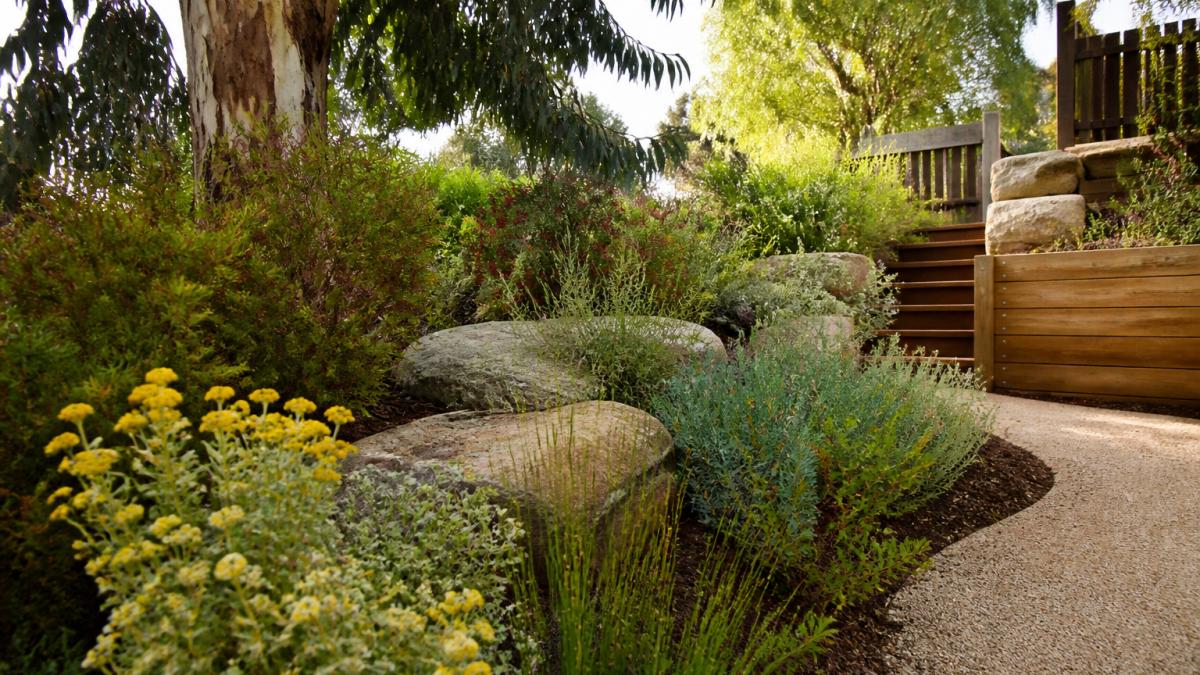
Surface drainage solutions work with your property's natural slope to guide water away from problem areas. These are often more aesthetically pleasing than buried pipes and can add landscape character while solving drainage issues.
Choosing the right solution for your site
A swale is a shallow, vegetated channel that directs water downslope. It's wider and shallower than a traditional ditch, typically 1-2 metres wide and 300-600mm deep. Swales slow water movement, allowing infiltration into the soil, which reduces erosion and filters runoff.
Dry creek beds serve a similar function but are lined with stone and gravel instead of soil and plants. They're designed to look like a natural watercourse that flows only during heavy rain and handle higher water volumes than swales.
Rain gardens are planted depressions that capture and filter stormwater runoff. They're typically 100-300mm deep and planted with water-tolerant species. Rain gardens slow runoff, reduce peak flows to stormwater systems, and filter pollutants before water infiltrates the soil.
The right choice depends on your slope, soil type, and aesthetic preferences. Steep properties benefit from swales or dry creek beds that handle fast-moving water. Flatter properties work better with rain gardens that allow water to pool temporarily. Properties in Rouse Hill, Glenhaven, and other Hills District areas with varied topography often benefit from combined solutions, a swale directing water to a rain garden, or a dry creek bed feeding into a planted depression that filters before final discharge.
Manage Downspouts and Extend Drainage Away from Foundations
Your gutters and downspouts are the first line of drainage defence. Water flowing off your roof must be directed well away from the house, not onto adjacent soil where it will saturate the ground near your foundation.
Standard downspout extensions should carry water at least 1.5-2 metres away from the house. This distance prevents water from pooling directly against the foundation or percolating into soil immediately beneath it. For properties with poor drainage or clay soil, extending further, 3 metres or more, provides additional protection.
Options range from simple rigid extensions attached to the downspout to underground systems that carry water to a designated drainage point. Ensure downspout discharge points toward your drainage solution, not toward a neighbour's property or a low spot that creates a new problem elsewhere.
DIY vs. Professional Drainage Work
Some drainage fixes are straightforward enough for a motivated homeowner. Others require professional expertise, equipment, and site knowledge that only comes with experience.
When to handle it yourself and when to call an expert
Simple grading adjustments and raking soil to improve slope around a garden bed are manageable DIY work. Installing a small rain garden in a low-lying area is also feasible if you're comfortable with basic excavation and planting.
French drains and ag pipe systems require more precision. You need to establish accurate slope, ensure proper backfill and compaction, and connect to a functioning outlet. Getting any of these wrong means the system fails silently over time.
Retaining wall drainage is definitely professional territory. Walls require engineering calculations to ensure they're designed for the soil and water conditions on your site. Improper drainage behind a wall leads to structural failure, a costly and potentially dangerous outcome.
For properties with complex drainage challenges, multiple problem areas, difficult site access, significant grading changes, or integration with existing structures, professional assessment and installation is the safest approach. Professional work also handles permits and compliance. Some councils require approval for significant grading changes, stormwater system modifications, or retaining walls.
Drainage problems don't resolve themselves, they worsen over time as water continues to saturate soil, damage foundations, and erode your landscape. Identifying the source, assessing your property's grading, and implementing the right solution protects your home and creates a healthier outdoor environment.
Whether you're managing surface runoff with a swale, installing subsurface drainage with French drains or ag pipe, or fixing grading around your foundation, the key is matching the solution to your site's specific conditions. FDSS Landscaping Services specialises in landscape design and construction that solves drainage challenges while enhancing your outdoor space. We handle everything from initial site assessment through design, excavation, and completion, working with you to create a drainage system that works reliably for years to come. Contact FDSS Landscaping Services for a professional assessment and quote tailored to your property's drainage needs.
Frequently Asked Questions
What are the most common signs of poor drainage in a garden?
Water pooling in low spots after rain, soil saturation that persists for days, yellowing or dying plants, and foundation dampness are all indicators. Poor drainage often causes erosion, muddy patches and a soggy feel underfoot. If your garden stays waterlogged long after rainfall, subsurface drainage or grading correction is likely needed to fix drainage problems and protect your landscape investment.
When should I consult a professional for drainage issues?
Consult a professional if water is pooling near your house foundation, if you have structural retaining walls involved, if the drainage problem spans a large area, or if you're unsure about excavation depth and slope requirements. Professionals can assess topography, identify groundwater issues, and design solutions like French drains or ag pipe installations. Complex drainage work often requires proper permitting and engineering oversight to ensure compliance with local council regulations.
What is the role of retaining walls in managing water runoff?
Retaining walls affect how surface runoff flows across your property and how hydrostatic pressure builds behind the wall. Proper retaining wall drainage requires weepholes, landscape fabric, and perforated pipe to prevent water saturation and structural damage. Without adequate drainage behind a retaining wall, soil pressure increases, risking failure. Retaining wall drainage requirements depend on site conditions, soil type, and local building standards, so professional assessment is often essential.
What materials do I need to install an agricultural pipe drainage system?
Installing ag pipe requires perforated agricultural pipe (typically 100mm diameter for residential work), landscape fabric, gravel backfill (usually 20-40mm), a catch basin or stormwater outlet, and trenching tools. The perforated pipe collects groundwater and subsurface runoff, while the gravel and fabric prevent soil clogging. Proper installation depth and slope toward an outlet are critical for the system to work effectively and prevent water pooling in your landscape.