 how-to
Choosing the Right Mulch for Sydney Soil Conditions
Table of Contents
- Why Mulch Matters for Sydney Gardens
- Understanding Sydney's Soil Types and Mulch Selection
- Organic Mulch Types for Your Garden
- Inorganic Mulch Options and When to Use Them
- Best Mulch for Clay Soil in Your Garden
- Getting Mulch Depth Requirements Right
- Step-by-Step Guide to Applying Mulch Correctly
- Fire Safety and Mulch Selection
- Frequently Asked Questions
Last Updated: October 3, 2026
Why Mulch Matters for Sydney Gardens
Mulch is one of the simplest yet most effective tools in garden maintenance, and selecting the right mulch for Sydney soil is essential to garden success.
The challenge is that Sydney doesn't have just one soil type. Clay-heavy soils dominate the Hills District and North-West Sydney, while sandy and mixed soils appear elsewhere across Greater Sydney. Each soil type responds differently to mulch. Apply the wrong mulch to clay soil, and you can trap moisture and create problems.
At FDSS Landscaping Services, we help homeowners and builders select mulch that works with their specific soil profile, not against it. This guide walks you through the main soil types, the mulch options available, and how to apply them correctly for maximum benefit.
Understanding Sydney's Soil Types and Mulch Selection
Your soil type determines which mulch works best. Sydney's soils fall into a few broad categories, and each has different drainage, nutrient, and structural characteristics.
Clay-heavy soils in the Hills District and North-West Sydney
Clay soil holds water. It's dense, slow-draining, and can become compacted easily. If you live in areas like Castle Hill, Baulkham Hills, Bella Vista, Rouse Hill, or Box Hill, you're likely working with clay-dominant soil.
With clay, your mulch strategy needs to improve drainage and prevent crusting. Organic mulches break down and add structure to clay, helping water move through the soil. Bark mulch and tree-lopper mulch are excellent choices because they're chunky and create air pockets. Sugar cane and lucerne mulch also work well, they decompose faster than bark, which means more organic matter gets into the soil to improve its structure.
What you want to avoid with clay is thick, compacted layers of fine mulch that can seal the surface and prevent water from soaking in. Heavy inorganic mulches like pebbles can also trap heat and moisture, making clay problems worse.
Sandy and mixed soils
Sandy soils drain quickly and warm up fast. They don't hold water or nutrients well. Mixed soils sit somewhere in between, they might be sandy in one area and clayey in another.
With sandy soil, your mulch job is different. You're trying to retain moisture and build soil structure. Organic mulches are essential here. They break down and add organic matter, which helps sandy soil hold water and nutrients better. Sugar cane and lucerne mulch are particularly useful because they decompose relatively quickly, feeding the soil as they break down. Straw mulch also works for vegetable gardens on sandy soils because it improves water retention.
Inorganic options like pebbles and decomposed granite can work on sandy soils, but they don't improve soil health. Use them mainly for appearance and erosion control, not as your primary mulch.
Organic Mulch Types for Your Garden
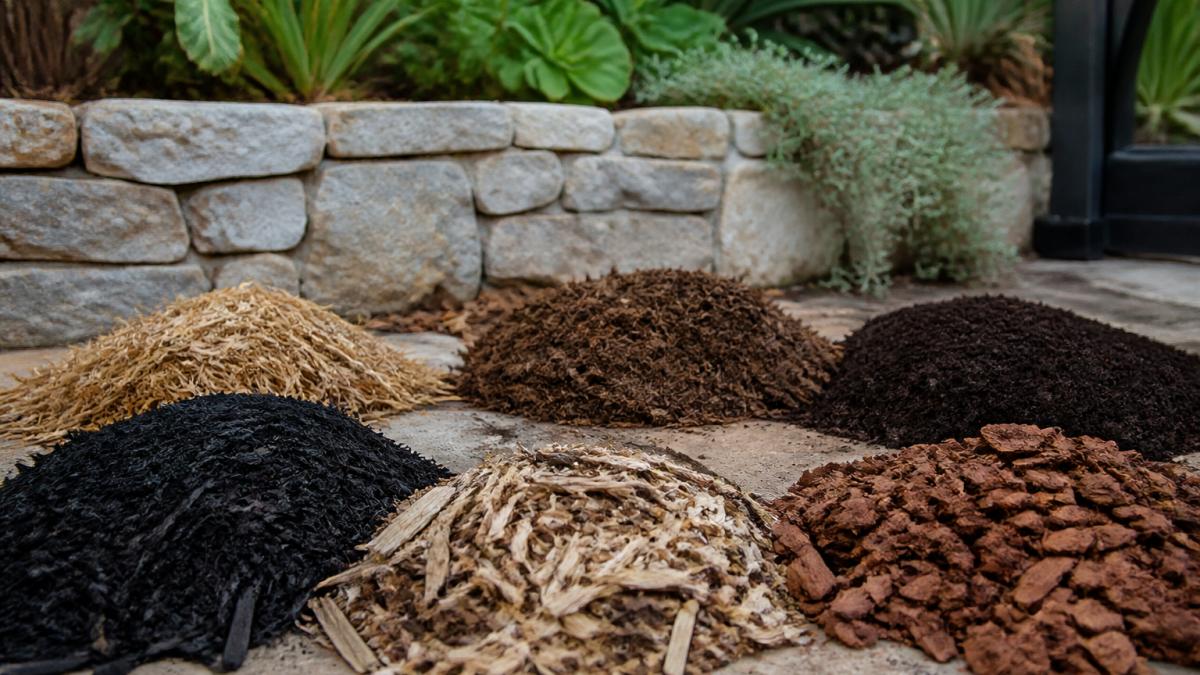
Organic mulches are made from plant material. They break down over time, adding organic matter to your soil and supporting soil microbes. This nutrient cycling improves soil health gradually.
Bark mulch and tree-lopper mulch
Bark mulch comes from processed tree bark. Tree-lopper mulch is fresh mulch from tree-lopping contractors, it's chunkier and coarser than commercial bark.
Both are excellent for clay soils because they don't compact. They create air spaces in the mulch layer, which helps water infiltrate. They also take months to break down, so you're not constantly reapplying. The downside is that they don't add much nutrition to the soil immediately, though over time they do contribute to organic matter.
Tree-lopper mulch is often cheaper because it's fresher and less processed. It's ideal if you're mulching large areas and don't mind the rougher appearance.
Sugar cane and lucerne mulch
Sugar cane mulch (also called bagasse) is a by-product of sugar processing. Lucerne mulch is dried lucerne hay. Both are lighter in colour than bark and break down faster.
These mulches are great for vegetable gardens and for soils that need organic matter quickly. They're particularly useful on sandy soils because they decompose and add structure. On clay soils, they help too, though you'll need to reapply more frequently as they break down.
The trade-off is that they decompose faster, so you're replenishing more often. They're also lighter and can blow around in wind, so they work better in sheltered gardens or mixed beds.
Straw mulch for vegetable gardens
Straw is dried grass stalks left over from grain harvesting. It's light, cheap, and breaks down fairly quickly.
Straw works well for vegetable gardens, especially on sandy soils where moisture retention matters. It's less suitable for ornamental gardens because it looks rough and can contain weed seeds. Make sure you're buying straw, not hay, hay contains seeds and will introduce weeds.
Inorganic Mulch Options and When to Use Them
Inorganic mulches don't break down. They don't add organic matter or support soil microbes. What they do is reduce evaporation, suppress weeds, and manage heat.
Decomposed granite and pebbles
Decomposed granite is crushed granite that looks like coarse sand. Pebbles are small stones, usually rounded.
Both suppress weeds effectively and look clean in ornamental gardens. They don't break down, so they last longer than organic mulches. Decomposed granite drains well and works on any soil type without changing soil structure. Pebbles are durable and come in various colours.
The downside is that they don't improve soil health. They also absorb and reflect heat, which can stress plants in hot summers. On clay soils, they can trap moisture underneath if the layer is too thick.
Hydromulch for erosion control
Hydromulch is a sprayed mixture of water, tackifier, and fibres. It's applied by specialist contractors and hardens to protect soil from erosion.
Hydromulch is ideal for slopes, new landscaping, and areas prone to washout. It's not a permanent solution, it breaks down over months, but it protects soil while plants establish. It's commonly used on construction sites and steep garden beds.
Best Mulch for Clay Soil in Your Garden
Clay soil needs mulch that improves drainage and adds structure. Your best options are:
- Bark mulch or tree-lopper mulch - chunky, doesn't compact, takes months to break down
- Sugar cane mulch - breaks down faster, adds organic matter, improves soil structure
- Lucerne mulch - similar benefits to sugar cane, slightly more nitrogen-rich
Avoid fine, compacted mulches and heavy inorganic options on clay. They trap moisture and prevent water movement.
If your garden is in the Hills District or North-West Sydney and you're working with clay, start with bark or tree-lopper mulch as your base layer. Top it with sugar cane or lucerne if you want faster organic matter buildup. Reapply annually or as needed to maintain depth.
Getting Mulch Depth Requirements Right
Mulch depth matters. Too little and it won't suppress weeds or retain moisture.
For most gardens, aim for 50-75 mm of mulch for Sydney soil depth. This is enough to suppress weeds, reduce evaporation, and moderate soil temperature without creating problems.
In clay soils, stay at the lower end (50 mm) to avoid moisture trapping. On sandy soils, go toward the higher end (75 mm) to improve water retention.
Around tree trunks and shrub bases, keep mulch 100 mm away from the stem. Mulch touching the trunk can rot bark and invite pests. Create a small mulch-free zone around each plant.
Mulch breaks down and settles over time. Plan to top up annually, especially with faster-decomposing mulches like sugar cane. A maintenance schedule keeps your mulch effective and your garden looking established.
Step-by-Step Guide to Applying Mulch Correctly
Applying mulch properly makes a real difference. Done wrong, it can do more harm than good.
Prepare your garden bed
Start with a clean, weed-free bed. Remove existing weeds and dead plant material. If the soil is hard or compacted, loosen the top 50-75 mm with a garden fork. This helps water move into the soil after mulching.
Edge your beds clearly so mulch doesn't spread onto lawn or paving. A clean edge also makes the garden look intentional and finished.
Install weed barrier if needed
Weed barrier (landscape fabric) sits under mulch and blocks weeds from growing through. It's optional but helpful in problem areas.
Lay the fabric flat, overlapping seams by 150 mm. Cut holes for existing plants. Weed barrier works best under inorganic mulches. Under organic mulches, it can trap moisture, so use it selectively on clay soils.
Spread and level your mulch
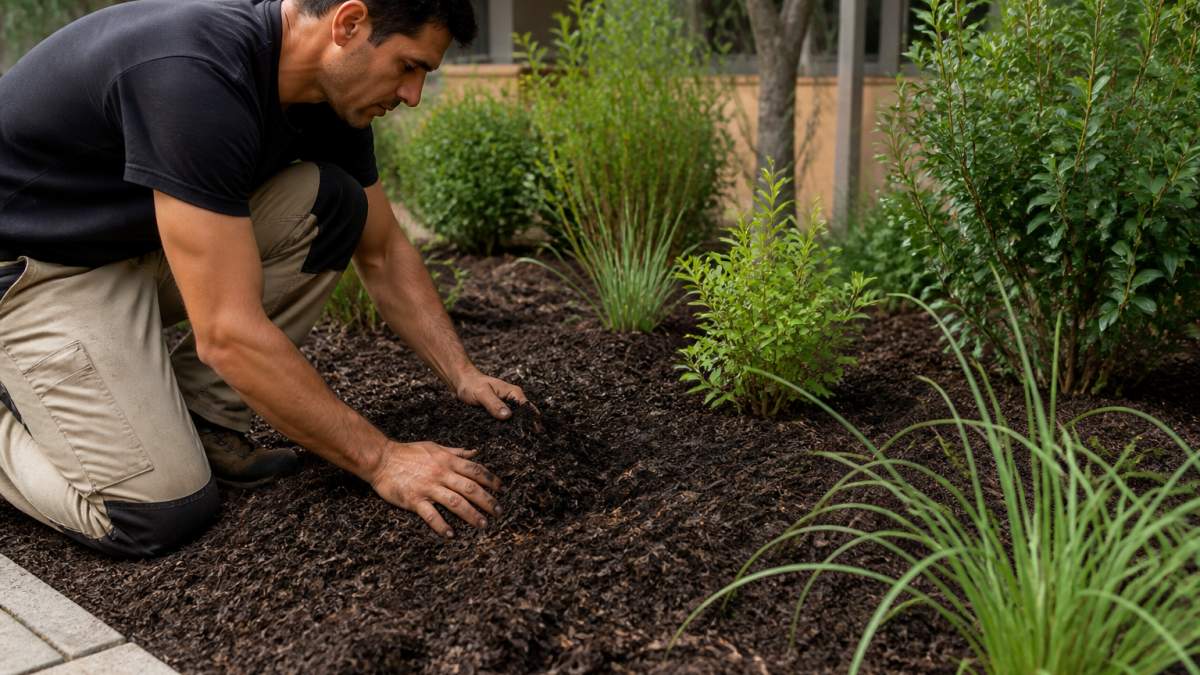
Spread your mulch to an even depth. Use a rake to level it. Aim for 50-75 mm across the bed.
Work around plant bases, keeping mulch 100 mm clear of trunks and stems. Don't pile mulch against plants, it invites rot and pest damage.
Maintain and replenish seasonally
Mulch breaks down. Monitor depth monthly and top up as needed. In Sydney, spring and autumn are ideal times to refresh mulch, growth is active and you're preparing for seasonal changes.
Watch for mulch compaction, especially after rain. If the surface crusts over, gently rake it to restore air pockets.
| Mulch Type | Breakdown Rate | Reapply Frequency | Best for |
|---|---|---|---|
| Bark mulch | Slow (6-12 months) | Annually | Clay soils, ornamental gardens |
| Tree-lopper mulch | Slow (6-12 months) | Annually | Large areas, budget-conscious |
| Sugar cane mulch | Fast (3-6 months) | Every 6 months | Vegetable gardens, organic matter |
| Lucerne mulch | Fast (3-6 months) | Every 6 months | Nutrient-poor soils, veg gardens |
| Straw | Fast (2-4 months) | Every 3-4 months | Temporary cover, veg gardens |
| Decomposed granite | None (permanent) | Top up as needed | Ornamental gardens, drainage |
| Pebbles | None (permanent) | Top up as needed | Modern gardens, low maintenance |
Fire Safety and Mulch Selection
In Sydney, fire safety is a real consideration. Mulch can fuel fires if it's too close to structures or if it's dry and loose.
The NSW RFS guidelines on vegetation management recommend keeping mulch at least 1 metre away from building walls and gutters. Use mulch that's less flammable, avoid fine, dry mulches in high-risk areas.
Inorganic mulches like pebbles and decomposed granite are non-flammable and are a sensible choice if your property is in a bushfire-prone area.
For properties in the Hills District, Penrith, Blacktown, or other elevated areas, check your local council's bushfire management guidelines] and adjust your mulching strategy accordingly. Some councils have specific requirements for vegetation and mulch placement.
Choosing the right mulch for your soil is one of the most practical decisions you'll make in garden maintenance.
If you're planning a garden renovation or new landscaping project in the Hills District or North-West Sydney, mulch selection is just one part of the picture. Professional landscape design considers soil, drainage, plant selection, and long-term maintenance together. If you'd like to discuss your garden project and how to get the mulching strategy right, request a landscaping quote from FDSS Landscaping Services today.
Frequently Asked Questions
What is the best type of mulch for gardens in Sydney?
The best mulch for Sydney depends on your soil type and garden goals. For clay-heavy soils common in the Hills District, organic mulches like bark or sugar cane improve drainage and soil microbes. For vegetable gardens, straw or lucerne add nutrients as they break down. Inorganic options like decomposed granite suit low-maintenance native plantings. Choose based on your soil's water retention needs and the plants you're growing.
What is the best mulch for clay soil?
Organic mulches work best for clay soil because they improve aeration and prevent crusting and cracking. Bark mulch, tree-lopper mulch, and sugar cane are excellent choices, they break down gradually, increasing organic matter and supporting soil health. These materials also reduce evaporation while allowing water to penetrate compacted clay. Avoid piling mulch against plant stems, as clay combined with excess moisture can cause rot.
How deep should mulch be applied?
Apply mulch 50-75 millimetres deep for most gardens. This depth provides effective weed suppression and moisture retention without suffocating soil microbes or causing stem rot. For vegetable gardens, 40-50 millimetres is sufficient. Avoid piling mulch against tree trunks or plant crowns. In high-traffic areas or on slopes, thicker mulch may settle faster, so plan for seasonal top-ups.
Should I remove old mulch before applying new mulch?
Not always. If old mulch is still intact and not compacted, you can add a fresh 25-40 millimetre layer on top. However, if it's broken down into a dense mat, remove it first to prevent crusting and allow water penetration. In clay soils, removing old mulch helps reset the growing environment and prevents moisture problems. Check for weed seeds or pest issues before deciding to retain old mulch.