 how-to
Replacing Lawn with Low Maintenance Ground Cover Plants
Table of Contents
- Why Replace Lawn with Low Maintenance Ground Cover Plants
- How to Remove Your Lawn: Step-by-Step Methods
- Soil Preparation for Garden Beds Before Planting
- Drought Tolerant Ground Covers for Sydney Gardens
- Native vs Non-Native Ground Cover Plants
- Landscape Design for Low Maintenance Gardens
- Maintenance Schedules and Common Mistakes to Avoid
- Frequently Asked Questions
Last Updated: September 30, 2026
Why Replace Lawn with Low Maintenance Ground Cover Plants
Replacing lawn with low maintenance ground cover plants is one of the most practical ways to cut weekend mowing, reduce water use, and still keep a green, finished garden. This guide from FDSS Landscaping Services covers removal methods, soil prep, plant choices, and long-term care.
The benefits stack up quickly:
- Less mowing, edging, and fuel use
- Lower watering needs once plants settle in
- Better weed suppression through dense growth
- Fewer bare patches and less erosion on slopes
- More texture, colour, and pollinator value
How to Remove Your Lawn: Step-by-Step Methods
The best lawn removal method depends on how much lawn you have, how quickly you want to replant, and how tough the existing grass is. Kikuyu and couch are the most common lawns in the Hills District and both regrow from small runners left in the soil, so your method has to deal with roots, not just the green top.
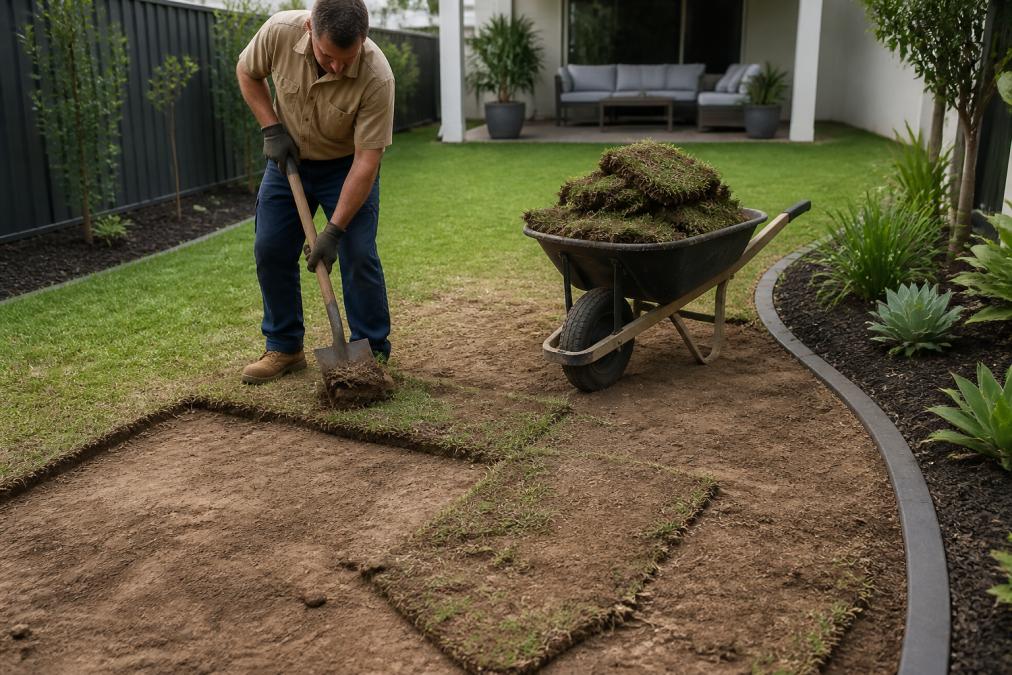
Here is how the main options compare in practice.
1. Manual removal (dig or strip)
Cut the lawn into strips about 30 cm wide with a spade or turf iron, lift each strip, and shake the soil back onto the bed. Best for small areas under about 20 square metres where you want to replant within days. Any runner fragments left behind will shoot again, so fork through the top 10 cm afterwards and pick out roots by hand.
2. Turf cutter hire
A powered turf cutter slices and rolls the lawn in one pass and is the fastest option for large yards. It removes the top 2 to 3 cm, taking most runners but leaving bare, compacted soil that must be covered or planted quickly to stop weeds. It struggles on steep or uneven ground, so sloped blocks around Glenhaven and Box Hill often still need hand work on the edges.
3. Sheet mulching (smothering)
Lay plain cardboard over the lawn with overlaps of at least 15 cm, wet it thoroughly, then top with 10 to 15 cm of compost and mulch. The lawn dies from lack of light over roughly six to eight weeks in warm weather, longer in winter. It is the lowest-effort method for most home gardens and builds organic matter as it breaks down.
4. Soil solarisation
Cover moist ground with clear plastic, seal the edges with soil or bricks, and leave it for four to six weeks of hot sun. Heat builds under the plastic and kills grass and shallow weed seeds. It works best in full sun over summer and is unreliable in shade or cool months; black plastic heats faster but blocks the light that helps cook the top layer.
5. Herbicide then replant
Used carefully and strictly per label directions, a non-residual herbicide clears tough weeds before planting. It is the fastest way to deal with established kikuyu, but you must wait out the recommended withholding period before planting, and it does nothing for seed already in the soil. If unsure, get advice rather than guessing.
Which method to choose
| Situation | Best method | Time to replant |
|---|---|---|
| Small bed, quick turnaround | Manual removal | Days |
| Large flat yard | Turf cutter | Days, with soil prep |
| Low effort, happy to wait | Sheet mulching | 6 to 8 weeks |
| Full sun, summer, open bed | Solarisation | 4 to 6 weeks |
| Heavy kikuyu or couch | Herbicide then replant | Per label directions |
Whichever method you choose, the goal is the same: no living runners and no viable seed left near the surface. Miss that step and you will be pulling grass out of your new ground cover for a year.
Sheet Mulching and Soil Solarisation in Detail
Sheet mulching is the lowest-effort method for most home gardens and builds organic matter as it breaks down. Layer plain cardboard with overlaps of at least 15 cm, wet it, then add 10 to 15 cm of compost and mulch. Wait six to eight weeks before planting through it, cutting a small hole and setting the seedling into the compost beneath.
What to Do With the Removed Turf
Stripped turf is not waste. Stack it upside down in a corner, cover it with a tarp, and let it break down over a few months, the result is a decent soil conditioner for garden beds. For larger renovations, turf is heavy and bulky, so plan the skip size before you start cutting.
Soil Preparation for Garden Beds Before Planting
Good soil preparation for garden beds is the difference between ground cover that fills in within a season and plants that sit still for a year. Test drainage and texture before buying a single plant.
Start with these steps:
- Check drainage. Dig a 30 cm hole, fill with water, and see how fast it drains. Slow drainage means you need to improve structure or build up the bed.
- Test pH. A simple kit tells you if soil is acidic, neutral, or alkaline. Most ground covers prefer neutral to slightly acidic soil.
- Break up compaction. Fork the top 20 to 30 cm so roots and water can move.
- Add organic matter. Dig through compost or aged manure to feed soil life and hold moisture.
- Level and firm. Rake level, then firm gently so plants sit at the right depth.
Drought Tolerant Ground Covers for Sydney Gardens
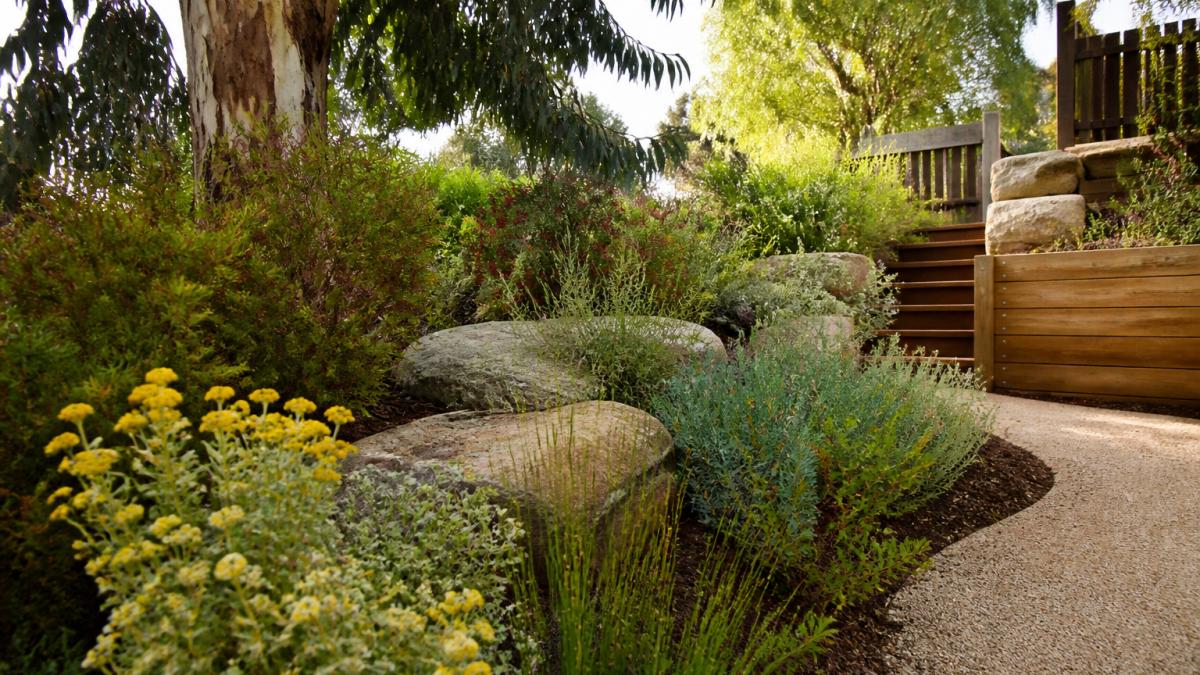
Drought tolerant ground covers Sydney gardens rely on are the ones that survive hot, dry spells once established. The trick is matching the plant to your light, soil, and foot traffic.
Some proven performers for local conditions:
- Native violet for shaded, moist spots
- Myoporum for sunny slopes and erosion control
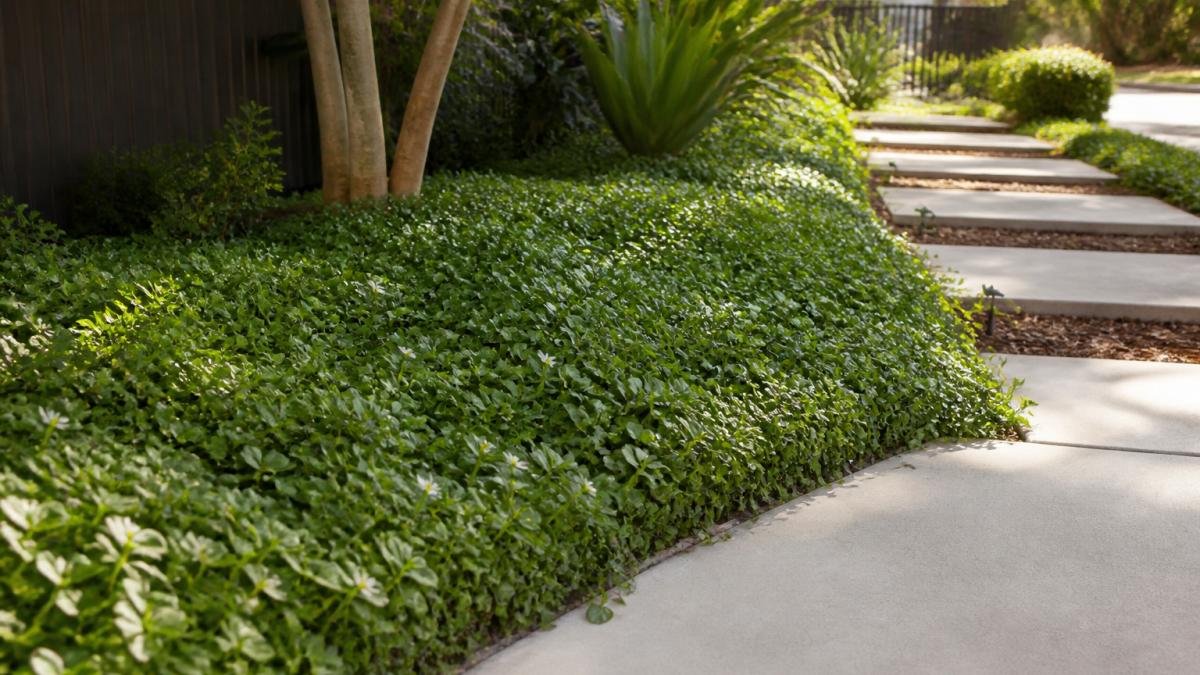
- Dichondra for a soft, lawn-like finish
- Grevillea ground covers for colour and bird life
- Lomandra for tough, strappy texture in sun or part shade
Full Sun, Partial Shade and Foot Traffic Picks
Match the plant to the spot and you halve the maintenance. Use this as a starting guide:
| Condition | Good Picks | Notes |
|---|---|---|
| Full sun | Myoporum, Lomandra, Grevillea | Handle heat and wind |
| Partial shade | Native violet, Dichondra | Keep soil moist |
| Heavy foot traffic | Dichondra, low Lomandra | Tougher, recovers well |
| Slopes and erosion | Myoporum, Grevillea | Deep, binding roots |
| Under trees | Native violet | Tolerates dry shade |
Native vs Non-Native Ground Cover Plants
Native ground covers generally suit local conditions better and support birds, bees, and butterflies. Non-natives can work well too, but check they are not known invaders in your area.
Landscape Design for Low Maintenance Gardens
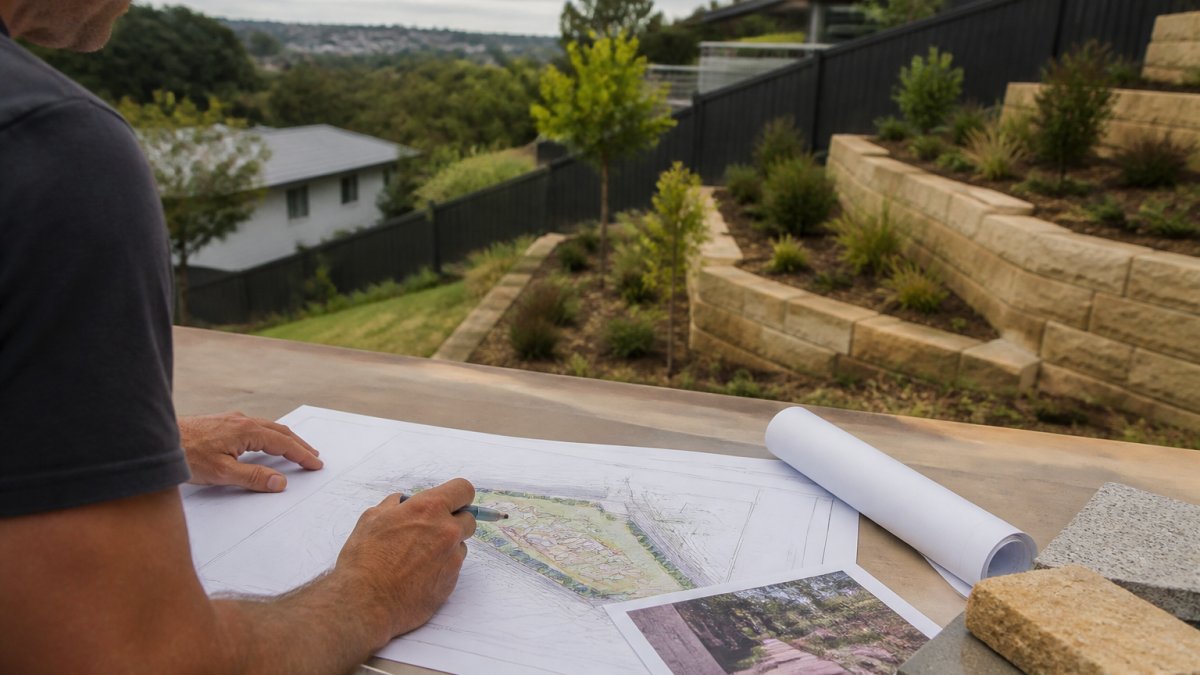
Landscape design for low maintenance gardens starts with the layout, not the plant list. Get the structure right and the garden almost looks after itself.
Design moves that cut ongoing work:
- Group plants by water and light needs so you water less
- Use paving, mulch, and gravel to shrink planted areas
- Add hardscaping for structure that never needs mowing
- Keep beds wide and curves gentle for easier edging
- Plan irrigation on a timer for the first establishment year
Maintenance Schedules and Common Mistakes to Avoid
A realistic maintenance schedule keeps ground cover looking full for years, and the honest truth is that the first year is not low maintenance at all. Most of the work happens between planting and the point where the plants close over and crowd out weeds themselves. After that, the effort drops sharply.
Year one: establishment
Weeks 1 to 4 after planting
- Water deeply two to three times a week in warm weather, less in cool weather. Deep watering pushes roots down; light daily watering keeps them shallow and weak.
- Hand-weed the gaps weekly, the ground cover is not dense enough yet to suppress anything on its own.
- Replace any losses straight away so the bed fills evenly.
Months 2 to 6
- Stretch watering out to once or twice a week, still deep.
- Top up mulch to keep the 10 to 15 cm depth as it settles.
- Trim any runners that stray over paths or into neighbouring beds.
- Watch for pests and disease while plants are soft and new.
Months 6 to 12
- Water only when the top few centimetres of soil dry out.
- Spot-weed monthly rather than weekly.
- Lightly tip-prune spreading types to encourage denser growth.
Year two onward: the low-maintenance phase
Once ground cover has knitted together, the routine shrinks to a few tasks a year.
- Spring: refresh mulch, check irrigation lines and emitters, trim back any winter growth.
- Summer: deep water during extended dry spells, spot-weed after rain.
- Autumn: the main tidy-up. Cut back overgrowth, remove leaf litter from dense mats, and divide or thin clumping types if they have outgrown their space.
- Winter: minimal work. Check drainage in wet spots and plan any replanting for spring.
Common mistakes to avoid
- Skipping soil prep. Planting into compacted ground stalls growth for a full season and lets weeds win the gaps.
- Planting too far apart. Ground cover only suppresses weeds once it touches. Space plants closer than the label suggests for faster cover.
- Overwatering after establishment. Once roots are down, constant moisture rots crowns and encourages fungal problems.
- Choosing an invasive spreader for a small bed. Fast spreaders need room; in a tight courtyard they become the weed.
- Ignoring drainage. Plants sitting in soggy soil in winter will thin out and die back, no matter how tough the species.
- Letting leaf litter smother the mat. A thick layer of fallen leaves blocks light and creates bare patches underneath.
If you would rather skip the trial and error, a professional install gets the prep and plant selection right the first time, and a properly prepared bed is what makes the low-maintenance promise actually hold up.
Frequently Asked Questions
What are the best low maintenance ground cover plants for Sydney gardens?
Sydney's warm, humid summers and mild winters suit drought tolerant ground covers such as native violet, dichondra, myoporum and lomandra. Match the plant to the spot: full sun positions need heat-hardy species, while partial shade suits ferns and native violet. Check the spread rate and mature height before buying, because vigorous spreaders can overtake small garden beds. Your local council or a landscape designer can confirm which species suit your soil and climate zone.
Do I need council approval to remove my lawn and install ground covers?
In most cases, replacing lawn with low maintenance ground cover plants on private property does not require approval. However, rules vary between councils and can apply if your land is in a bushfire-prone area, a heritage zone, or subject to a vegetation or landscaping condition on your development consent. Check with your local council before you start, especially if you plan to remove mature trees or change drainage. Requirements depend on the site and the relevant authority.
How much water do ground cover plants require compared to turf?
Once established, most drought tolerant ground covers need far less watering than a traditional lawn. Turf typically needs regular deep watering through summer to stay green, while established ground covers can often survive on rainfall alone outside extended dry spells. The establishment period is the thirsty stage: new plantings need consistent moisture for the first few months until their root systems settle in. Adding organic matter and mulch at planting time improves moisture retention and reduces how often you need to water.
Can ground cover plants handle foot traffic in residential areas?
Some can, but tolerance varies widely. Tough options like dichondra and certain native grasses cope with occasional foot traffic, while delicate species such as native violet bruise easily under repeated steps. If a path crosses your garden bed, consider pairing ground covers with paving or stepping stones so traffic follows a defined route. For areas with constant foot traffic, a hardscape surface usually performs better than any plant. Plan the layout around how you actually use the space.
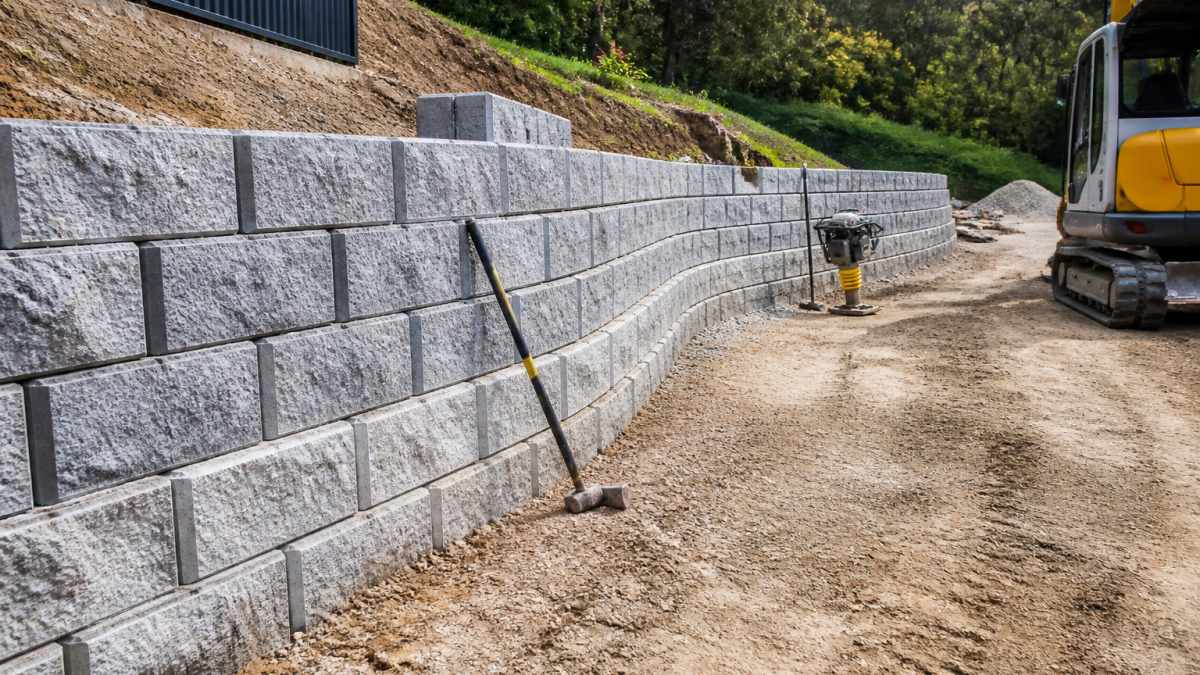
Replacing a lawn is a real project, and the prep work is what makes it last. If you want a low-maintenance garden designed and built properly, FDSS Landscaping Services can help from concept through to completion. We handle landscape design, retaining walls, paving, and garden construction across the Hills District and North-West Sydney. Get started with FDSS Landscaping Services and request a quote for your project.