 listicle
Hardscaping Ideas for Small Backyards in Rouse Hill?
Last Updated: October 30, 2026
Quick Summary
The best hardscaping ideas for small backyards in Rouse Hill divide the space into zones: a seating area, a path linking the house to the garden, and a planted edge. Lighter, large-format pavers with narrow joints make a yard feel bigger, and low retaining walls can double as seating or raised beds.
- Light-coloured pavers reflect more light and tend to make a yard read as bigger.
- Large-format pavers with narrow joints create fewer visual breaks than small, busy patterns.
- Retaining walls of around one metre or less are often the most practical in small gardens.
- Choose plants for their mature size, not the size they are sold at, to avoid overgrown beds.
- Plan drainage before building so water is not redirected onto the house or neighbouring property.
Table of Contents
- Why Small Backyards Need Smart Hardscaping
- Small Backyard Paving Ideas That Make Space Feel Larger
- Small Sloping Backyard Landscaping: Working With the Fall
- Retaining Wall Ideas for Small Gardens
- Low-Maintenance Backyard Landscaping for Busy Homeowners
- Adding Seating and Outdoor Living Without Crowding the Yard
- Planning Drainage and Site Preparation Before You Build
- Booking a Hardscaping Design Consultation for Your Rouse Hill Backyard
- Frequently Asked Questions
Why Small Backyards Need Smart Hardscaping
Small backyards in Rouse Hill often feel cramped because every square metre has to work harder. Hardscaping, the paving, retaining walls, steps and built structures that make up the bones of a garden, is usually what decides whether a compact yard feels liveable or simply crowded. At FDSS Landscaping Services, we consider how the space will be used as part of the design process.
Hardscaping ideas for small backyards in Rouse Hill work best when they divide the space into zones: a place to sit, a path that connects the house to the garden, and a planted edge that softens the boundaries. For a practical guide to designing functional outdoor living areas that suit a compact yard, see functional outdoor living areas.
Small Backyard Paving Ideas That Make Space Feel Larger
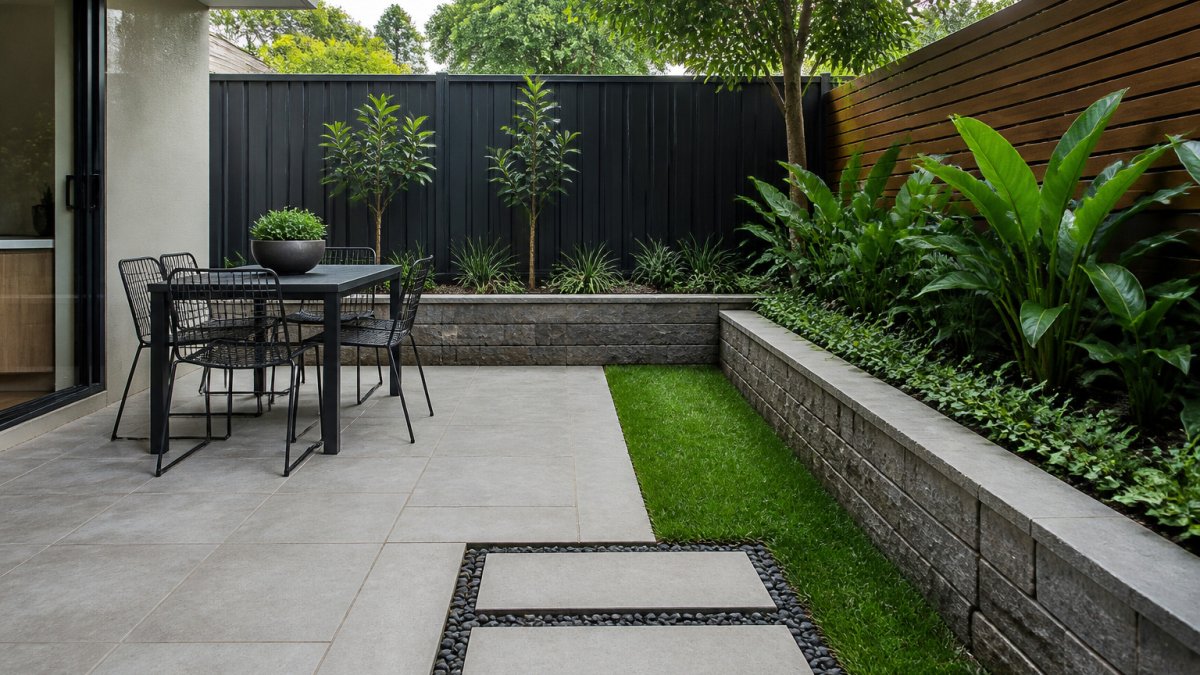
Paving is the most visible part of any small backyard, so colour and pattern choices matter more than they do on a large block. Lighter pavers reflect more light and tend to make a yard read as bigger.
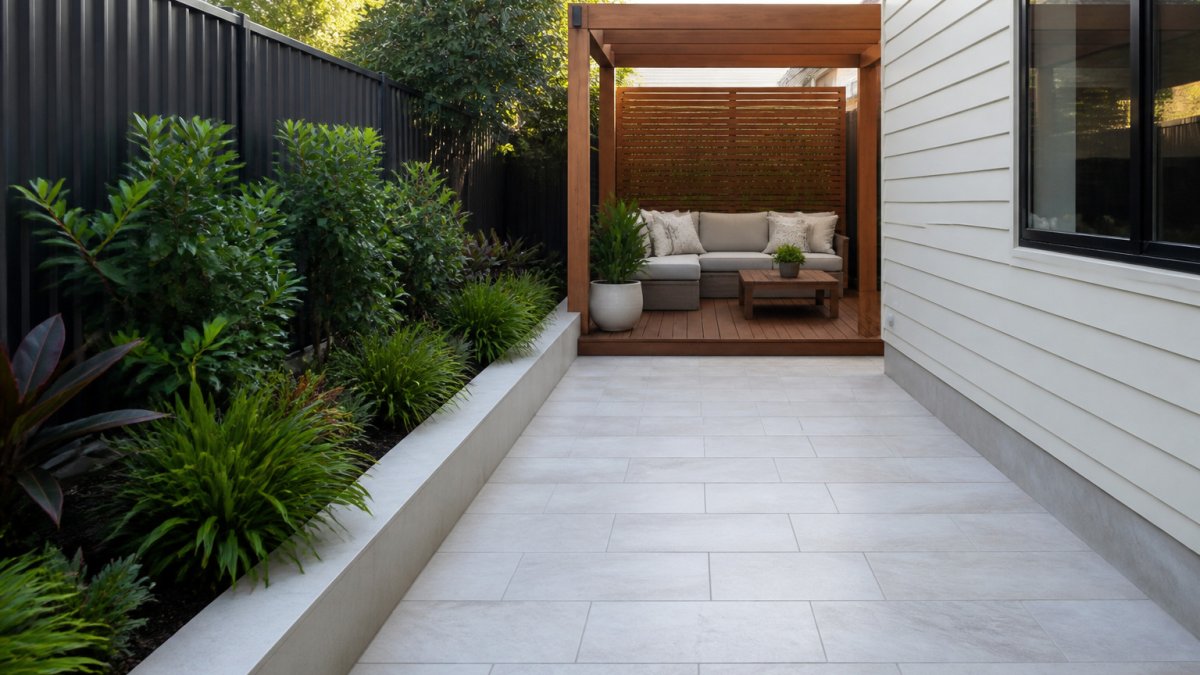
Large-format pavers with narrow joints create fewer visual breaks than small, busy patterns. Where you want a path or a change of zone, a contrasting band of paving can mark the transition without adding clutter. Our paving services cover this kind of layout planning.
The article compares how paving choices affect the feel of a small yard, so the key points are summarised below.
| Paving choice | Effect on space | Note |
|---|---|---|
| Lighter pavers | Reflect more light | Tend to make a yard read as bigger |
| Large-format pavers | Fewer visual breaks | Use narrow joints |
| Small busy patterns | Create visual clutter | Less suited to small yards |
| Contrasting paving band | Marks zone transitions | Adds division without clutter |
Small Sloping Backyard Landscaping: Working With the Fall
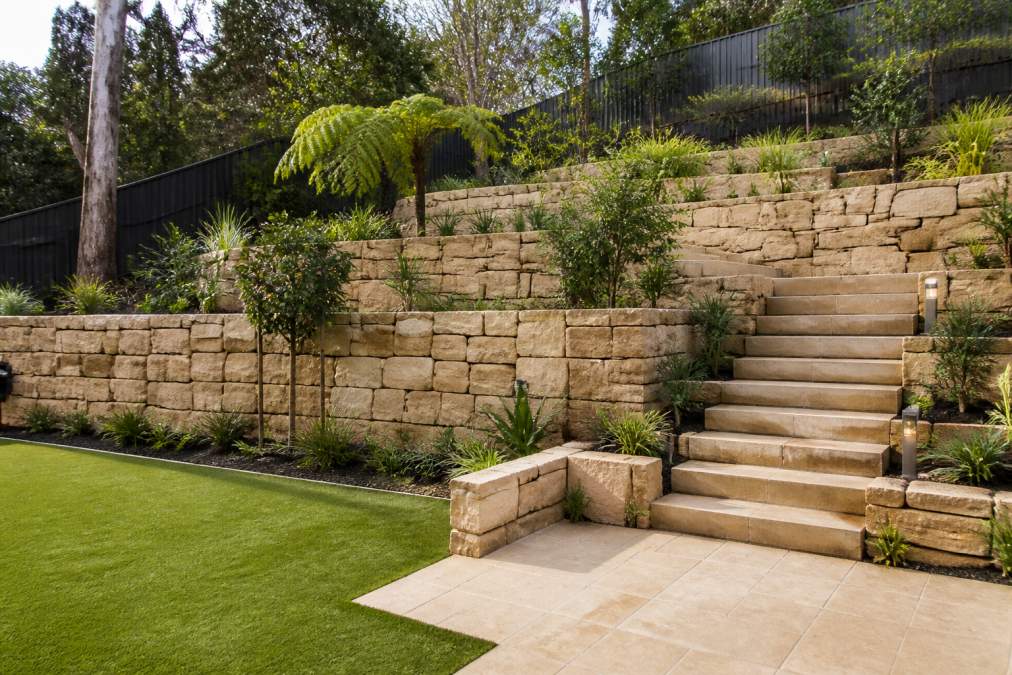
Many Rouse Hill blocks have a fall across the yard, and a slope can complicate even a simple paved area. A common approach is to step the level down in terraces, each sized to suit a function, with the right design depending on the site.
Drainage has to be planned alongside any slope work. Water that is directed toward the house or a neighbour's boundary creates problems that are far more expensive to fix later. Requirements for retaining, drainage and boundary works depend on the site and the relevant council, so confirm the details for your own property before building.
Retaining Wall Ideas for Small Gardens
Retaining walls in a small garden do two jobs: they hold back soil and they define the shape of the space. Low walls of around one metre or less are often the most practical, because they can be built in a way that creates a raised garden bed or a seat without the engineering demands of taller structures.
Material choice affects both cost and appearance. Sleeper walls, block walls and rendered finishes each suit different styles, and the best option often depends on how the wall will be viewed from the house. Our retaining walls service covers design and construction.
Low-Maintenance Backyard Landscaping for Busy Homeowners
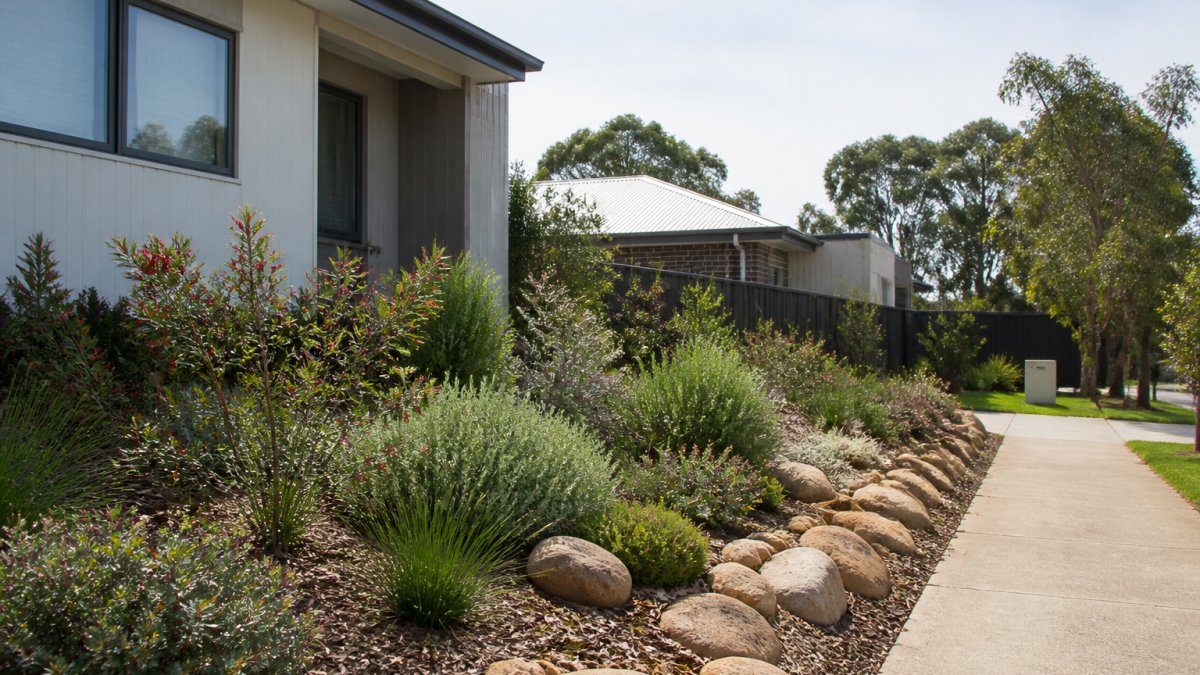
A small yard that looks good with minimal upkeep usually relies on hardscaping rather than high-maintenance planting. Paved areas, mulched beds with hardy plants and turf kept to a manageable size all reduce the weekly workload. Built-in planters with irrigation give structure without constant pruning.
Planting too densely in a small space is a common mistake, which can lead to overgrown beds within a few seasons. Choose plants for their mature size, not the size they are sold at, and leave clear edges between hard and soft surfaces so that maintenance stays simple.
Adding Seating and Outdoor Living Without Crowding the Yard
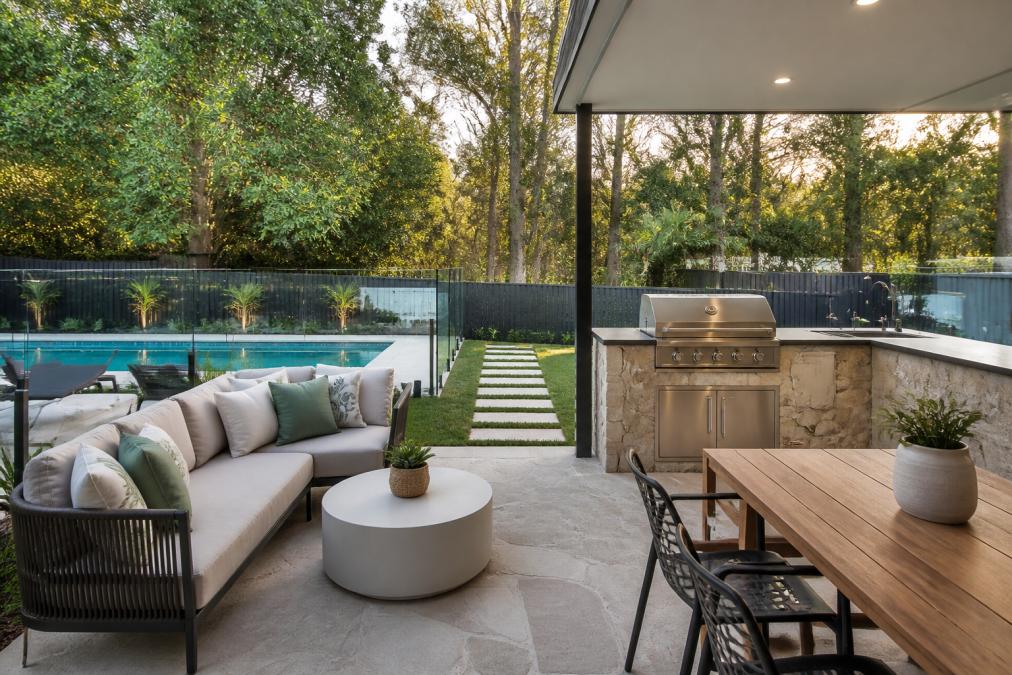
Outdoor living in a small backyard is about choosing the right footprint. A single well-placed timber bench built into a retaining wall can seat several people without taking up floor space. Where there is room for a table, a compact setting or a fixed bench along one side keeps the centre of the yard open.
Pergolas and covered areas can extend usable space upward rather than outward, and they provide shade without eating into the ground plane. Position any seating so that it catches the morning or afternoon sun, depending on how you plan to use the space.
Planning Drainage and Site Preparation Before You Build
Drainage and site preparation are the parts of a project that are rarely visible once construction is finished, but they play a major role in how long the work lasts. Check the fall of the land, identify where stormwater currently goes, and plan the new hardscape so it does not redirect water onto neighbouring property.
Excavation and base preparation should be done properly before any pavers or concrete go down. Shortcuts here often show up as sunken pavers or cracked slabs within a few years. Our excavation and concreting services cover this groundwork, and we recommend discussing it early in the design process rather than treating it as an afterthought.
Booking a Hardscaping Design Consultation for Your Rouse Hill Backyard
Every small backyard is different, and the right hardscaping ideas depend on the slope, the orientation, the access and how you want to use the space. A design consultation is the fastest way to work through those factors and get a clear plan before construction begins. Our landscape design service can help plan zones, paving layouts and retaining options for your block.
If you are ready to explore options for your Rouse Hill backyard, request a landscaping quote from FDSS Landscaping Services and we will arrange a site visit and design discussion.
Frequently Asked Questions
How can I make a small backyard look bigger?
Continuous paving that runs from the house into the garden, light-coloured surfaces and a clear sightline from the back door to the far fence all help a small backyard read as larger. Avoid breaking the space into many small zones, and keep edging lines simple. Low, layered planting along the boundaries adds depth without adding clutter. Pricing depends on the materials, the site access and the level of detail, so request a quote for an accurate figure for your yard.
What hardscaping works best in a small backyard?
The most useful hardscaping in a small backyard is usually a single main paved area, a defined seating spot and a retaining wall where the ground is uneven. Large features such as big pergolas or multiple separate patios often overwhelm the space. Choose one or two elements that serve daily use, then size them to leave room to move around. Your site's drainage, access and council requirements will shape which options are practical.
Can retaining walls create more usable space in a small backyard?
Yes. A well-designed retaining wall can turn a sloping or uneven block into flat, usable levels, creating space for a patio, lawn or garden bed. The wall height, materials and footings all need to suit the site, and some walls may require council approval or engineering input depending on size and location. Speak to a qualified landscape designer before deciding on a layout, as requirements depend on the specific property.
How do I plan a low-maintenance small backyard?
Start by reducing the areas that need regular care. Paving or gravel can replace high-maintenance lawn in high-traffic zones, and hardy, well-spaced plants reduce the need for trimming. Good drainage prevents ongoing problems, and built-in irrigation or mulched beds cut down on watering and weeding. Pricing for these works varies with materials and site conditions, so request a quote from FDSS Landscaping Services to plan the right mix for your yard.