 ultimate-guide
7 Benefits of Permeable Paving for Sydney Gardens
Last Updated: November 2, 2026
Quick Summary
Permeable paving lets rainwater soak through its joints or pores into the ground instead of running off into the stormwater system. In Sydney gardens this reduces surface runoff and standing water, especially during heavy downpours. It can also support groundwater recharge and help slow erosion on sloped blocks.
- The main benefit is reduced surface runoff, as rain drains through the paving.
- The effect is most noticeable during heavy downpours, when the yard absorbs the load over time.
- Erosion risk from fast-moving runoff on sloped garden beds can be reduced.
- A properly prepared sub-base is the most common factor in whether the surface performs well.
- It works best as part of a wider drainage plan, not as a standalone fix.
Table of Contents
- What Permeable Paving Is and How It Works in a Sydney Garden
- How Permeable Paving Reduces Stormwater Runoff and Puddling
- Permeable Paving Drainage: Groundwater, Erosion and Waterway Protection
- Benefits for Garden Plants and Soil Health
- Sydney Conditions, Council Rules and Limitations to Consider
- Permeable Paving Installation and Long-Term Maintenance
- Planning Your Permeable Paving Project With FDSS Landscaping Services
- Frequently Asked Questions
What Permeable Paving Is and How It Works in a Sydney Garden
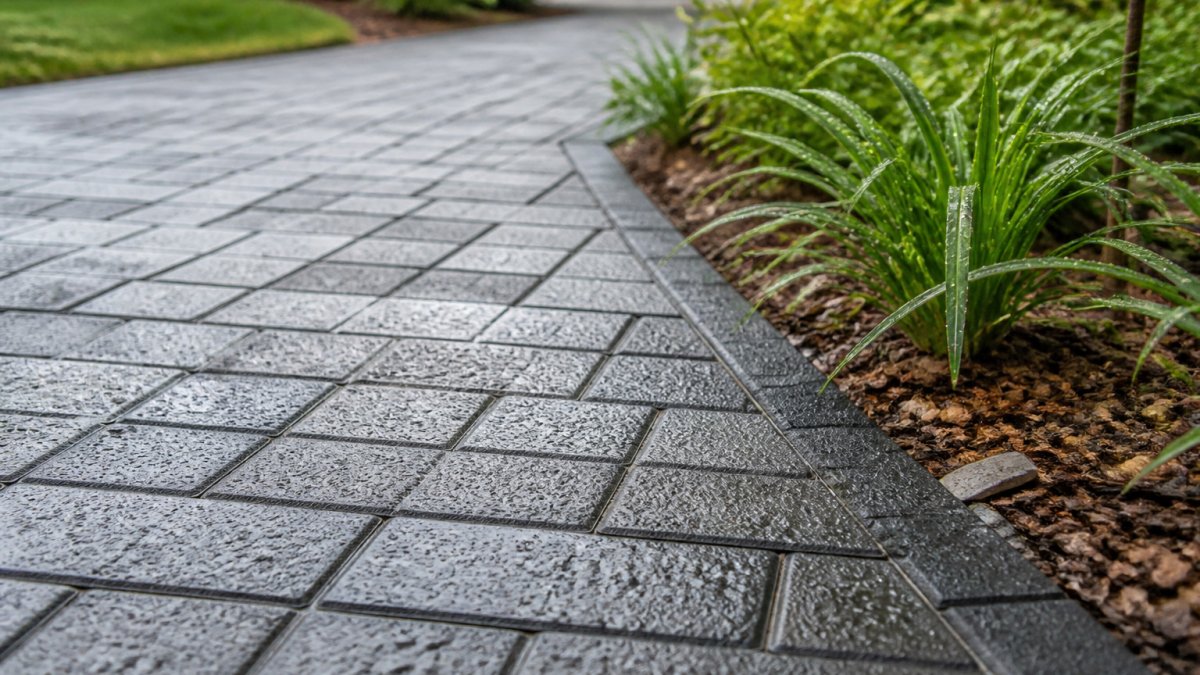
Permeable paving is a surface that lets rainwater pass through its joints or pores into the ground below, rather than shedding it into the stormwater system.
For Sydney gardens, this matters because so much of the city has been covered by impervious surfaces such as concrete driveways, sealed paths and solid patios. Each of these sends rain straight to the gutter, which is where many backyard drainage problems begin.
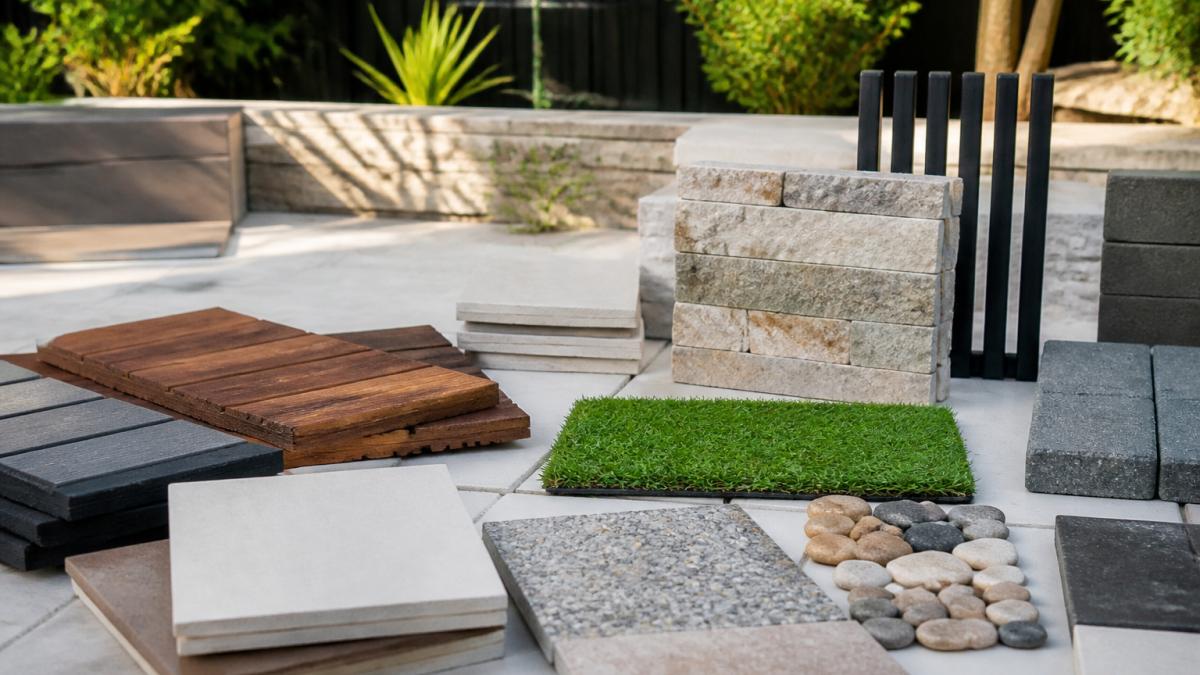
Permeable paving materials and surface types
Permeable surfaces come in several forms, and the right choice depends on how the space will be used:
- Permeable pavers: Concrete or clay units with spaced joints filled with fine aggregate, suited to paths, patios and driveways.
- Porous concrete or asphalt: A continuous surface with open pores, usually better for larger areas with steady foot or vehicle traffic.
- Gravel and crushed stone grids: Plastic or concrete cell systems filled with single-sized gravel, a practical option for low-traffic areas and garden paths.
Each type needs a properly prepared sub-base to perform. A poorly compacted base is the most common reason a permeable surface clogs or settles early, so the installation quality matters as much as the surface you choose.
How Permeable Paving Reduces Stormwater Runoff and Puddling
The main benefit of permeable paving is that it reduces surface runoff.
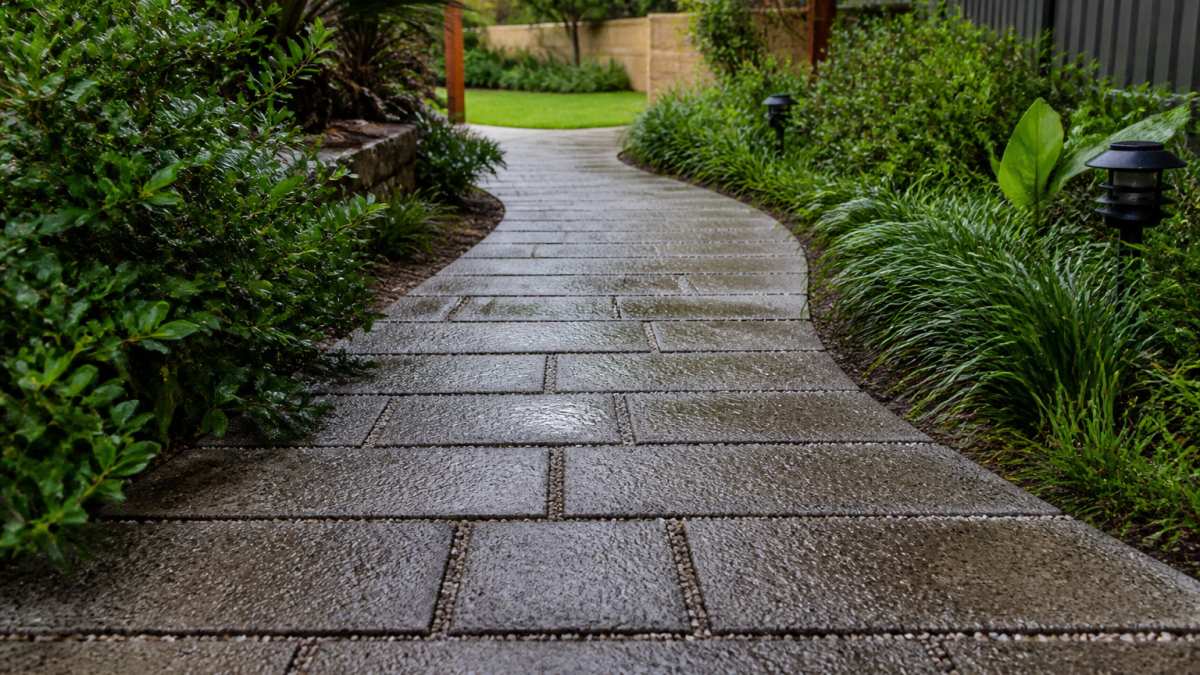
In practice, the effect is most noticeable during heavy downpours.
A flat section near a house that stays wet for days after rain is a common drainage problem. Our guide on managing stormwater runoff with backyard retaining walls explains how drainage design, ag pipe and early warning signs fit together.
Permeable paving works best as part of a wider drainage plan. Where runoff is already a problem, it should be considered alongside grading and the existing stormwater layout, rather than treated as a standalone fix.
The table below summarises the main runoff and drainage facts covered in this section.
| Factor | What the article says | Note |
|---|---|---|
| Main benefit | Reduces surface runoff | Rain drains through the paving |
| Most noticeable | Heavy downpours | Yard absorbs the load over time |
| Typical problem | Flat area staying wet for days | Common drainage issue near houses |
| Effect on saturation | May shorten how long ground stays wet | Depends on soil and surrounding grades |
| Best use | Part of a wider drainage plan | Not a standalone fix |
Permeable Paving Drainage: Groundwater, Erosion and Waterway Protection
Because water infiltrates rather than running off, permeable paving can support groundwater recharge and reduce the volume of water carrying sediment and pollutants into local waterways.
Erosion is another consideration. Fast-moving runoff from sealed surfaces can scour soil from sloped garden beds and banks.
If your garden already has waterlogging or erosion on a slope, our guide on improving drainage on sloped garden beds covers practical fixes that go beyond paving alone.
Benefits for Garden Plants and Soil Health
Plants near a permeable surface can benefit from water that soaks into the root zone instead of running off. Adjacent garden beds and lawns are less likely to dry out in pockets or flood after rain, which supports healthier vegetation growth.
Permeable surfaces also suit water-wise gardening. By directing rainwater into the soil, you can reduce how much you need to rely on irrigation during drier months, though the amount saved will vary with your planting and climate.
Sydney Conditions, Council Rules and Limitations to Consider
Permeable paving performs differently depending on the ground it sits on, and the local conditions across the Hills District, North-West and Western Sydney vary enough that a generic specification is rarely enough. The section below explains what to check before committing, and where permeable systems can fall short.
Local rainfall, soils and slopes
Rainfall in the region tends to arrive in short, intense bursts rather than steady drizzle.
Soil is the other half of the equation. Soils across Western Sydney and the Hills District vary, and some sites have clay-heavy profiles that drain slowly while others have shale or sandstone close to the surface.
A simple check before you choose a system:
- Dig a test hole in the proposed area and see how quickly water drains away after rain.
- Note how the ground falls across the site and where water currently collects.
- Identify the nearest stormwater connection and whether the site has a legal point of discharge.
Watch out: a surface that passes water quickly in a test hole can still fail if the surrounding grades push water back towards the house or a neighbouring property.
Council rules and stormwater requirements
Stormwater and hard-surface requirements are set by the relevant local council and, in some cases, by state planning or water authority guidance. They commonly cover the proportion of a site that can be covered by impervious surfaces, where stormwater must be directed, and whether on-site detention or infiltration systems are required.
Because requirements depend on the property, the zoning and the council area, we cannot confirm what applies to your site without assessing it. Before work starts, it is worth confirming:
- Whether your council has specific controls on hardstand coverage or stormwater discharge.
- Whether an approval or development application is needed for the scale of paving proposed.
- Whether the site needs on-site detention, infiltration or a connection to the street system.
A landscaping contractor familiar with your local government area can help you identify the right questions, but the final confirmation sits with the council or relevant authority.
Limitations and failure risks
Permeable paving is a good solution in the right setting, but it is not universal. The main risks are:
- Clogging: Joints and pores fill with fine sediment, leaf litter and moss over time. Surfaces under trees or near bare soil clog faster than those in open areas.
- Poor sub-base design: An undersized or poorly compacted base is the most common cause of settling, ponding and early failure. The base does as much work as the surface.
- Steep sites: On slopes, infiltrated water can travel laterally and emerge downslope, causing damp patches or undermining nearby structures if the design does not manage it.
If your garden already has waterlogging or erosion on a slope, our guide on improving drainage on sloped garden beds covers practical fixes that go beyond paving alone.
Permeable Paving Installation and Long-Term Maintenance
Choosing a permeable system is really a series of decisions about how the space will be used, what sits under it and how much upkeep you are prepared to do. The framework below is the one we work through on site, and it applies whether the project is a garden path in Castle Hill or a driveway in Kellyville.
Choosing a system for your garden
Work through these questions in order, because each one narrows the options:
- Traffic: Will the area take foot traffic only, occasional light vehicles, or regular car and trailer loads? Footpaths and garden steppers can use gravel grids or permeable pavers with open joints; driveways need a system and base designed for vehicle loads.
- Slope: On flat ground, infiltration is straightforward. On sloping blocks, the design needs to slow water, direct it to a controlled outlet, or step the surface so water does not run along the base.
- Soil: Sandy or loamy profiles infiltrate well. Clay-heavy profiles usually need a free-draining sub-base and a connection to a legal point of discharge rather than soakage alone.
A common pattern is to combine systems on one property: permeable pavers on the driveway, gravel grids on a garden path, and conventional paving only where a sealed finish is genuinely needed.
Installation: what a properly built base looks like
A permeable surface is only as good as the layers beneath it. The typical build-up includes:
- Subgrade preparation: The existing soil is graded to fall and compacted where needed, with any soft spots removed.
- Sub-base: A compacted layer of single-sized aggregate, placed in layers and compacted to the depth the design requires. This layer stores water while it infiltrates.
- Bedding layer: A thin layer of fine aggregate that levels the surface and allows water to pass through the joints.
Watch out: a base that is compacted in one thick layer rather than in stages will not reach the same density, and the surface above it will settle unevenly within a season or two.
Long-term maintenance
Maintenance is mostly about keeping the surface open. The practical routine is:
- Sweep leaves and debris regularly, especially before and after storms.
- Remove weeds that root in joints before they establish.
- Vacuum or use low-pressure cleaning to lift sediment from joints and pores, topping up joint aggregate afterwards.
How often this is needed depends on the surface type, the surrounding planting and the amount of leaf litter. A permeable driveway under gum trees will need more attention than a path in an open garden. Our paving services cover how permeable surfaces are installed and what ongoing care they need.
Whole-of-life value
Permeable paving can cost more to install than standard paving because of the additional base, geotextile and outlet work, and pricing depends on the site and scope of works. The value comes from what it replaces: fewer drainage fixes, less water pooling near the house, and a surface that can reduce the load on the stormwater system. A useful comparison looks beyond the surface alone to include any drainage work it may make unnecessary.
Planning Your Permeable Paving Project With FDSS Landscaping Services
The best outcome comes from planning the surface, drainage and planting together. Start by identifying where water collects, how the ground falls, and how the area will be used.
FDSS Landscaping Services handles the full process, from concept and 3D design through to construction and completion, so the paving works with the rest of your landscape. You can review our full range of services to see how a permeable paving project fits alongside retaining walls, turf, drainage and outdoor living areas.
When you are ready to explore options for your property, you can request a landscaping quote from our team. We will assess your site and talk through what suits your garden, your budget and your local conditions.
Frequently Asked Questions
What are the benefits of permeable paving in a garden?
Permeable paving allows rainwater to soak through the surface rather than running off, which reduces puddling and pooling in low spots. It can also lessen the volume of stormwater leaving your property, help water infiltrate the soil beneath, and support nearby plants by keeping moisture available to their roots. For many Sydney homeowners, the surface also suits paths, patios and low-traffic driveways while keeping a natural look. Suitability depends on your site, soil and traffic loads, so it is best assessed on the ground before you commit.
Does permeable paving need a special base?
Yes. Permeable paving relies on a layered sub-base of compacted single-sized gravel that stores and drains water beneath the surface. The depth and grading of these layers depend on the expected traffic, the soil type and how quickly the ground drains. A poorly prepared base is one of the most common reasons these systems clog or settle, so the excavation and base work should be planned carefully by an experienced installer.
How do you maintain permeable paving?
Regular maintenance keeps permeable paving draining as designed. Sweep or vacuum the surface to remove leaves, soil and debris that can clog the joints, and avoid letting fine sediment wash onto the surface. Keep fertilisers and pesticides away from the paving, and address any areas where weeds establish in the joints. Maintenance needs vary with the material, the plants nearby and how much the area is used, so ask your installer for a schedule suited to your garden.
Is permeable paving suitable for a garden path or patio?
Permeable paving is well suited to garden paths, patios and other low-traffic areas where you want water to soak in rather than run off. Heavier traffic, such as frequent vehicle loads, requires a more robust base and a suitable surface type. Whether a particular area suits permeable paving depends on the site conditions, the intended use and the local council or authority requirements, so check these before finalising your design.