 how-to
Improve Drainage on Sloped Garden Beds: A Guide
Table of Contents
- Why Sloped Garden Beds Struggle with Drainage
- Assess Your Soil and Slope Before Starting Work
- Retaining Wall Drainage Requirements for Sloped Gardens
- French Drain Construction for Effective Sub-Surface Drainage
- Grading, Terracing and Surface Water Management
- Soil Amendment and Raised Garden Beds on Slopes
- Landscape Excavation Services and Professional Support
- Maintaining Your Drainage System
- Frequently Asked Questions
Last Updated: August 12, 2026
Why Sloped Garden Beds Struggle with Drainage
Sloped gardens present a fundamental challenge: water moves too quickly downhill, creating surface runoff that erodes topsoil and leaves plants thirsty. Simultaneously, compacted clay-rich soil often prevents water from percolating properly, leading to waterlogged patches and root rot. The real answer lies in working with the slope, not against it, to manage both surface runoff and sub-surface water movement.
The challenge intensifies on slopes steeper than 1 in 10 (roughly 10 degrees). You need a layered approach: grading and terracing to control surface water, sub-surface drainage systems to manage percolation, and soil amendments to improve water retention where it counts. FDSS Landscaping Services works with homeowners across the Hills District and Greater Sydney to design and build drainage solutions tailored to each property's slope, soil type, and intended use.
Assess Your Soil and Slope Before Starting Work
Before you dig, understand what you're working with. Soil composition determines how water moves through it, and slope gradient determines how fast water moves across it.
Soil type matters more than slope angle. Clay-rich soil has poor permeability; water sits on top rather than soaking in. Test this yourself: dig a hole about 30 centimetres deep, fill it with water, and observe how fast it drains. If it takes more than an hour to drain completely, you have a permeability problem that amendments alone won't fix.
Slope gradient determines water velocity. A gentle slope of 1 in 20 (5%) allows water to move steadily without excessive erosion. A steep slope of 1 in 5 (20%) accelerates water dramatically, increasing both runoff volume and erosion risk. Measure your slope by marking two points on the ground, measuring the horizontal distance, then measuring the vertical drop. Divide the vertical drop by the horizontal distance to get your gradient ratio. A slope steeper than 1 in 10 typically requires terracing or French drains to prevent water from scouring the soil surface.
Look for existing water patterns. After heavy rain, where does water pool? Where does it run fastest? Waterlogged areas indicate poor sub-surface drainage or a hardpan layer (compacted soil that blocks water movement). Bare patches or eroded channels show where surface runoff is too aggressive. These observations guide where to install drainage infrastructure.
Retaining Wall Drainage Requirements for Sloped Gardens
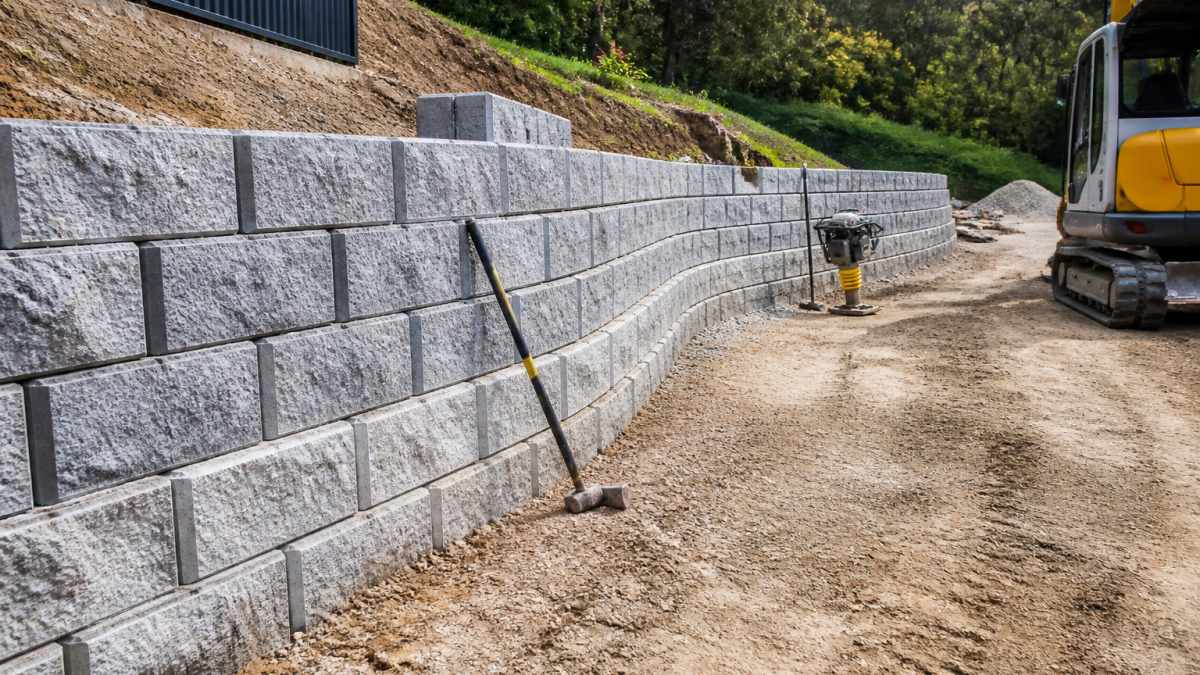
If your slope is steep enough to need retaining walls, the walls themselves must manage water properly or they'll fail. Water pressure behind a retaining wall builds up over time, pushing against the structure and eventually causing movement or collapse.
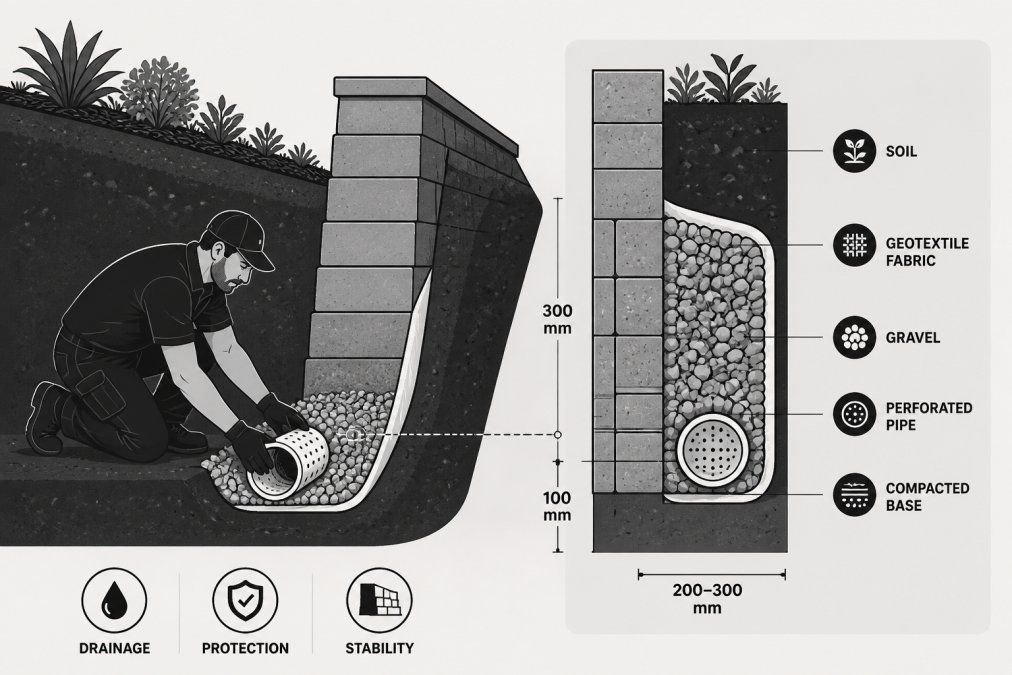
Drainage behind the wall is essential. A retaining wall needs a drainage layer behind it, typically gravel or scoria, to allow water to flow down and away from the wall face. Without this, water accumulates in the soil behind the wall, creating hydrostatic pressure that destabilises the structure. The drainage layer should be at least 30 centimetres thick.
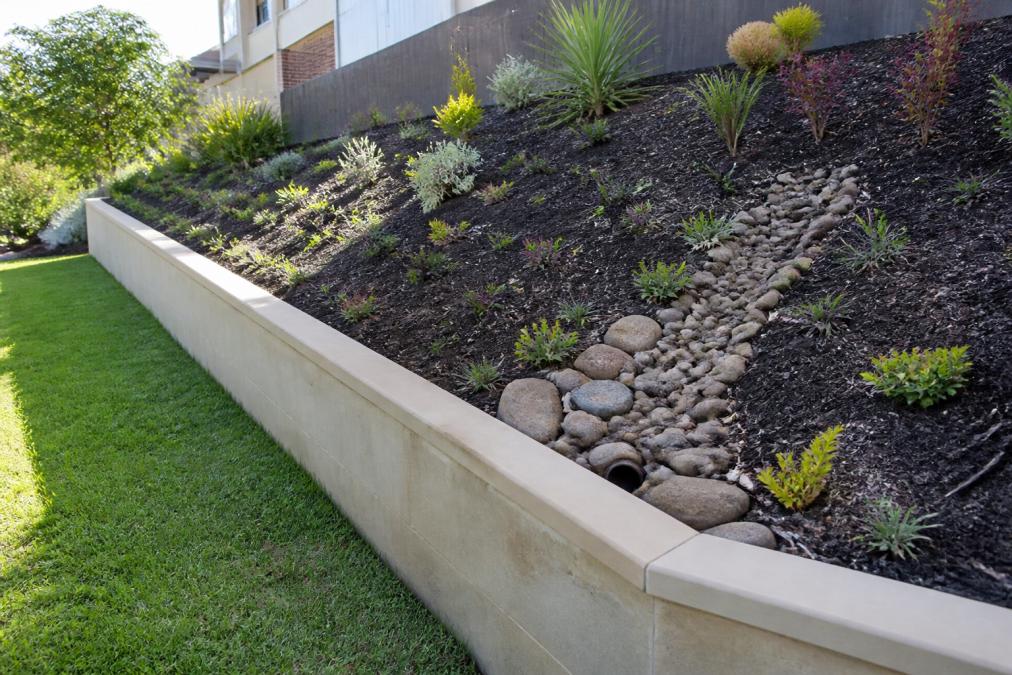
Drainage pipes collect and redirect water. A perforated drainage pipe (typically 100 millimetres diameter) sits at the base of the wall, behind the gravel layer. This pipe collects water filtering through the gravel and directs it to daylight, either to a lower garden bed, a rain garden, or a stormwater outlet. The pipe should slope gently (at least 1 in 100) to allow water to flow out.
Geotextile fabric prevents soil clogging the drainage layer. A geotextile membrane sits between the retained soil and the gravel drainage layer. This fabric allows water through but stops fine soil particles from clogging the gravel. Use a non-woven geotextile rated for permanent drainage applications.
The engineering of retaining wall drainage depends on wall height, soil type behind the wall, and local rainfall. Walls over 1.2 metres high typically require engineer design in most councils. FDSS Landscaping Services designs and builds retaining walls with proper drainage integration.
French Drain Construction for Effective Sub-Surface Drainage
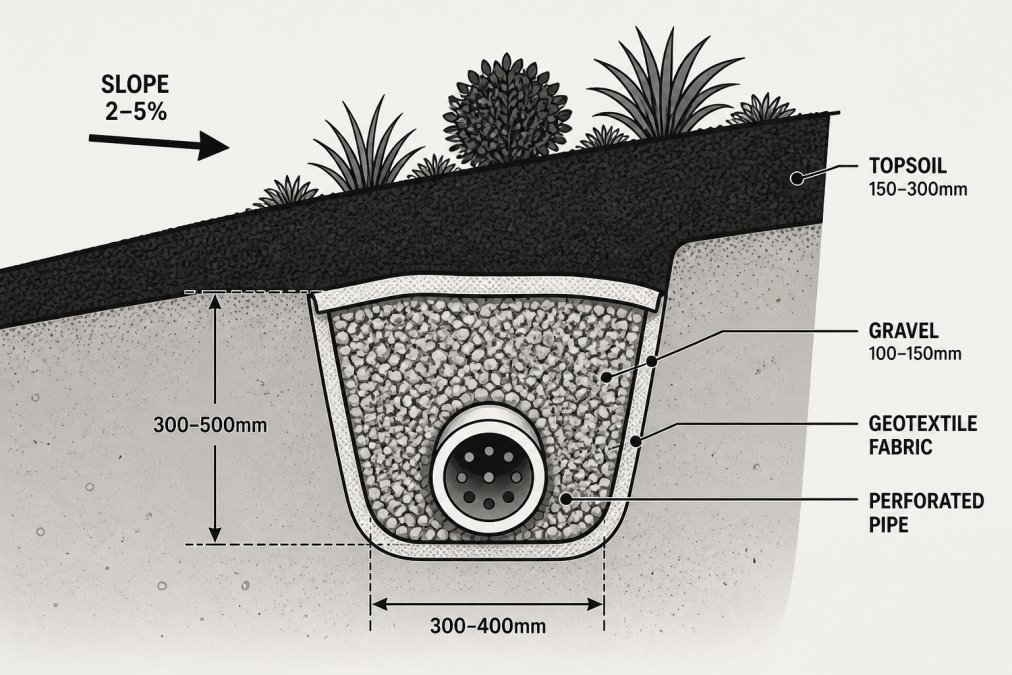
A French drain is a simple but highly effective sub-surface drainage system. It's essentially a trench filled with gravel and a perforated pipe that collects water and moves it away from problem areas. On sloped garden beds, French drains intercept water moving downhill through the soil and redirect it safely away from plants and structures.
The basic structure is straightforward. Dig a trench along the contour line where you want to intercept water. The trench should be 30-45 centimetres deep and 30 centimetres wide. At the bottom, lay a perforated drainage pipe (usually 100 millimetres PVC). Wrap the pipe with geotextile fabric to prevent soil from clogging the perforations. Fill the trench with drainage gravel or scoria. Top the gravel with more geotextile to separate it from the soil above, then backfill with topsoil.
Water flows into the pipe from all sides. The perforations in the pipe allow water to enter from the surrounding gravel. Water travels along the pipe's slight slope (minimum 1 in 100) and exits at daylight, a lower garden bed, a rain garden, or a stormwater drain. The beauty of a French drain is that it works passively: no pump needed, no electricity required.
Placement determines effectiveness. On a slope, position the French drain along a contour line to intercept water moving downhill. For maximum effectiveness on steep slopes, install multiple drains at different elevations, each one capturing water and moving it downhill to the next drain or to daylight.
Maintenance keeps it working. Every 3-5 years, flush the system with water to clear minor blockages. Inspect the outlet after heavy rain to confirm water is flowing.
Grading, Terracing and Surface Water Management
Surface water management is about controlling how fast water moves across your slope and where it goes. Grading and terracing are the most effective structural solutions for sloped gardens.
Grading directs water away from problem areas. Even a subtle change in slope, 2-3 centimetres over a few metres, can redirect water away from a building, a wet garden bed, or a hardscaping area. Grading should always move water away from structures and toward designated drainage areas.
Terracing breaks steep slopes into manageable steps. Instead of one steep slope, terracing creates a series of level or gently sloping platforms separated by retaining walls. Each terrace should have a slight inward slope (about 1 in 50) to encourage water to pool and infiltrate rather than run off.
Swales and rain gardens capture and filter runoff. A swale is a shallow, vegetated channel that runs along a contour line, capturing surface runoff and allowing it to infiltrate slowly. A rain garden is a shallow depression planted with water-loving plants that tolerates temporary flooding. Both systems slow water down, reduce erosion, and allow soil to absorb water instead of letting it run away.
Vegetation stabilises slopes and slows water. Native plants with deep root systems help bind soil together and reduce erosion. Water-loving plants in rain gardens and swales absorb excess moisture and reduce the volume of water that needs to drain away.
Soil Amendment and Raised Garden Beds on Slopes
Amending soil with organic matter improves drainage in some situations and makes it worse in others. Understanding when to amend and when to use raised beds is crucial on slopes.
Organic matter improves permeability in clay soil. Adding compost, aged manure, or other organic matter to clay-heavy soil increases its water-holding capacity and allows water to percolate more easily. Work the amendment into the top 20-30 centimetres of soil. However, amendment alone won't solve drainage problems on very steep slopes or in areas with severe compaction; you still need structural solutions like French drains or terracing.
Raised garden beds bypass poor soil entirely. Instead of amending compacted or clay-heavy soil, build a raised bed with quality topsoil and compost. Raised beds on slopes should be level (not sloped to match the terrain), which requires a retaining wall on the downhill side. Raised beds also need their own drainage management: water from the bed must flow somewhere, usually into a French drain or swale below the bed.
Mulch reduces water loss and stabilises soil. A 5-7 centimetre layer of mulch on garden beds reduces evaporation, moderates soil temperature, and helps prevent erosion. On slopes, mulch also slows surface runoff, giving water more time to infiltrate. Aim for at least 20-25 centimetres of quality topsoil on sloped garden beds.
Landscape Excavation Services and Professional Support
Most sloped drainage projects require excavation: digging trenches for French drains, cutting and filling for terraces, or reshaping the land for grading.
Excavation equipment handles slopes safely. A tracked excavator can work on slopes that would be dangerous or impossible to dig by hand. The operator can precisely control trench depth, width, and slope.
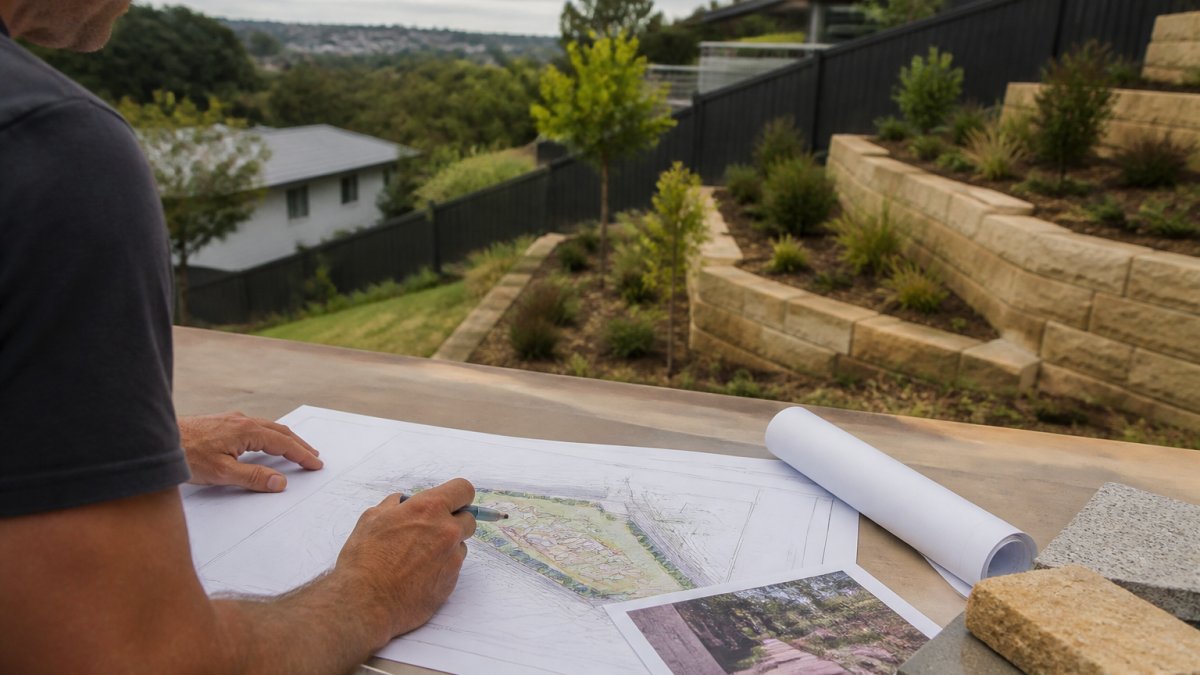
Site assessment determines the excavation approach. Before any digging begins, a professional evaluates the slope, soil type, existing structures, and drainage requirements. This assessment guides decisions about trench placement, depth, and the need for retaining walls or other structures. It also identifies potential complications: underground utilities, rock outcrops, or unstable soil that might require special handling.
Proper site preparation prevents future problems. Excavation work often disturbs soil, compacting it or mixing layers. Professional teams understand how to restore soil structure after digging, ensuring that French drains and other systems function as designed.
FDSS Landscaping Services provides landscape excavation and drainage design as part of our integrated approach. We assess your slope, design a drainage strategy tailored to your soil and site conditions, and execute the work. Whether you need a simple French drain or a complete terracing and drainage system, our team handles the excavation, construction, and site restoration.
Maintaining Your Drainage System
A well-designed drainage system requires minimal maintenance, but some upkeep ensures it continues working effectively for years.
Inspect outlets after heavy rain. Water should flow steadily from French drain outlets, swales should fill and drain within a few hours, and rain gardens should dry within 24-48 hours. If water isn't flowing where it should, the system may be clogged or blocked.
Clear debris from swales and rain gardens. Leaves, branches, and sediment accumulate in swales and rain gardens, reducing their capacity. Remove debris in autumn and after major storms.
Flush French drains periodically. Every 3-5 years, flush the French drain system with water to clear minor sediment buildup. Use a garden hose to run water down the inlet end of the drain. Water should flow out the outlet end.
Monitor plant health in drainage areas. If plants in a rain garden or swale start showing signs of stress, yellowing leaves, poor growth, or wilting, the drainage system may not be working as intended.
Check retaining wall drainage annually. After heavy rain, look for seepage or wet patches on the face of a retaining wall. Water should exit the drainage pipe at the base of the wall, not seep through the wall face.
Improving drainage on sloped garden beds transforms how water behaves on your property. Rather than fighting the slope, a well-designed system works with it: intercepting water at the right points, slowing it down, and allowing soil to absorb moisture where plants need it. The result is healthier plants, stable soil, and no more waterlogged patches or erosion.
If your slope needs professional assessment or construction, FDSS Landscaping Services offers landscape design and drainage solutions tailored to your site. We work with homeowners across the Hills District, North-West Sydney, and Greater Sydney to design and build drainage systems. Contact us for a quote and site assessment, we'll show you exactly how to improve drainage on your sloped garden beds.
Frequently Asked Questions
How do I know if my sloped garden bed has poor drainage?
Poor drainage shows as waterlogged soil that stays soggy for days after rain, surface pooling of water, or soil compaction where plants struggle to establish roots. On slopes, watch for water running directly down the surface rather than soaking in, or soil erosion where water carves channels. If clay-rich soil dominates your garden, permeability will be naturally low. A simple test: dig a hole, fill it with water, and time how long it drains. If water sits for more than a few hours, drainage work is needed.
Can I improve drainage on a sloped garden bed without professional help?
Simple amendments work for minor drainage issues: adding organic matter like compost improves permeability in clay-rich soil, and raised garden beds with amended topsoil can resolve waterlogging in small areas. Grading and surface levelling to direct runoff are manageable DIY tasks. However, French drain construction, terracing, retaining walls and slope stabilisation require proper excavation, engineering and understanding of soil compaction and geotextile fabric placement. Sloped terrain can shift unexpectedly if drainage is installed incorrectly, so professional assessment is wise before major work.
What's the difference between a French drain and a rain garden for slope drainage?
A French drain is sub-surface drainage: a trench filled with gravel and drainage pipe that moves water away from the garden bed underground, ideal for removing excess moisture quickly. A rain garden is a planted depression that captures and filters surface runoff, allowing water to percolate slowly into soil while reducing erosion control concerns. Rain gardens work well on gentle slopes and integrate plants; French drains suit steep slopes or clay-rich soil where water needs to be diverted. Many effective sloped gardens use both: French drains manage excess water, while rain gardens and terracing slow surface runoff.
When should I call a professional for sloped garden drainage?
Contact a professional if your slope is steep (greater than 1 in 5 gradient), if you're installing retaining walls or terracing, or if waterlogging is severe and simple amendments have failed. Complex drainage requires landscape excavation services, proper grading calculations, and understanding of how water moves through compacted soil. Professionals assess whether you need French drains, swales, permeable hardscaping or terracing, and ensure work meets local council requirements for water management. For sloped gardens in The Hills District and North-West Sydney, soil variability and steep terrain often need expert evaluation to avoid costly mistakes.