 how-to
Preventing Soil Erosion on Sloped Sydney Gardens
Table of Contents
- Why Sloped Gardens Face Erosion Risk in Sydney
- Understanding Sydney Soil Types and Erosion Potential
- Retaining Wall Construction Sydney: A Structural Foundation
- Landscape Drainage Solutions for Runoff Control
- Using Mulch, Ground Cover and Native Plants for Erosion Control
- Regrading and Hardscaping Techniques to Stabilise Slopes
- When to DIY Versus When to Engage Professional Landscaping
- Frequently Asked Questions
Last Updated: August 24, 2026
Sloped gardens in Sydney present a genuine challenge. Water flows downward, carrying topsoil and eroding your landscape over time. Preventing soil erosion on sloped Sydney gardens requires a layered approach combining structural support, drainage management, and strategic planting. At FDSS Landscaping Services, we've designed and constructed countless slope stabilisation projects across The Hills District and North-West Sydney, from small residential gardens in Baulkham Hills to larger properties in Bella Vista and Castle Hill. This guide walks you through the key strategies that work, and shows you when to tackle a project yourself versus when professional engineering matters.
Why Sloped Gardens Face Erosion Risk in Sydney
Sydney's climate creates perfect conditions for soil erosion. Summer storms deliver intense rainfall over short periods, and winter brings persistent moisture (bom.gov.au). Both mean water constantly moves across your slope, especially during the first heavy rain after a dry spell when the ground hasn't absorbed water yet.
The problem accelerates without intervention. Bare soil compacts under foot traffic and rainfall, causing water to run off rather than soak in. Native vegetation that once held soil in place gets removed during construction or dies back during drought. Much of the Hills District sits on Hawkesbury sandstone, which weathers into sandy soils that drain quickly but hold little water. Other areas have clay-based soils that shed water rapidly. Both favour erosion. Add wind exposure, common on elevated properties, and bare slopes deteriorate noticeably within a single season.
A small washaway becomes a gully. A minor slope failure threatens retaining walls or building foundations. Sediment clogs drainage systems. What starts as cosmetic becomes structural.
Understanding Sydney Soil Types and Erosion Potential
Not all Sydney soils erode at the same rate. Understanding what you're working with determines which stabilisation method will hold.
Sandstone-derived soils dominate much of the northern suburbs. These soils drain well but are structurally weak, individual sand grains don't bind tightly together. Once water starts moving downslope, it carries sand away easily. Sandstone-derived soils need strong root systems or structural support to hold firm.
Clay soils are heavier and more cohesive. Water doesn't drain through them readily, so it pools and runs off instead. Clay slopes often fail through sudden slumping when water pressure builds up behind the slope face, requiring drainage control more than sandstone does.
Mixed soils, a combination of sand, silt, and clay, are common in suburban gardens and can behave unpredictably depending on the exact ratio and compaction.
The gradient of your slope matters as much as soil type. A gentle 1-in-4 slope erodes slowly. A steep 1-in-1.5 slope erodes rapidly. Anything steeper than 1-in-2 usually requires structural intervention, retaining walls, terracing, or engineered drainage, to remain stable long-term.
Aspect also influences erosion risk. North-facing slopes receive intense afternoon sun, drying the soil surface and increasing water runoff during rain. South-facing slopes stay damper longer, which can increase erosion potential if drainage isn't managed.
Retaining Wall Construction Sydney: A Structural Foundation
When a slope is steep or erosion risk is high, a retaining wall becomes the most effective solution. A well-designed retaining wall holds soil in place, redirects water flow, and prevents catastrophic slope failure.
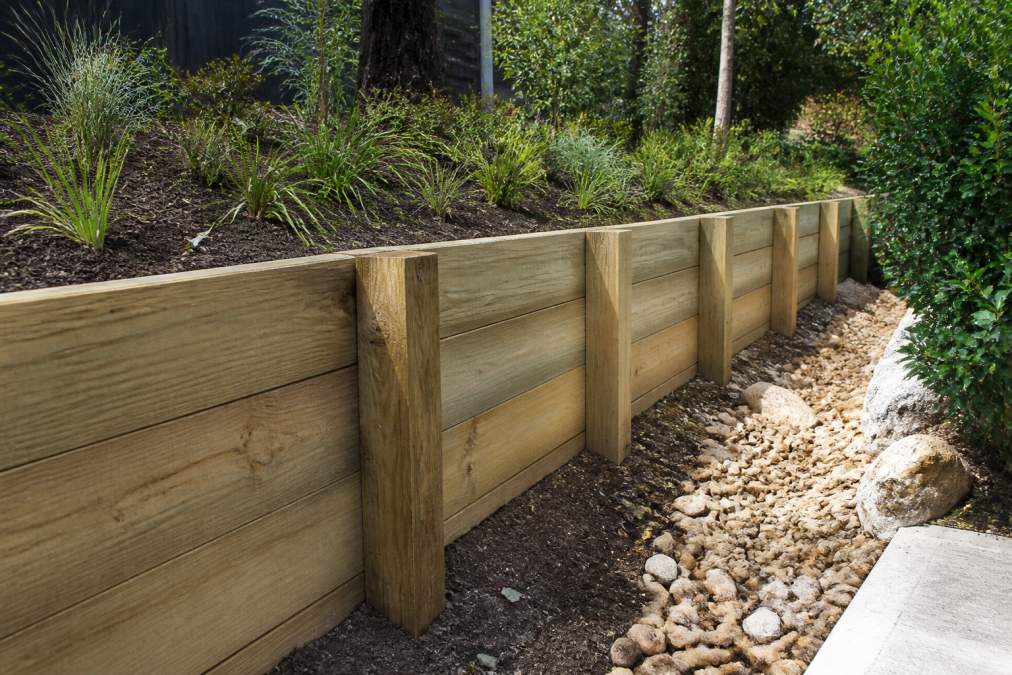
Retaining walls work by providing a vertical or near-vertical face that soil can rest against. Without the wall, soil would naturally slide downslope. But holding back soil creates pressure, especially water pressure. That's why proper drainage behind the wall is critical. If water builds up behind the wall, pressure increases and the wall fails. A well-constructed retaining wall includes drainage pipes, gravel backfill, and sometimes geotextile membranes to manage that water.
Timber retaining walls are common in Sydney gardens. They're relatively quick to build and blend well with landscaping. Treated pine or hardwood holds up reasonably well in Sydney's climate, though timber may need replacement after 15-20 years (fwpa.com.au). Timber walls work best for moderate heights, typically up to 1.2 metres, and on less steep slopes.
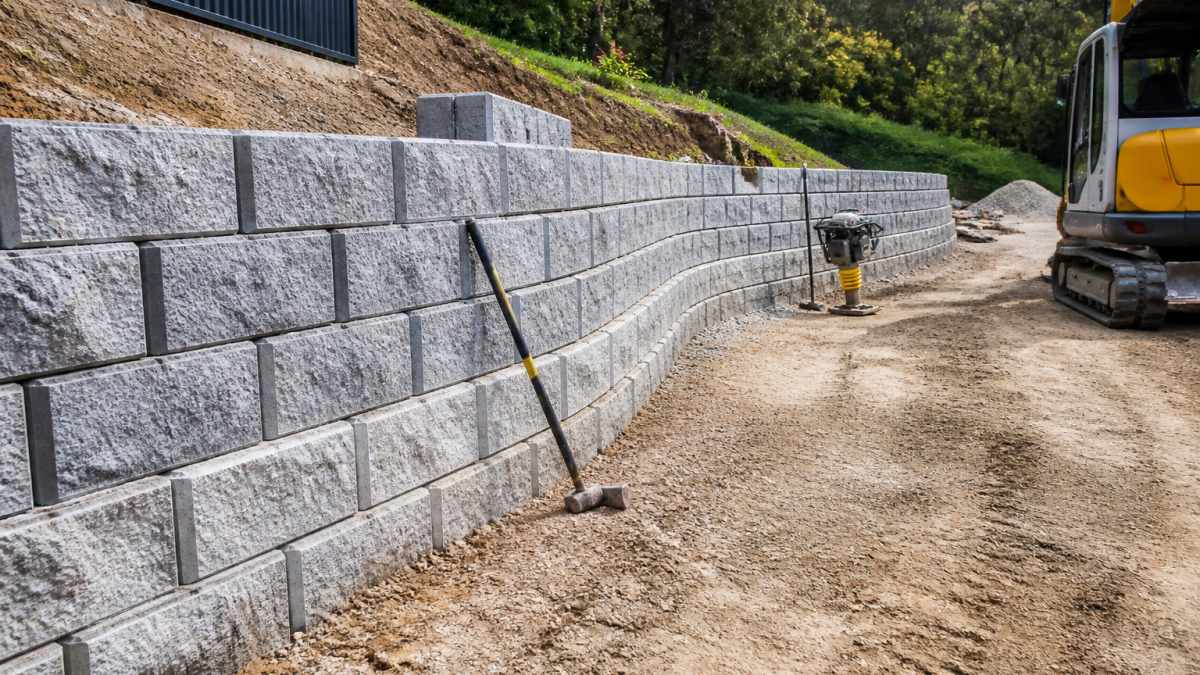
Stone or block retaining walls last longer and handle steeper slopes better. Rendered concrete block, natural stone, or engineered retaining wall blocks provide durability and can be built taller. These walls are heavier, more expensive, and require proper engineering if they exceed certain heights. For properties in Castle Hill, Rouse Hill, or Norwest where slopes are significant, stone or block walls are often the better long-term choice.
Engineered retaining walls, designed by a structural engineer, are necessary when walls exceed 1.5 metres in height, sit close to building foundations, or support particularly steep slopes. An engineer calculates soil pressure, water pressure, and the wall's load-bearing capacity, specifying materials, dimensions, drainage requirements, and sometimes tie-backs or reinforcement.
The foundation of any retaining wall matters enormously. The wall sits on a concrete footing that extends below the frost line (in Sydney, typically 600-800 mm deep) and spreads the load across stable soil. A poorly founded wall will fail regardless of how well-built above ground.
Drainage behind the wall is non-negotiable. Perforated drainage pipes run along the base of the wall, collecting water and directing it away. Gravel backfill, typically 150-200 mm of coarse gravel, surrounds the drainage pipe, allowing water to move freely. Without this drainage layer, water pressure builds and the wall fails.
Landscape Drainage Solutions for Runoff Control
Managing water flow across a slope prevents erosion. Water that's directed, controlled, and absorbed causes far less damage than water free to rush downhill.
Swales and drainage channels are shallow, vegetated trenches that intercept runoff and slow it down. A swale sits across the slope, perpendicular to the downhill direction, catching water flowing downslope. Water moves slowly through the swale, soaks into the ground, and is absorbed rather than running off. Swales work well on moderate slopes and blend naturally into the landscape, especially when planted with native groundcover or grasses.
French drains are subsurface drainage systems, trenches filled with gravel and perforated pipe, that intercept water before it becomes surface runoff. A French drain sits upslope from an area you want to protect and collects water moving through the soil. The pipe directs that water to a safe discharge point downslope or to a stormwater system.
Permeable surfaces allow water to soak into the ground rather than running off. Permeable paving, gravel, permeable pavers, or recycled plastic grids let water through to the soil below. This reduces runoff volume and allows the soil to absorb water gradually.
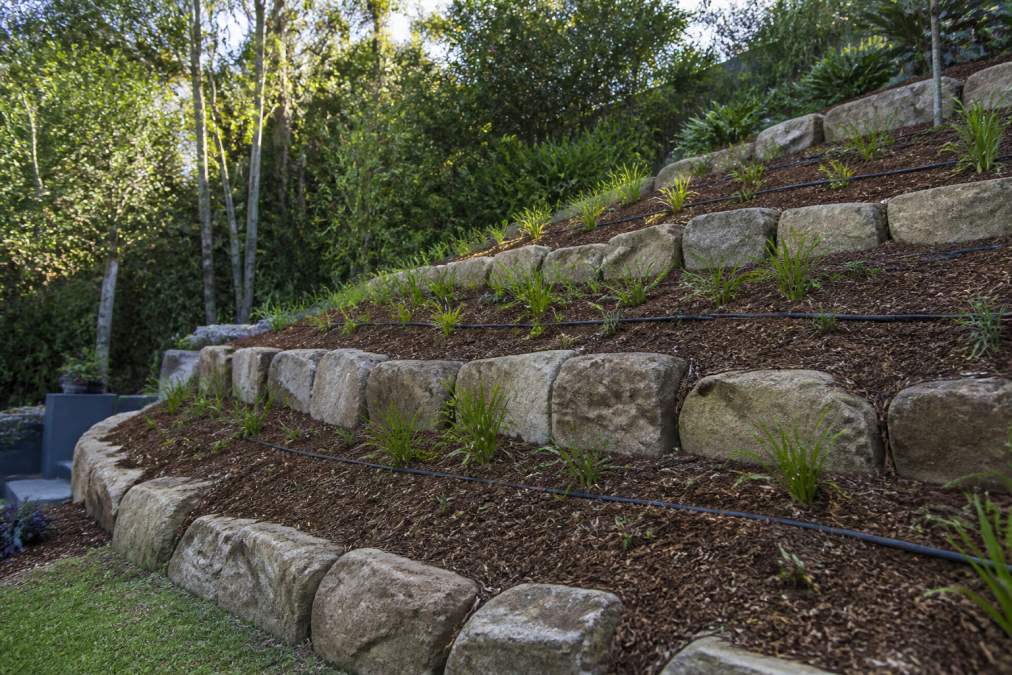
Terracing breaks a steep slope into a series of smaller, flatter steps. Each terrace is supported by a retaining wall or batter (a graded slope). Water moves across each terrace more slowly than across a continuous steep slope. Terracing is labour-intensive and requires significant earthworks, but it transforms steep, eroded slopes into usable, stable areas. Properties in Glenhaven and Box Hill often benefit from terracing.
The key principle is simple: slow water down and let it soak in. Fast-moving water carries sediment. Slow-moving water deposits sediment and allows infiltration.
Using Mulch, Ground Cover and Native Plants for Erosion Control
Structural solutions like walls and drainage manage water. Living solutions, mulch, ground cover, and deep-rooted plants, stabilise soil directly by binding it together and reducing water impact.
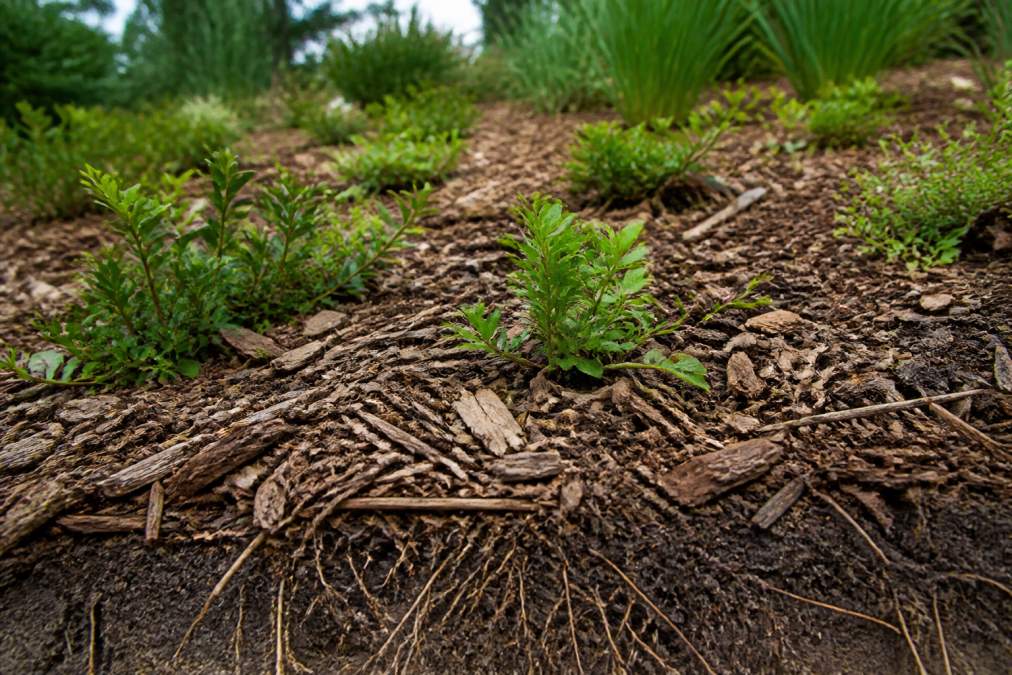
Organic mulch, wood chips, bark mulch, or compost, protects the soil surface from raindrop impact. A raindrop hitting bare soil has enough force to dislodge soil particles that then become part of runoff. Mulch absorbs that impact. A 75-100 mm layer of organic mulch reduces erosion significantly (peer-reviewed research). As mulch breaks down, it improves soil structure, helping soil hold together better and retaining moisture.
Straw or hay provides temporary erosion control, particularly useful during the establishment phase of a slope restoration project. Straw mats can be pegged down on bare slopes to reduce erosion while native plants establish. Once plants are growing and their roots have stabilised the soil, the straw biodegrades.
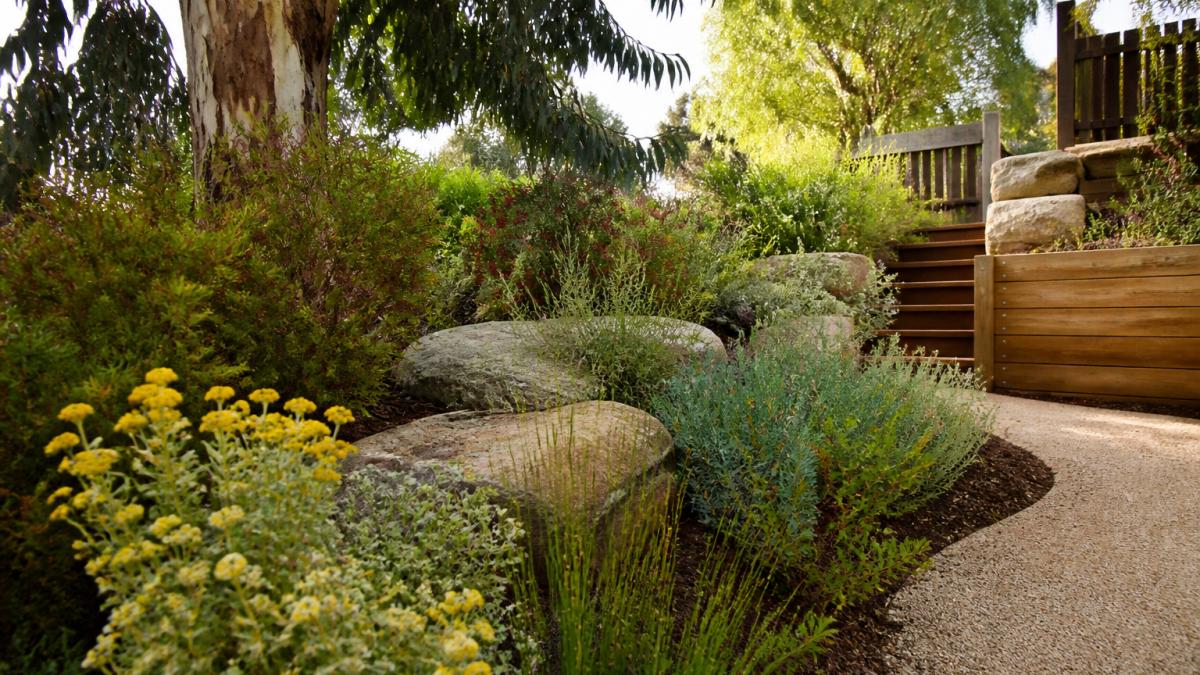
Native groundcover plants are the long-term erosion solution. Plants with deep, fibrous root systems bind soil particles together. The root network acts like a mesh, holding soil in place even when water flows across the slope. Native species like Myoporum parvifolium, Ozothamnus diosmifolius, and Leptospermum varieties establish well in Sydney conditions and hold soil effectively once established.
Native plants are adapted to Sydney's climate and soil conditions, establish more reliably than exotic species, and require less maintenance once established. For slopes in The Hills District or Greater Sydney, native groundcover is often the most practical long-term erosion control.
Timing matters with plants. Planting into bare, eroding soil often fails because plants can't establish in unstable conditions. The better approach is to stabilise the slope first with mulch, straw, or a temporary erosion control mat, then plant into that stable base. Plants then establish without fighting erosion.
Root binding is the mechanism that makes plants effective. Fine, fibrous roots interweave through soil, creating a network that holds soil particles together. Deep-rooted plants like native shrubs anchor into deeper soil layers, preventing slip failures on steep slopes.
Regrading and Hardscaping Techniques to Stabilise Slopes
Sometimes the most effective solution is to change the slope itself. Regrading, reshaping the land, can reduce slope gradient, create terraces, or redirect water flow. Hardscaping can stabilise slopes while creating usable space.
Regrading involves moving soil to flatten slopes or create a series of gentler steps. A steep 1-in-1.5 slope might be regraded to a gentler 1-in-3 slope, which erodes much more slowly. The earthworks required are significant, soil must be moved, compacted, and stabilised, but the result is a more stable, usable landscape. Regrading is particularly effective on properties in Bella Vista or Norwest where space allows reshaping.
Battered slopes, graded slopes rather than vertical walls, provide an alternative to retaining walls. A battered slope might be graded at 1-in-2 or 1-in-3 and planted with deep-rooted vegetation. This is gentler on the landscape than a wall and often more stable because the slope is supported by root systems across its entire face.
Hardscaping, timber decking, stone paving, or concrete, can stabilise slopes by distributing foot traffic and weather exposure. Permeable hardscaping allows water to soak through, reducing runoff.
Geotextiles, synthetic fabrics laid across the slope, provide temporary or permanent erosion control while vegetation establishes.
When to DIY Versus When to Engage Professional Landscaping
Not every erosion control project requires professional help. Some work is straightforward enough for a competent homeowner. Other work needs expertise and equipment you don't have.
DIY-friendly work includes:
Applying mulch across an existing, stable slope. If the slope isn't actively eroding, spreading 75-100 mm of organic mulch and refreshing it annually is straightforward.
Planting groundcover into a stabilised slope. Once the slope is stable, planting native groundcover is labour-intensive but not technically complex.
Installing a simple French drain on a gentle slope. If you're comfortable digging a trench, laying perforated pipe, and backfilling with gravel, a French drain is achievable.
Installing temporary erosion control measures like straw matting or erosion control blankets.
Professional work is essential for:
Retaining walls higher than 1 metre. Once walls exceed about 1 metre in height, engineering becomes important. Soil pressure increases significantly, and failure risk is real.
Slopes that are actively failing, slumping, cracking, or showing signs of movement. An actively failing slope needs professional assessment. A structural engineer can determine the cause and design a stabilisation strategy.
Regrading or terracing projects. Moving significant volumes of soil, compacting it properly, and ensuring new slopes are stable requires equipment and expertise.
Drainage systems that integrate with building foundations or stormwater infrastructure. Professional design and installation are necessary if drainage work affects your building, your neighbour's property, or council stormwater systems.
Projects on steep slopes (steeper than 1-in-2) or where failure could damage buildings, infrastructure, or neighbouring property.
The practical threshold is this: if the project involves structural work, significant earthmoving, or risk to buildings or infrastructure, engage a professional. If it's maintenance, planting, or minor improvements on a stable slope, DIY is reasonable.
Sloped gardens in Sydney don't have to be erosion problems. The strategies outlined here, from retaining walls and drainage through to mulch and native planting, address erosion at every level. The right approach depends on your slope's gradient, soil type, budget, and how much work you're willing to do yourself.
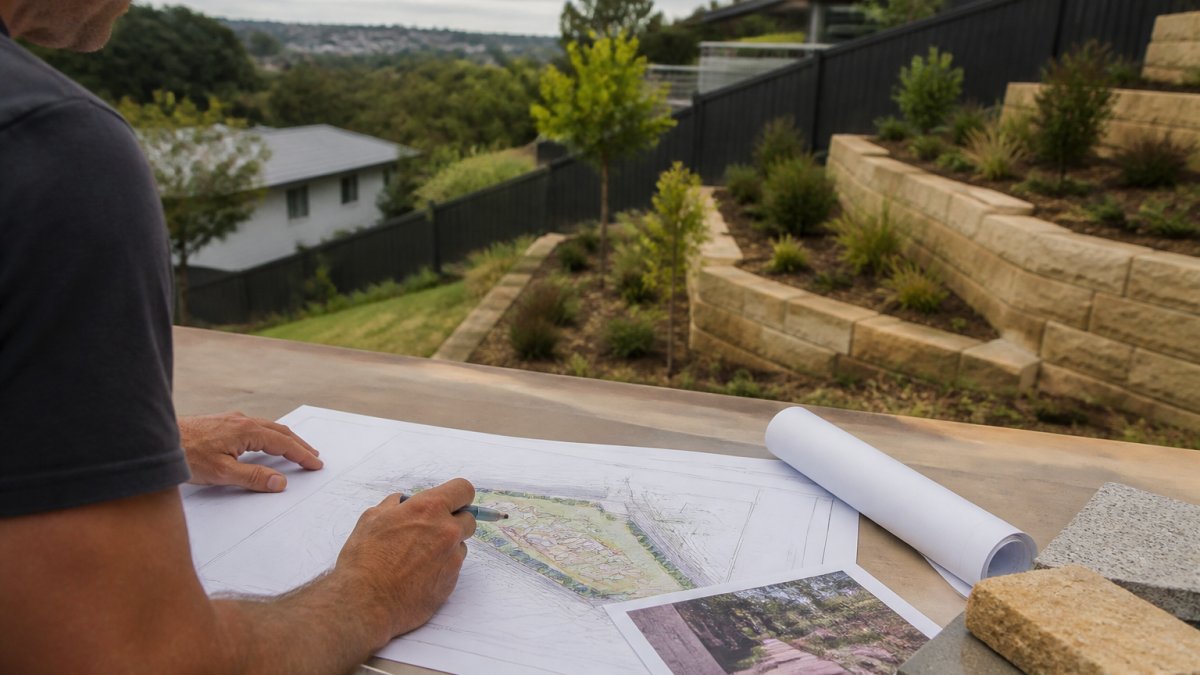
If you're planning a landscape project on a sloped property in The Hills District, Bella Vista, Castle Hill, or anywhere across Greater Sydney, FDSS Landscaping Services can help. We provide landscape design, 3D visualisation, and complete construction from retaining walls and drainage through to planting and hardscaping. Request a landscaping quote to discuss your slope stabilisation project with an experienced team that understands Sydney soils, local conditions, and practical solutions.
Frequently Asked Questions
How do I know if my sloped garden has a serious erosion problem?
Watch for visible signs: soil loss during rain, exposed tree roots, surface water channels or gullies, sediment collecting at the base of the slope, or bare patches where vegetation has washed away. Heavy rainfall events often reveal erosion quickly. If you notice water flowing directly down the slope rather than soaking in, or if soil is visibly moving, professional assessment is worthwhile. The steeper the gradient and the more exposed the soil, the higher the erosion potential.
What are the best native plants for preventing soil erosion on sloped Sydney gardens?
Native species with strong root systems work best: Banksia, Grevillea, Leptospermum (tea tree), Westringia and Acacia varieties establish deep root binding that stabilises soil. Ground covers like Myoporum parvifolium and Hardenbergia violacea spread across slopes to prevent sediment loss. These plants thrive in local conditions, require minimal maintenance once established, and their root systems hold topsoil during heavy rainfall. Choose species suited to your soil type and aspect for best results.
Do I need council approval for retaining walls in the Hills District?
Requirements depend on the wall height, location and your local council. Generally, walls over 1 metre or those near property boundaries may require development approval or engineering certification. Some councils classify certain retaining walls as exempt development if they meet specific standards. Contact your local council planning department before construction, as requirements vary across The Hills District suburbs. Professional landscapers familiar with local regulations can guide you through approval requirements.
How often should I maintain mulch and drainage systems on a sloped garden?
Inspect mulch and drainage after heavy rainfall to check for displacement or blockages. Top up organic mulch annually as it breaks down and settles, typically applying 75-100 mm of fresh material. Clear drainage swales and permeable surfaces of sediment and debris every 3-6 months. Monitor ground cover plants for gaps where erosion might restart. Maintenance schedules depend on slope gradient, rainfall patterns and soil type, steeper slopes and clay soils may need more frequent attention.