 ultimate-guide
Landscape Contractor Sydney: Your Complete Guide
Table of Contents
- What a Landscape Contractor Does
- Landscape Design Sydney: From Concept to Reality
- The Landscape Construction Process
- Retaining Wall Construction Requirements
- Budgeting Your Landscaping Project
- Local Council Regulations and Approvals
- Choosing the Right Contractor for Your Project
- Frequently Asked Questions
Last Updated: September 25, 2026
What a Landscape Contractor Does
A landscape contractor designs, plans, and builds outdoor spaces from the ground up, transforming raw land into functional, attractive environments through structural work, hardscaping, and planting design, unlike a gardener who maintains existing gardens.
For homeowners in the Hills District and across Greater Sydney, a landscape contractor Sydney provides one experienced team throughout planning, construction, and completion, managing site assessment, excavation, drainage, hardscape construction (paving, retaining walls, decking), and softscape installation (turf and planting), rather than juggling multiple trades.
FDSS Landscaping Services operates as a full-service landscape contractor, handling everything from initial 3D landscape design through to final construction and handover. This integrated model is especially valuable for complex projects involving retaining walls, significant excavation, or custom outdoor living areas.
Landscape Design Sydney: From Concept to Reality
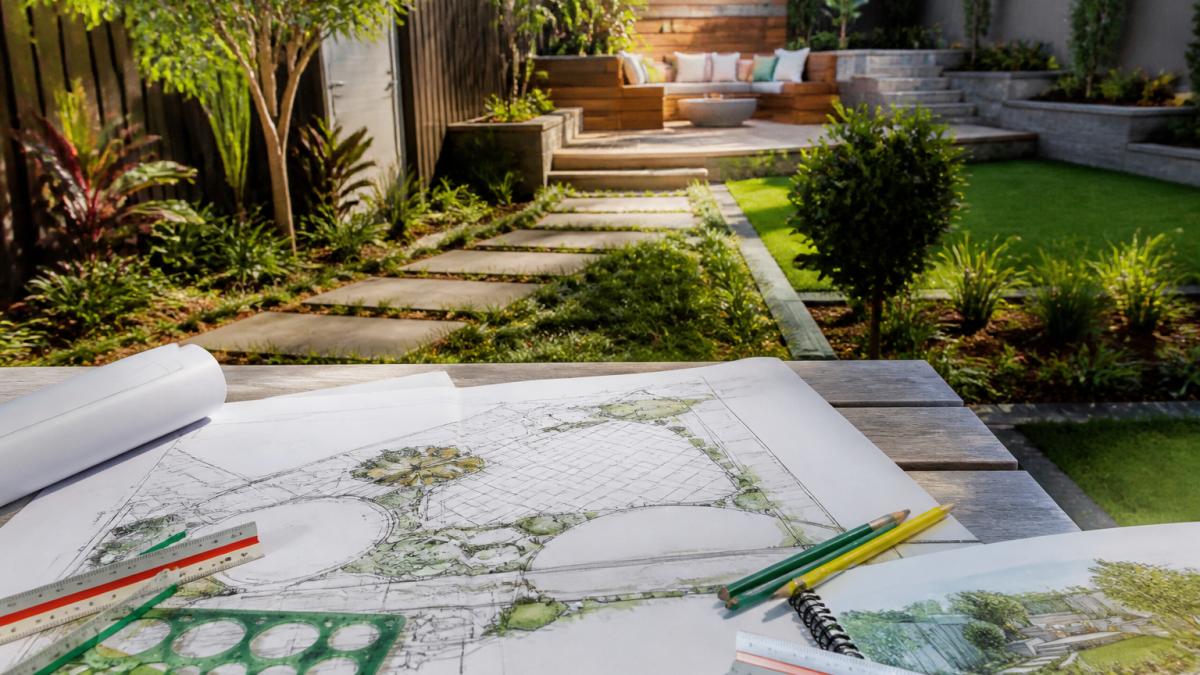
Landscape design is where every successful project begins. A landscape contractor Sydney with strong design capabilities reads a site, assesses constraints, and creates a vision that works within budget and local conditions.
The design process starts with a site assessment: soil type, drainage patterns, existing vegetation, slope, sun exposure, and access routes. The contractor also discusses your lifestyle, maintenance preferences, and budget to ensure the design is practical.
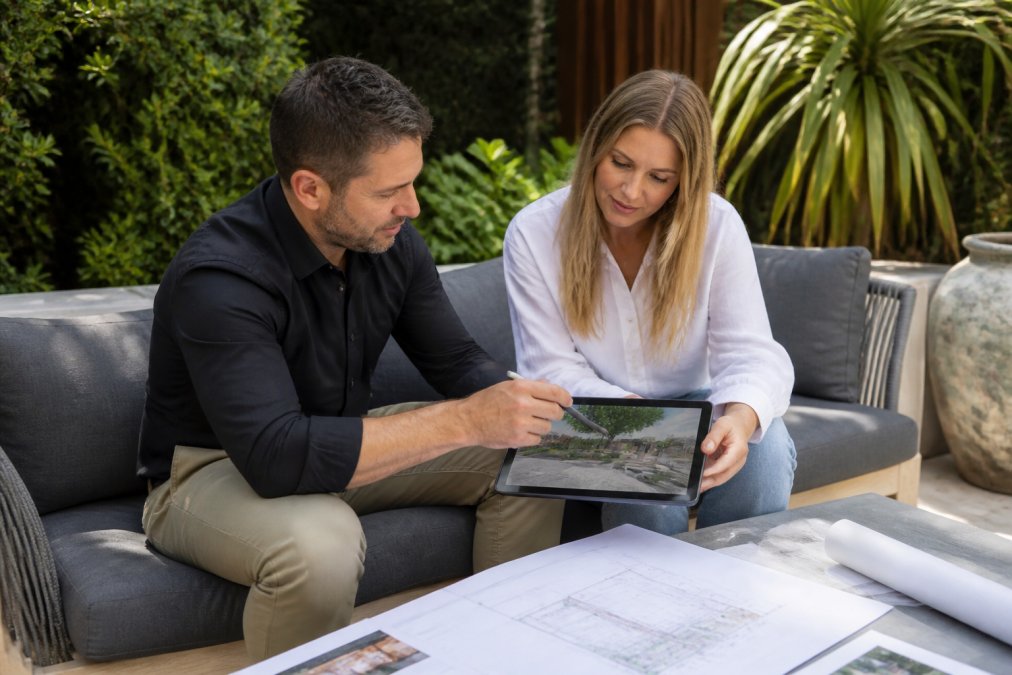
A landscape contractor develops concept designs using 3D visualisation so you can see the finished result before construction begins, accounting for local soil conditions, native plant suitability, and council setback requirements.
The design phase addresses functional elements, drainage, foot traffic flow, shade, and privacy, integrating practical considerations with aesthetic appeal.
The Landscape Construction Process
Landscape construction is where design becomes reality. Careful sequencing is essential, get the order wrong and costly rework follows.
Site Assessment and Planning
A landscape contractor surveys the land, identifies underground services (water, gas, electricity, telecommunications), and checks council requirements for setbacks, easements, and building approvals.
A site assessment reveals soil conditions, compaction levels, and drainage patterns. In areas like Castle Hill and Baulkham Hills, clay-heavy soils require different handling than sandy soils.
The planning phase includes securing necessary approvals. Retaining walls over a certain height or structures near property boundaries may require council approval or engineering certification. A professional landscape contractor advises on requirements and manages the approval process.
Excavation and Soil Preparation
A landscape contractor uses machinery to remove topsoil, level the site, and create the foundation for hardscape elements like paving or retaining walls.
Soil preparation determines long-term success. Compaction must be correct, too loose and paving settles unevenly; too dense and drainage suffers. The contractor manages topsoil stockpiling and reuse for economy and sustainability.
For projects involving retaining walls or significant grading changes, a landscape contractor may bring in additional fill material or remove excess soil, setting the geometry for everything that follows.
Hardscape and Softscape Installation
Hardscaping includes paving, retaining walls, decking, pergolas, and outdoor kitchens. Softscaping includes turf, planting, irrigation, and garden beds.
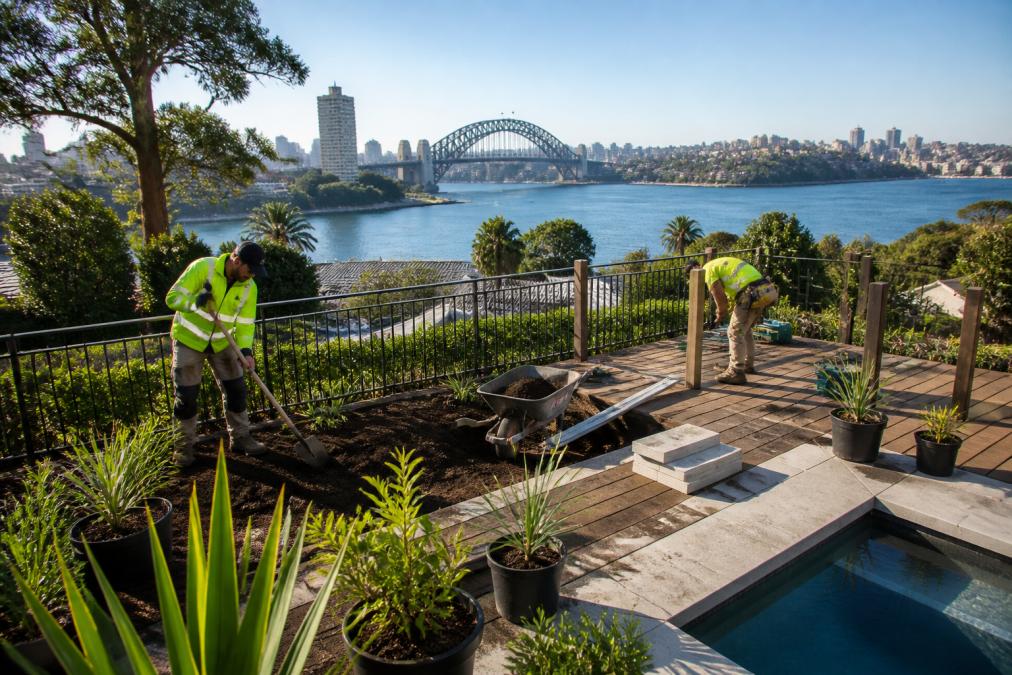
A landscape contractor sequences these carefully. Hardscape typically comes first because it requires machinery and creates dust. Once complete, softscape follows, preventing damage to newly planted areas and allowing irrigation systems to be installed precisely.
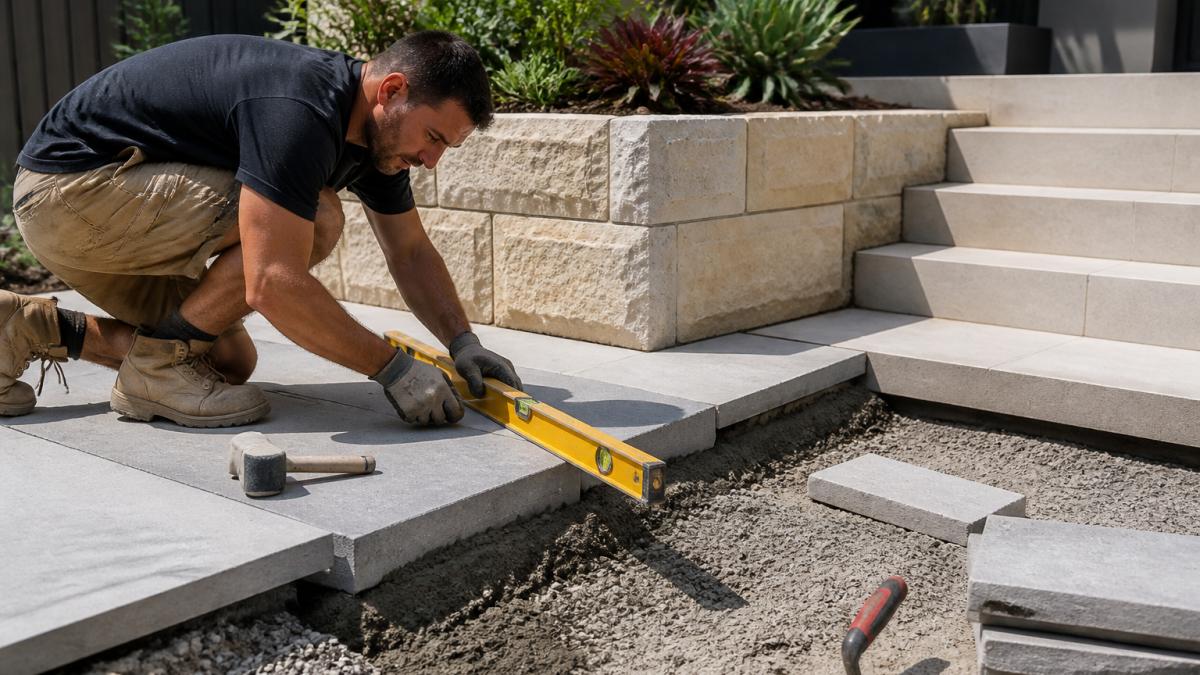
Paving installation requires proper base preparation, correct fall for drainage, and appropriate jointing. Retaining walls need proper drainage behind them to prevent hydrostatic pressure and failure. Turf installation requires soil preparation, levelling, and immediate watering.
Retaining Wall Construction Requirements
Retaining walls are engineered structures that must withstand soil pressure and water infiltration, not simply stacked blocks.
A retaining wall must be designed to handle the weight of soil behind it, depending on height, soil type, water conditions, and construction method. Walls over a certain height often require engineering certification and council approval (requirements vary by council).
Proper drainage is essential. Water trapped behind a retaining wall creates hydrostatic pressure that can cause failure. A landscape contractor installs drainage rock, a perforated drainage pipe at the base, and proper outlets to direct water away.
The foundation is equally critical. A retaining wall must sit on stable, well-compacted ground. Inadequate foundation preparation is a common cause of wall failure. The contractor excavates to appropriate depth, compacts the base, and adds a concrete footing.
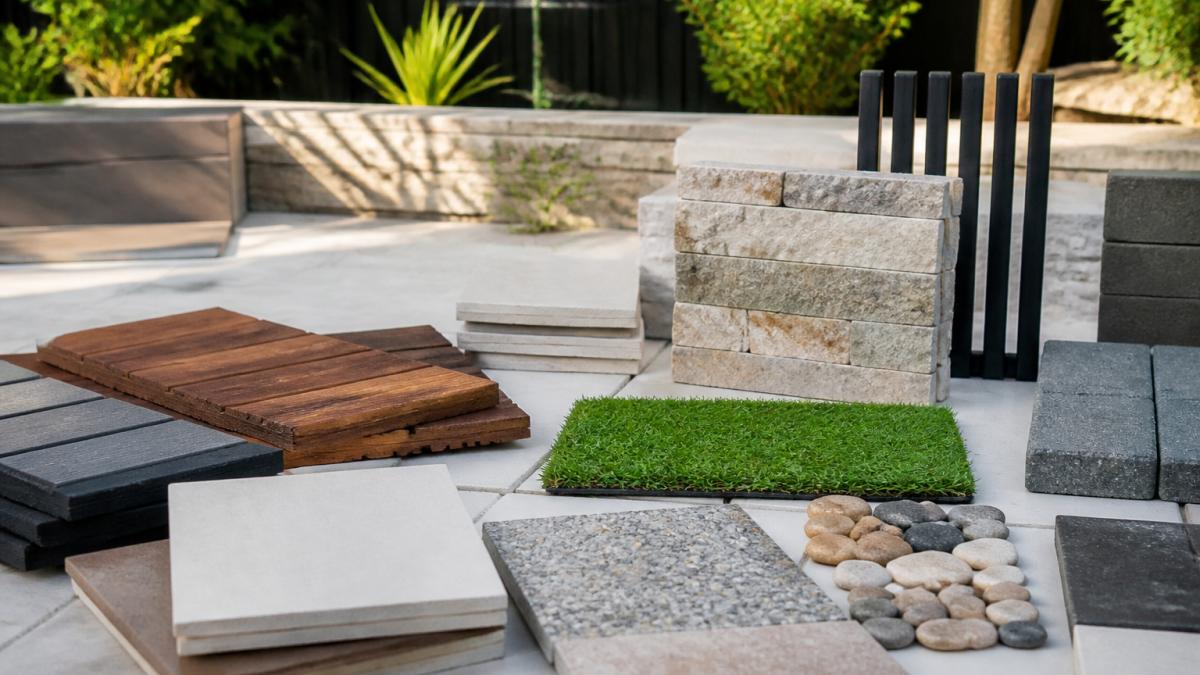
Material choice affects appearance and durability.
Budgeting Your Landscaping Project
Landscape construction costs depend on site size, complexity, material choices, and local conditions. Understanding cost drivers helps you make informed decisions and compare quotes fairly.
Cost Drivers and Typical Budget Allocation
Most landscape projects break down into three cost categories: site preparation and earthworks, hardscape materials and installation, and softscape (turf, planting, and irrigation).
Getting Accurate Quotes
A professional landscape contractor provides a detailed, itemised quote breaking down costs by element: excavation, paving, walls, turf, planting, irrigation, and labour. A quote that simply states a total figure without breakdown is a red flag.
Timing and Material Availability
Timing affects cost in two ways. Some contractors offer better rates during quieter seasons (typically autumn and winter in Sydney). Material lead times can influence scheduling, natural stone or custom pavers may have 6-8 week lead times. A professional landscape contractor advises on timing and helps you plan a realistic schedule and budget.
Scope Adjustments and Phasing
If budget is constrained, discuss phasing with your contractor. You might complete hardscape and major structural work in year one, then add planting and irrigation in year two. However, phasing adds mobilisation costs.
Local Council Regulations and Approvals
Landscape construction in Greater Sydney is subject to local council regulations that vary significantly by location. Understanding what approvals are required before you design, not after, prevents costly delays and rework.
Retaining Walls and Engineering Certification
Retaining walls are the most common landscape element requiring council approval or engineering certification. Penrith City Council, Blacktown City Council, and The Hills Shire typically require engineering certification for retaining walls over 1 metre in height, or where the wall is within 900 mm of a property boundary. Some councils require certification for walls over 600 mm on steep slopes or in flood-prone areas.
Development Applications and Landscape Works
Most residential landscape projects do not require a Development Application (DA). However, certain works do: structures (pergolas, gazebos, outdoor kitchens, decking over 300 mm high) may require DA if they exceed size thresholds or are in heritage areas; tree removal on properties with tree preservation orders or in heritage conservation zones requires council approval; significant earthworks may require DA; and works in flood-prone areas often require assessment against council flood planning controls.
Drainage and Stormwater Requirements
Councils are increasingly strict about drainage. Landscape works must not increase stormwater runoff to neighbouring properties or create flooding risk.
Heritage and Tree Preservation
If your property is in a heritage conservation area or has a heritage listing, landscape works may be restricted. You may not be able to remove certain trees, alter the front setback, or install certain materials without heritage approval. If your property has trees subject to a Tree Preservation Order (TPO), you cannot remove or significantly prune them without council consent.
Easements and Underground Services
Before any excavation begins, you must identify underground services: water mains, sewer, gas, electricity, and telecommunications. Hitting a service line is dangerous, expensive, and can cause service outages.
Getting Approvals Right
Discuss council requirements with your landscape contractor before finalising design. They should identify what approvals your project requires, advise on engineering certification thresholds, confirm drainage and stormwater requirements, check for heritage or tree preservation restrictions, and manage applications and council liaison. This upfront investment prevents surprises during construction.
Choosing the Right Contractor for Your Project
FDSS Landscaping Services brings integrated design-and-build expertise across Greater Sydney, with particular strength in the Hills District and North-West Sydney. The team manages projects from initial 3D landscape design through to completion, eliminating communication gaps between separate designers and builders.
Frequently Asked Questions
What is the difference between a landscape designer and a landscape contractor?
A landscape designer creates the visual plan and specifications for your outdoor space, often using 3D design software to show what the finished result will look like. A landscape contractor executes that design, managing excavation, construction, installation and project delivery. Many landscape contractors Sydney-based offer both services, allowing you to work with one experienced team from concept through completion, ensuring design intent is preserved during construction.
Do I need council approval before starting a landscaping project?
Requirements depend on the scope and location of your project. Structural elements like retaining walls above a certain height, significant excavation, or changes affecting drainage may require council approval or engineering certification. Some councils in the Hills District and North-West Sydney have specific guidelines for external works. Your landscape contractor should assess your site and advise on what approvals are needed before work begins.
What should I prepare before my landscaping contractor arrives?
Clear the work area of obstacles, vehicles and personal items. Mark any underground services (pipes, cables, utilities) if you know their location. Confirm site access and parking for equipment and vehicles. Have a clear understanding of your project scope, timeline and any specific requirements. A professional landscape contractor will conduct a thorough site assessment during planning, but early preparation helps the project run smoothly and on schedule.
What makes quality landscape construction work last?
Quality depends on proper site preparation, appropriate material selection, correct installation techniques and compliance with Australian Standards. Drainage solutions must be designed to handle local rainfall. Hardscape materials should suit the climate and soil conditions. A licensed, fully insured contractor will follow best practices for soil compaction, base preparation and construction sequencing. Regular maintenance schedules also extend the life of your landscaping significantly.