 how-to
How to Design a Modern Low Maintenance Garden in Sydney
Table of Contents
- Start With Your Site: Soil, Slope and Sun Exposure
- Low Maintenance Garden Layout: Reducing Lawn and Adding Structure
- Low Maintenance Plants for Sydney Gardens
- Modern Garden Paving Ideas That Cut Ongoing Work
- Backyard Drainage Solutions for Sydney Properties
- Retaining Wall Construction in Sydney: Managing Slopes Practically
- Irrigation, Mulching and a Realistic Maintenance Schedule
- Outdoor Living Areas: Completing Your Low Maintenance Garden Design
- Frequently Asked Questions
Last Updated: August 10, 2026
Start With Your Site: Soil, Slope and Sun Exposure
Designing a low maintenance garden in Sydney starts with understanding your site. Getting this right upfront saves significant rework later.
Reading Your Block Before You Design
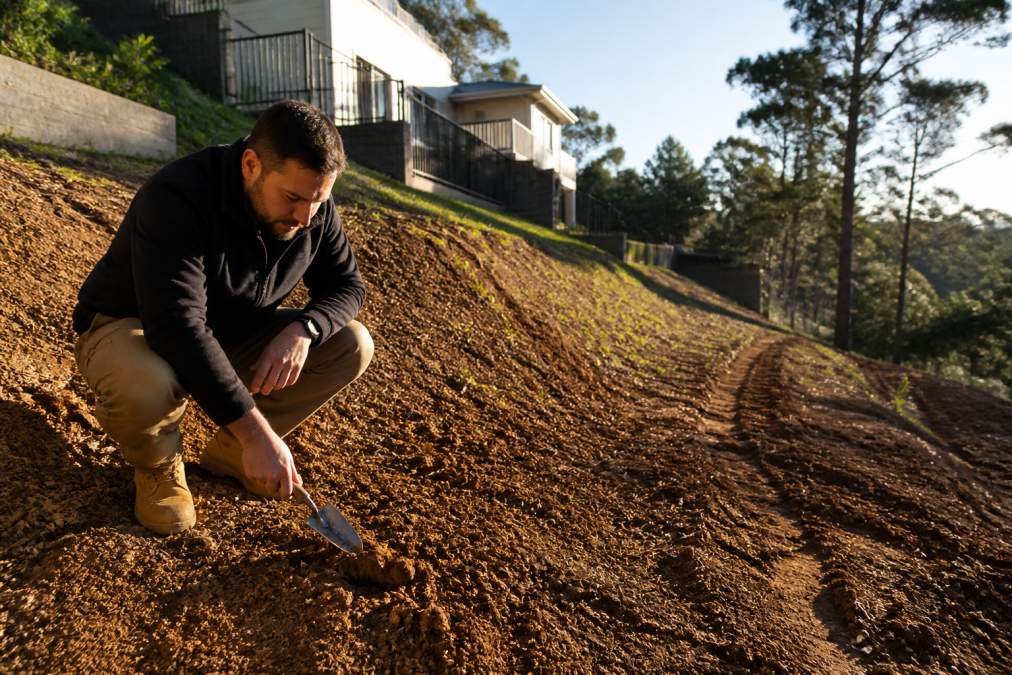
Many parts of Western Sydney and The Hills District have clay-rich soils, but soil conditions vary between suburbs and individual properties. Before finalising planting, paving or drainage, assess the site’s actual soil type, drainage behaviour and slope. Matching the landscape design to the existing site conditions helps reduce future maintenance and drainage problems.
Before committing to any layout, assess these four factors:
- Soil type and drainage behaviour: Does water pool after rain? Does the surface crack in summer? Clay-rich soils may benefit from appropriate soil preparation, drainage improvements or plant species suited to those conditions. The right approach depends on the individual site.
- Slope and fall: Even a gentle gradient affects where water travels, where retaining walls may be needed, and how paving should be graded.
- Sun exposure: In Sydney, north-facing areas generally receive the most winter sun, while south-facing areas are often cooler and shadier. Existing trees, buildings and site orientation can also affect sun exposure.
- Existing infrastructure: Sewer lines, stormwater pipes, easements, and overhead cables all constrain what can be built where.
A proper site assessment shapes every decision that follows. Matching plants to existing soil conditions rather than fighting them is one of the most effective strategies for reducing ongoing garden maintenance.
Low Maintenance Garden Layout: Reducing Lawn and Adding Structure
Lawn can be one of the more maintenance-intensive elements of a residential garden because it may require regular mowing, edging, watering, fertilising and repair. Reducing lawn area can significantly reduce ongoing maintenance where large turf areas are not needed.
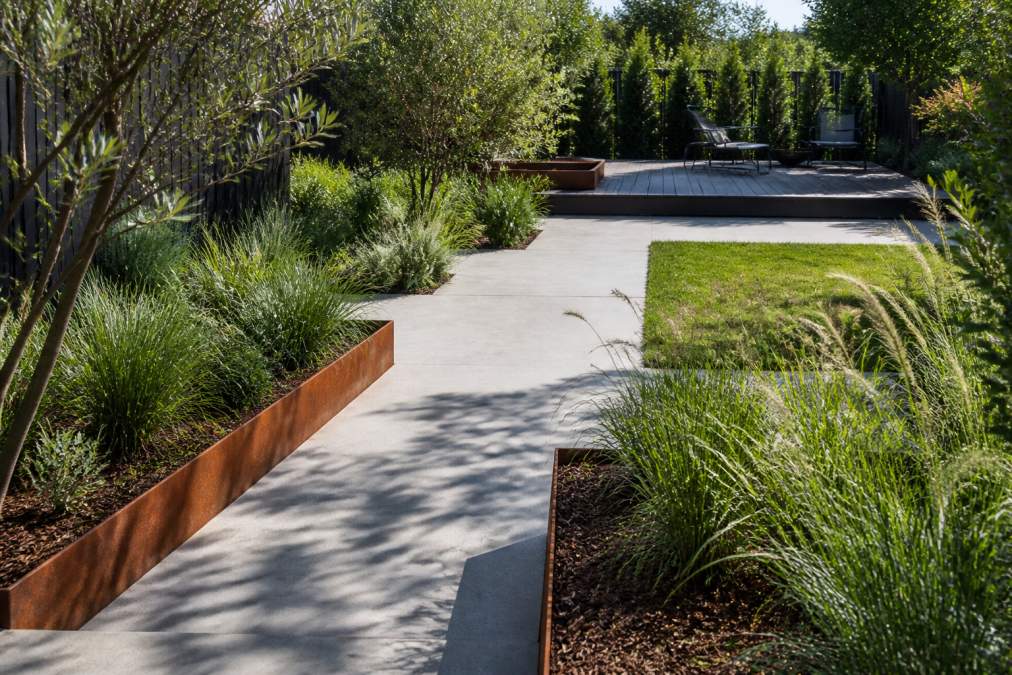
The practical alternative is a balance of hardscaping (paving, decking, retaining walls, garden edging) and softscaping (garden beds, trees, ground covers).A well-designed low-maintenance garden balances practical hardscaping with manageable areas of planting and turf, based on how the household intends to use the space.
Hardscaping vs Softscaping: Finding the Right Balance
The right balance depends on how you use the space. A family with young children may want a small turf area for play, surrounded by paved entertaining zones and structured garden beds. A couple minimising weekend work might eliminate lawn entirely, replacing it with permeable paving, gravel, and architectural planting.
Zone | Recommended Approach | Maintenance Impact | |
|---|---|---|---|
High-traffic areas | Concrete, stone or timber paving | Very low, sweep or hose | |
Entertaining areas | Decking, concrete, pavers | Low, occasional clean | |
native planting | Defined edging, appropriate mulch and plants suited to the site | Low if well-planted | |
Lawn areas | Reduce or eliminate | High if retained | |
Slopes and banks | Ground-cover planting for suitable gentle slopes; retaining structures where soil retention or level changes require them | Medium, varies |
Garden bed edging is worth particular attention. Steel edging, concrete mowing strips, or stone borders create a clean line between planted areas and paving, dramatically reducing edge trimming and weed management time.
DIY vs Professional Landscape Construction
Most homeowners can handle basic softscaping: planting, mulching, and maintaining established beds. Hardscaping is different. Concreting, paving, retaining wall construction, and drainage installation require proper substrate preparation, correct falls, and in many cases, engineering input or council approval.
Getting hardscaping wrong is costly to fix. Poorly laid paving lifts and cracks. Retaining walls without adequate drainage fail under soil pressure. Drainage that isn't graded correctly directs water toward the house rather than away from it. If the work involves concrete, structural walls, drainage infrastructure, or excavation, engaging a professional landscape construction team is the more reliable path. Certain retaining wall heights and structural works may require council approval or engineering certification depending on your local authority, requirements vary by site and council, so check with your local council before work begins.
Low Maintenance Plants for Sydney Gardens
Low maintenance plants for Sydney gardens are those that suit the local climate without requiring supplemental irrigation once established, resist local pest and disease pressures, and don't outgrow their position within a few seasons. The most common mistake is selecting plants based on appearance at the nursery rather than suitability to the site.
Native and Climate-Resilient Plants That Suit The Hills District
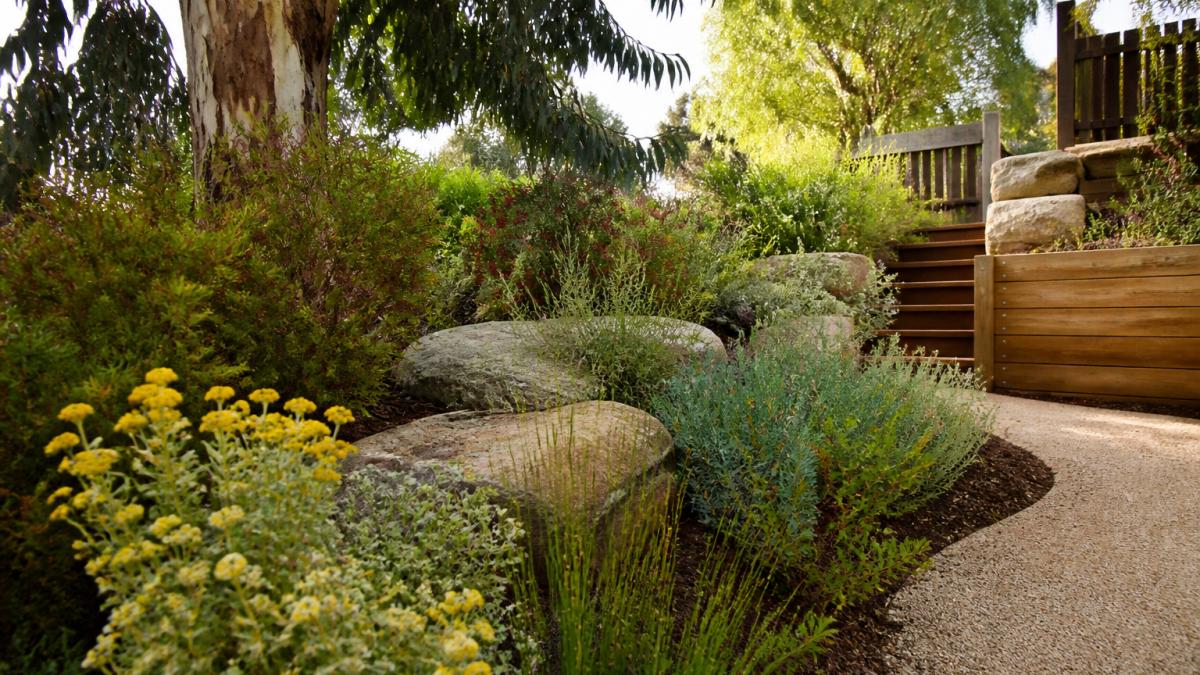
Australian native plants are the most climate-resilient option for Sydney gardens. They've evolved for local rainfall patterns, soil conditions, and temperature ranges. Many require minimal irrigation once established, tolerate the reactive clay soils common in The Hills District, and support local wildlife.
Reliable choices for Western Sydney conditions include Lomandra longifolia (Mat Rush), Westringia fruticosa (Coast Rosemary), Dianella species (Flax Lily), Lilly Pilly (Syzygium species), and Correa species. Most native species perform best when planted into well-draining soil with minimal fertiliser.
Sculptural and Architectural Plants for a Modern Look
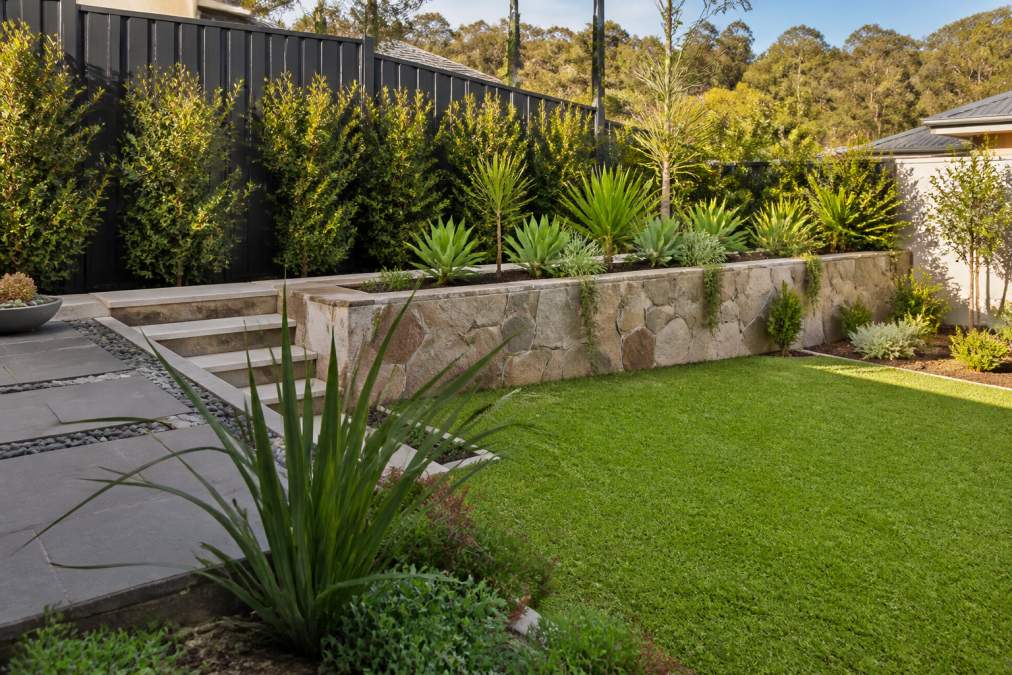
A minimalist garden aesthetic relies on plants with strong architectural form. These create visual structure without dense planting. Agave and large succulents are drought-tolerant, require almost no maintenance once established, and create striking contrast against concrete or stone. Position them away from paths and play areas, as agave can grow large and the terminal spike is sharp.
Ornamental grasses, particularly varieties of Pennisetum and native Lomandra, add movement and texture. Cycads create a bold look that suits minimalist design. Clumping bamboo (non-invasive species only) provides screening without the maintenance demands of a hedge. The key principle is restraint: three well-placed agave in a gravel bed have more visual impact than a crowded mixed border and require far less ongoing work.
Modern Garden Paving Ideas That Cut Ongoing Work
Paving eliminates mowing, weeding, and seasonal replanting across that area permanently. Modern garden paving ideas for Sydney properties range from brushed concrete and exposed aggregate to natural stone, porcelain tiles, and permeable paving systems.
Concrete remains the most cost-effective and durable option for large areas. Brushed or exposed aggregate finishes reduce slip risk and disguise surface wear. Natural stone (sandstone, granite, bluestone) suits period homes and ages well, but requires careful installation to prevent movement and weed ingress. Porcelain pavers are popular in contemporary Sydney gardens, they're low-maintenance, resist staining, and come in large-format tiles that suit a clean, minimalist look. Permeable paving systems, including gravel, decomposed granite, and permeable concrete or pavers, allow water to infiltrate rather than run off. This is particularly relevant in areas subject to stormwater management requirements.
Choose paving based on the load it will carry, the drainage requirements of the area, and the maintenance you're willing to commit to. All paving requires some maintenance, but the right material in the right application reduces that to an occasional hose-down rather than a weekly task.
Backyard Drainage Solutions for Sydney Properties
Poor drainage is the most common structural problem in Sydney backyards. Clay soils, flat or poorly graded blocks, and increased hardscaping all concentrate stormwater that needs somewhere to go.
Backyard drainage solutions for Sydney properties generally fall into three categories: surface drainage (grading and channel drains), subsurface drainage (agricultural pipe or slotted pipe systems), and connection to the stormwater system. Most residential projects need a combination of all three.
Common warning signs that drainage needs attention before landscaping proceeds include water pooling on the surface for more than an hour after rain, soft or boggy ground in specific areas, staining or damp patches on retaining walls or fences, and soil erosion on slopes after heavy rain. Getting drainage right at the construction stage is significantly cheaper than rectifying it after paving and planting are in place. In many cases, drainage work connects to council stormwater infrastructure, which may require approval from your local council. Requirements vary, so confirming with your council before work begins is sensible.
Retaining Wall Construction in Sydney: Managing Slopes Practically
Sloped blocks are common across The Hills District and North-West Sydney. The terrain around Glenhaven, Box Hill, and North Kellyville regularly presents significant grade changes that need to be managed before a functional garden can be created.
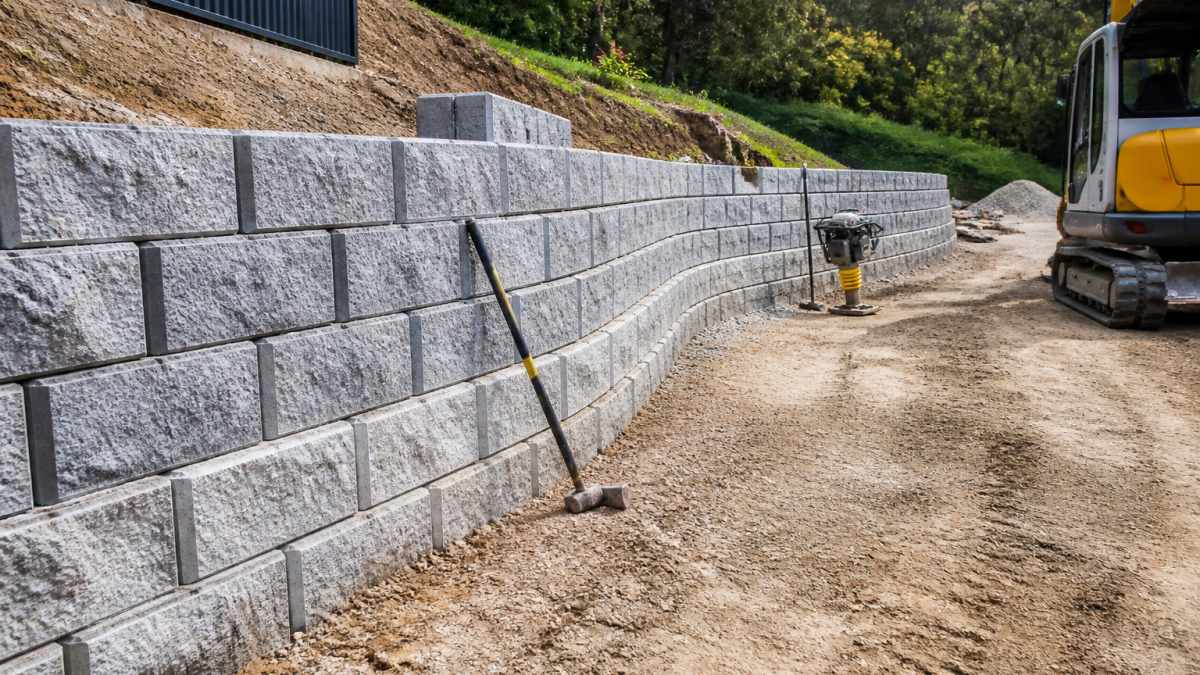
Retaining wall construction serves two purposes: it holds soil in place on slopes and creates level terraces that are far more usable and easier to maintain than a sloped surface. A well-designed retaining wall system can transform an awkward sloped block into a series of flat, functional outdoor zones.
Materials for residential retaining walls include concrete sleepers, natural stone, besser block, and treated timber (though timber has a shorter lifespan). Concrete sleepers are the most popular choice for new construction in Western Sydney: they're durable, low maintenance, and available in a range of finishes that suit contemporary garden design.
The engineering requirements for retaining walls depend on height, soil conditions, and surcharge loads. In NSW, retaining walls above a certain height typically require a development application or complying development certificate, and may need to be designed by a structural engineer. The specific thresholds vary by council and site. Check with your local council before construction begins.
Irrigation, Mulching and a Realistic Maintenance Schedule
A low maintenance garden still requires some maintenance. The goal is reducing that maintenance to tasks that are genuinely manageable and building systems that do the work for you between visits.
Irrigation efficiency is the foundation. A drip irrigation or subsurface irrigation system, connected to a timer, eliminates manual watering and delivers water directly to plant root zones. This reduces water use, suppresses weed germination, and keeps plants healthy through Sydney's dry summers without daily attention.
Mulching is the other non-negotiable. A 75-100mm layer of quality mulch across all garden beds suppresses weeds, retains soil moisture, moderates soil temperature, and gradually improves soil structure. Hardwood or forest mulch suits most Sydney conditions. Reapplying mulch once a year is typically sufficient.
A realistic maintenance schedule for a well-designed low maintenance garden in Sydney might look like this:
Task | Frequency | Time Required |
|---|---|---|
Check irrigation system | Monthly | 15-20 minutes |
Weed garden beds | Monthly | 30-60 minutes |
Prune shrubs and natives | 2-3 times per year | 1-2 hours |
Reapply mulch | Annually | 2-3 hours |
Clean paving surfaces | Seasonally | 30-60 minutes |
Lawn mowing (if retained) | Fortnightly | Variable |
The contrast with a conventional lawn-heavy garden, which typically requires weekly mowing, regular edging, seasonal fertilising, and ongoing weed management, illustrates why the layout decisions made at the design stage have such a large impact on long-term workload.
Outdoor Living Areas: Completing Your Low Maintenance Garden Design
An outdoor living area is the feature that makes a low maintenance garden genuinely usable rather than just attractive.
Outdoor living spaces in Sydney gardens typically include some combination of a paved or decked entertaining area, a pergola or shade structure, and integrated planting that provides privacy and visual interest without demanding constant attention. The design should connect naturally to the house, ideally with a direct flow from indoor living areas to the outdoor space.
For a low maintenance outcome, the materials and construction matter as much as the design. Concrete and composite decking require far less ongoing maintenance than treated pine. Powder-coated steel or aluminium pergola structures outlast timber in Sydney's UV-intense climate. Built-in seating or planters reduce the need to move furniture and create a more permanent, resolved aesthetic.
Architectural plants, agave, large succulents, clumping grasses, or a well-positioned Lilly Pilly hedge, work well around outdoor living areas because they provide structure and privacy without constant pruning. A few well-chosen pots with drought-tolerant species add flexibility without adding maintenance burden.
The outdoor living area is also where lighting, outdoor power, and drainage intersect with the landscape design. Getting these services coordinated during construction, rather than retrofitted later, produces a cleaner result and avoids damage to finished surfaces.
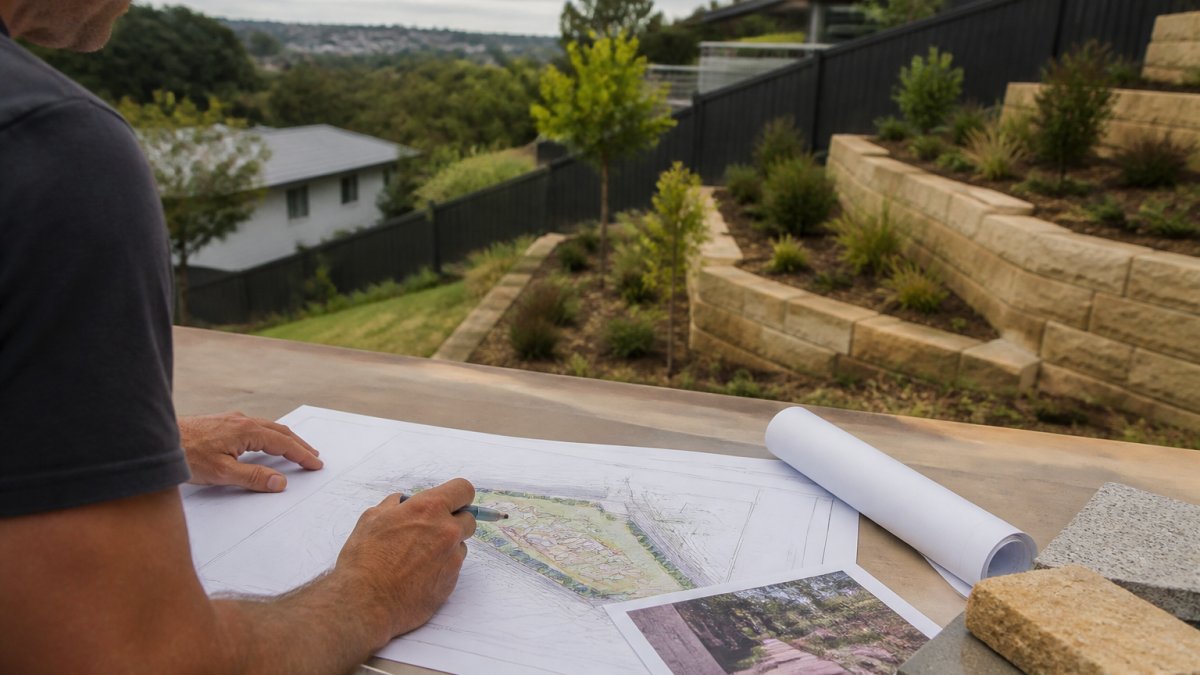
FDSS Landscaping Services designs and builds complete outdoor living areas as part of integrated landscape construction projects across The Hills District and Greater Sydney, from initial concept and 3D design through to construction and completion.
Designing a low maintenance garden that looks genuinely good takes more upfront planning than most homeowners expect, but the payoff is a space that stays attractive with a fraction of the ongoing effort of a conventional garden.
If you're planning a landscaping project in The Hills District, North-West Sydney, or the broader Sydney area, FDSS Landscaping Services can help you move from concept to completed construction. Our design-and-build approach means you work with one team across the entire project, from site assessment and 3D design through to paving, planting, drainage, and outdoor living construction. Request a free quote from FDSS Landscaping Services to get started.
Frequently Asked Questions
What are the best low-maintenance plants for Sydney gardens?
Native and drought-tolerant plants perform best across Sydney's climate. Good choices include Lomandra, Dianella, Westringia, Lilly Pilly, and Correa, all of which handle Sydney's dry summers with minimal watering once established. Succulents and agaves add sculptural interest with almost no ongoing care. The right selection depends on your soil type, sun exposure and drainage, so it pays to match plants to your specific site rather than following a generic list.
Is turf or paving better for a low-maintenance garden?
Paving generally requires far less ongoing effort than turf. Lawn needs regular mowing, edging, fertilising and watering to stay presentable, whereas well-laid concrete, stone or permeable paving needs only occasional cleaning. For families who use the lawn for play or pets, a smaller, high-quality turf area combined with paved zones is often the practical middle ground. The best outcome depends on how you use the space and your property's drainage conditions.
Do I need council approval for retaining walls in The Hills District?
Approval requirements for retaining walls vary depending on wall height, the volume of fill involved, proximity to boundaries, and your specific council's development controls. The Hills Shire Council and Blacktown City Council each have their own thresholds. Generally, walls above a certain height or those that affect drainage or neighbouring properties require a development application or complying development certificate. Always check with your local council or a qualified professional before construction begins.
How do I manage drainage in a sloped North-West Sydney backyard?
Sloped blocks in areas like Kellyville, Box Hill and Rouse Hill often have clay-heavy soils that shed water quickly rather than absorbing it. Effective backyard drainage solutions include installing subsoil agricultural drains, reshaping garden beds to direct runoff away from structures, using permeable paving materials, and incorporating retaining walls to create level terraces. Poor drainage left unaddressed can undermine paving, damage foundations and kill plants, so it is worth assessing the site properly before finalising any garden layout.