 ultimate-guide
Best Garden Design Ideas 2026: A Practical Guide
Table of Contents
- Garden Design Ideas for 2026: What's Changing
- Sustainable Landscaping Materials and Eco-Conscious Design
- Outdoor Living and Indoor-Outdoor Flow
- Climate-Resilient Planting and Native Species
- Sydney Retaining Walls and Hardscaping Solutions
- 3D Landscape Design Services for Planning and Visualisation
- Residential Drainage Solutions and Soil Health
- Smart Garden Technology and Low-Maintenance Features
- Frequently Asked Questions
Last Updated: September 2, 2026
Garden Design Ideas for 2026: What's Changing
The landscape design world is shifting. Homeowners now ask harder questions: Does this garden work for how we actually live? Can it handle our climate? Will it support wildlife? The best garden design ideas 2026 blend aesthetics with function, sustainability with durability, and visual appeal with genuine ecological benefit.
At FDSS Landscaping Services, we've observed this shift firsthand across Greater Sydney. Projects that excite homeowners most aren't those that look good for six months, they're ones that improve over time, require less intervention, and create outdoor spaces that feel like extensions of the home. Whether you're planning a complete garden redesign in Castle Hill or a modest renovation in Rouse Hill, understanding what's driving contemporary landscape design will help you make choices that last.
Sustainable Landscaping Materials and Eco-Conscious Design
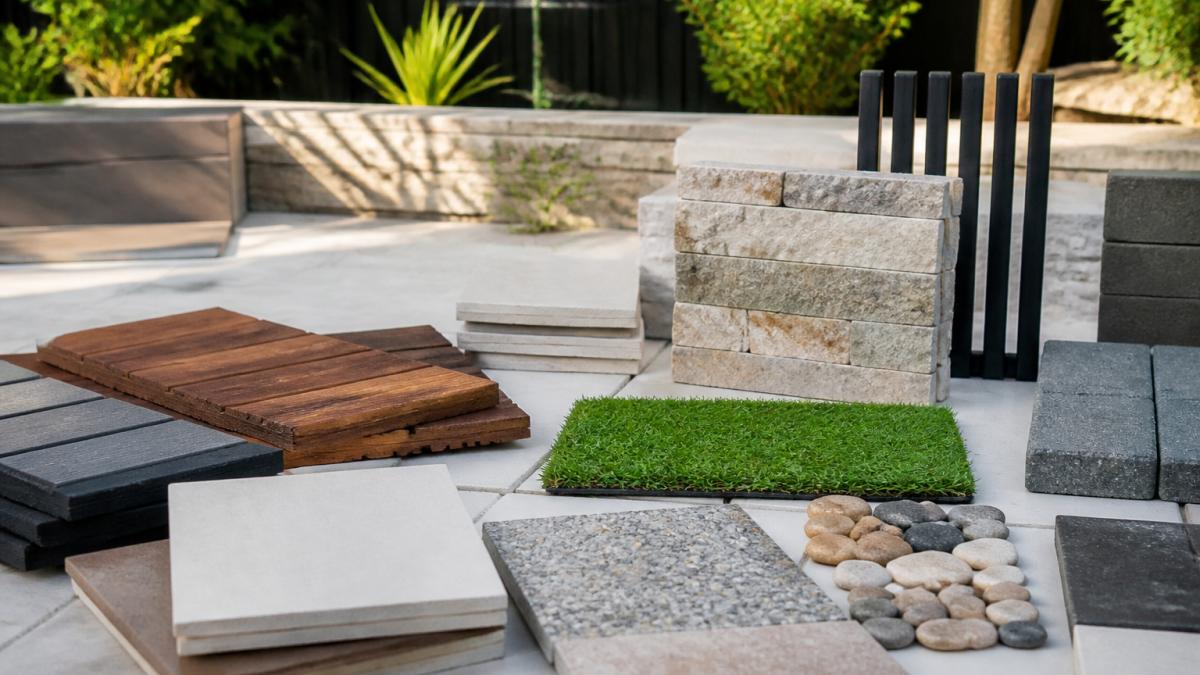
Sustainable landscaping materials have moved from niche choice to mainstream expectation. Homeowners now ask where materials come from, how they're manufactured, and whether they'll leach chemicals into soil or waterways. Sustainable materials typically outlast cheaper alternatives and require less maintenance over time.
Permeable paving, whether permeable concrete, recycled plastic pavers, or gravel systems, manages stormwater on-site rather than overwhelming local drainage infrastructure. This matters across Greater Sydney, where heavy rainfall events are becoming more intense. Permeable surfaces let water soak through to groundwater rather than pooling or running off into streets.
Reclaimed and recycled materials are gaining traction too. Salvaged timber for raised beds, recycled aggregate for pathways, and reclaimed stone for features reduce demand for new resource extraction. These materials carry character that new materials struggle to match, and the environmental benefit aligns with aesthetic preference.
Native stone and locally sourced gravel are equally important. Using stone and aggregates available within New South Wales reduces transport emissions and supports local suppliers. For retaining walls, hardscaping, and garden edging, locally quarried materials are both more sustainable and often more cost-effective.
Instead of importing new topsoil for every project, landscape designers now work with site soil, improving it through organic matter and compost rather than replacing it wholesale. This approach builds soil health over time and reduces waste.
Outdoor Living and Indoor-Outdoor Flow
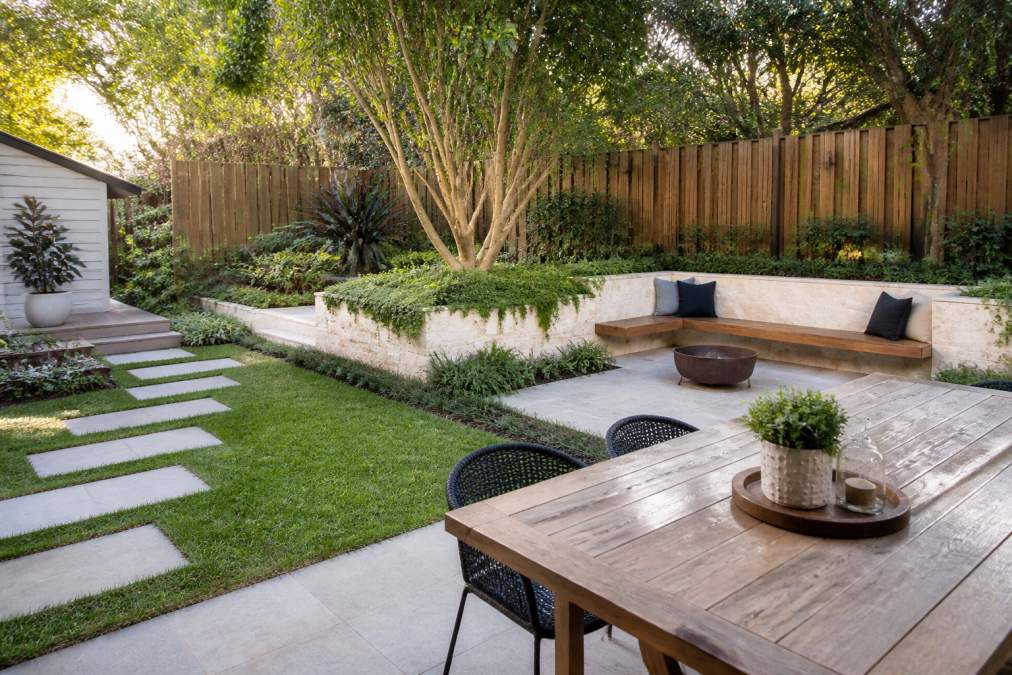
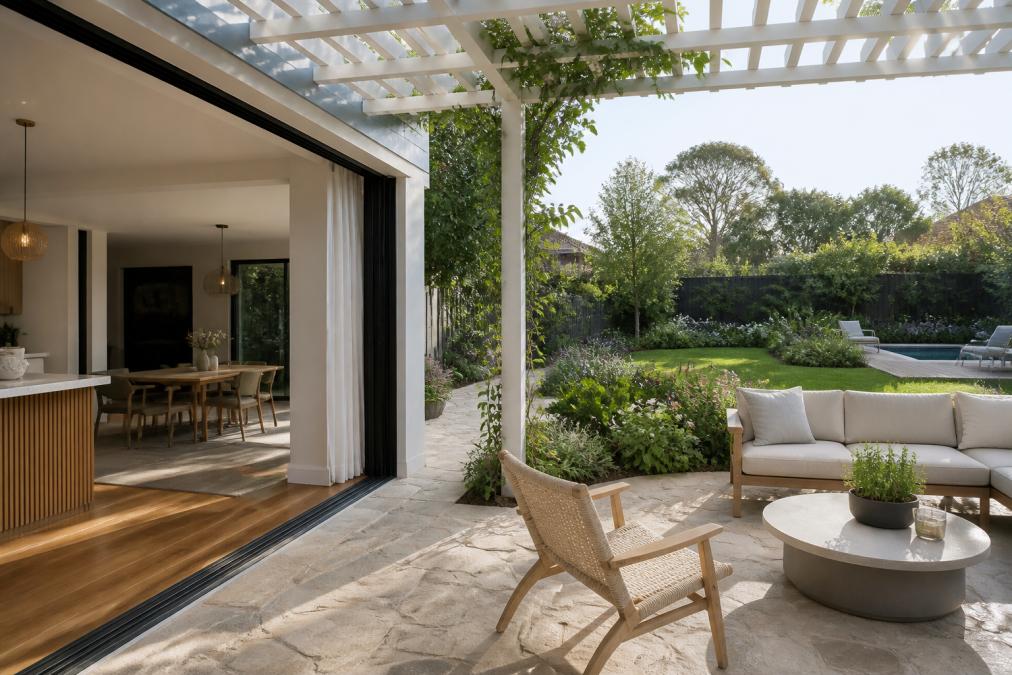
The boundary between inside and outside has become fluid. Modern garden design treats outdoor spaces as functional rooms: dining areas with weather protection, kitchens for entertaining, seating zones for different times of day. This reflects how Australians actually use their homes.
Indoor-outdoor flow requires thoughtful zoning: a transition space (perhaps a pergola or covered patio) that bridges the house and garden. This intermediate space is where people naturally gather, making it the most valuable real estate in a modern garden.
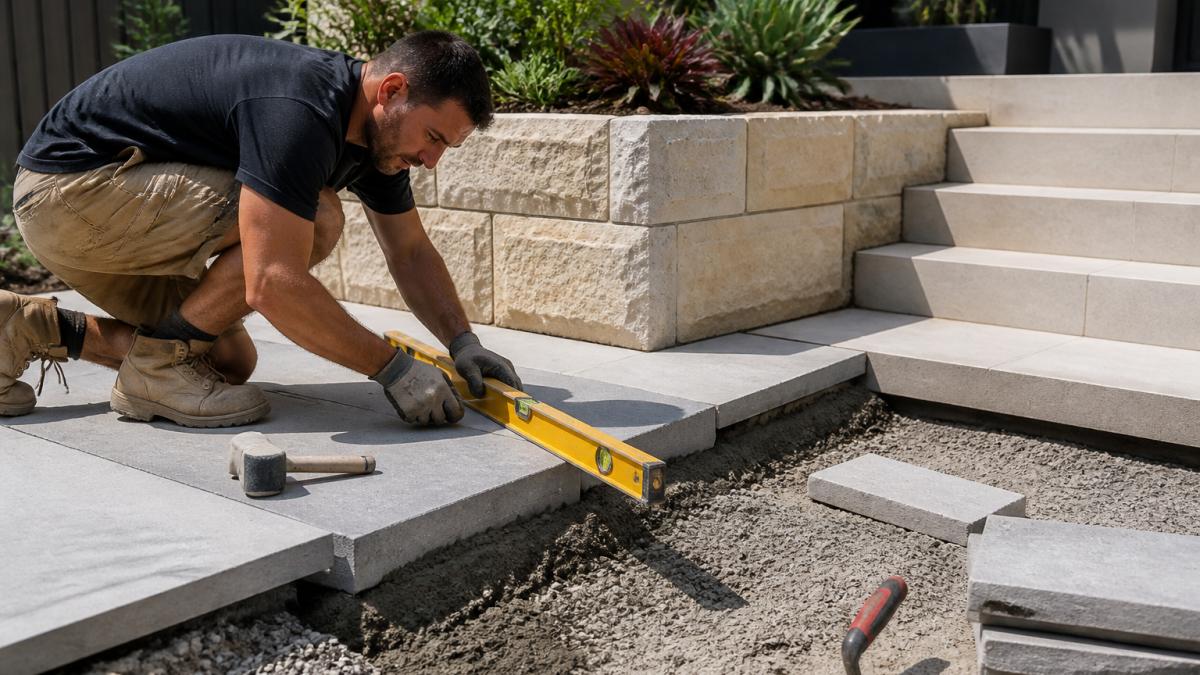
Hardscaping, paving, decking, pergolas, and walls, creates the framework for these zones. Quality paving materials that match or complement house materials visually extend the home into the garden. A well-designed patio becomes an outdoor room: defined by scale, furnished with weather-resistant seating, and often shaded by a pergola or shade sail.
Pergolas provide partial shade without the weight of a solid roof, allowing filtered light and airflow while creating a defined space. They're also excellent for training climbing plants that provide summer shade but allow winter sun through when foliage drops.
Water features contribute to outdoor living appeal. A simple recirculating water feature adds movement and sound that makes outdoor spaces feel more alive, masking neighbourhood noise and creating a sense of retreat.
Outdoor kitchens and dining areas are becoming standard in garden design ideas 2026. A simple outdoor kitchen (sink, cooktop, storage) transforms entertaining. Paired with a dining table positioned to catch afternoon shade, it becomes the hub of outdoor living.
Climate-Resilient Planting and Native Species
Climate-resilient planting is essential in Sydney gardens. Extreme heat, variable rainfall, and longer dry periods are now normal conditions. The best garden design ideas 2026 select plants that thrive under these conditions rather than fighting them.
Native species are the obvious starting point. Australian native plants have evolved to handle local climate extremes, are drought-tolerant by nature, require minimal fertiliser, and support local pollinators and wildlife. The diversity within Australian native flora is vast: groundcovers, shrubs, small trees, and structural plants that create visual interest while handling heat and dry periods.
Xeriscaping, designing with drought-tolerant plants, has matured beyond "dry garden = boring garden." Contemporary xeriscape design uses texture, colour, and form to create visually rich landscapes. Grasses with different heights and colours, shrubs with varied foliage tones, and accent plants with structural interest create gardens that are both resilient and beautiful.
Layering is key. Structural planting (larger shrubs and small trees) provides the backbone. Mid-layer planting (smaller shrubs and groundcovers) fills space and softens hard edges. Ground-layer planting (low-growing natives and groundcovers) suppresses weeds and retains soil moisture. This tiered approach creates depth and reduces maintenance while improving biodiversity.
Soil health underpins climate resilience. Deep, healthy soil retains moisture better than compacted, depleted soil. Mulching, applying 50-75mm of organic mulch around plants, reduces evaporation, moderates soil temperature, and gradually improves soil structure as it breaks down.
Native species support pollinators and wildlife, which is increasingly important as natural habitats shrink. Flowering natives provide nectar and pollen throughout the year, creating continuous food sources for wildlife and making gardens more biodiverse and visually dynamic.
Sydney Retaining Walls and Hardscaping Solutions
Retaining walls are often engineering solutions masquerading as garden features. On sloped properties across the Hills District and North-West Sydney, they're essential for creating usable flat spaces. But they're also opportunities for visual impact and improved garden function.
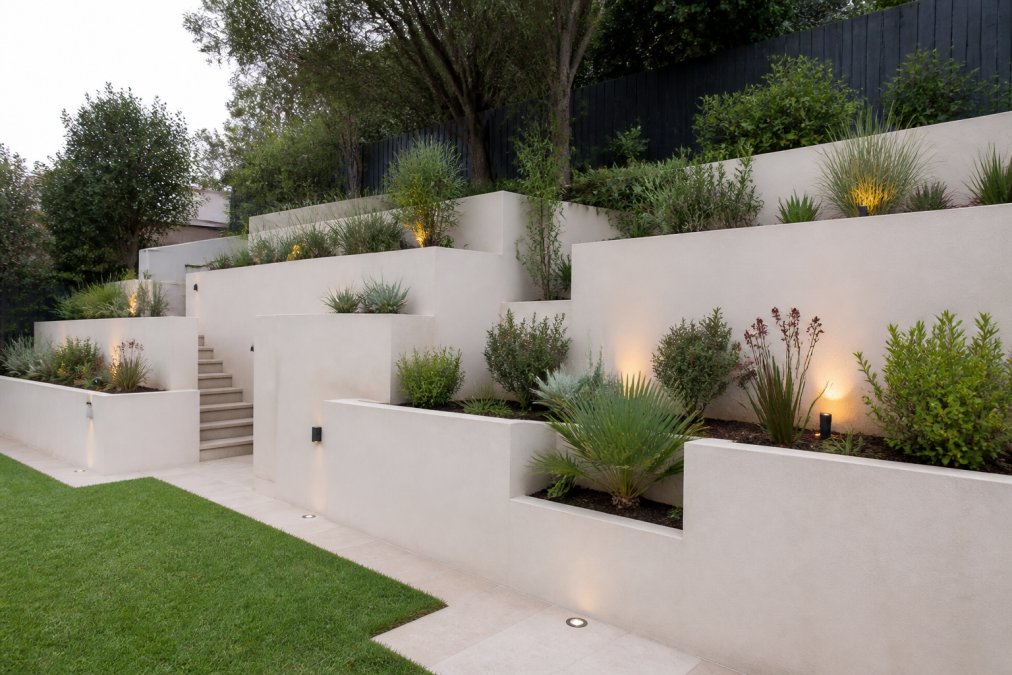
Modern retaining wall design balances engineering requirements with aesthetic and ecological considerations. A well-designed wall does more than hold soil; it creates planting opportunities, defines garden zones, and improves drainage.
Material choice matters. Timber retaining walls suit informal gardens and blend with natural landscapes, but they require maintenance and have limited lifespan in wet conditions. Stone, whether natural stone or rendered blockwork, offers durability and visual weight. Concrete block walls can be rendered or faced with stone for a more finished appearance. Gabion walls (steel baskets filled with stone) create textural interest and allow water drainage while maintaining structural integrity.
Height and proportion affect how a wall reads in the landscape. Stepping the wall height, introducing planting pockets, or breaking the face with different materials softens its visual impact. Planting at the top and base of walls helps integrate them into the garden rather than making them feel like barriers.
Drainage behind retaining walls is critical. Water pressure behind a wall can cause failure. Proper drainage, gravel backfill, perforated drainage pipes, and weep holes, prevents water accumulation and extends wall life. This is where professional landscape design and construction makes a real difference.
Hardscaping beyond retaining walls includes paving, edging, and surface treatments. Permeable paving manages stormwater while providing functional surface. Gravel gardens, areas planted with drought-tolerant plants and maintained with gravel mulch, have become a signature of contemporary garden design. They're low-maintenance, visually striking, and genuinely water-efficient.
3D Landscape Design Services for Planning and Visualisation
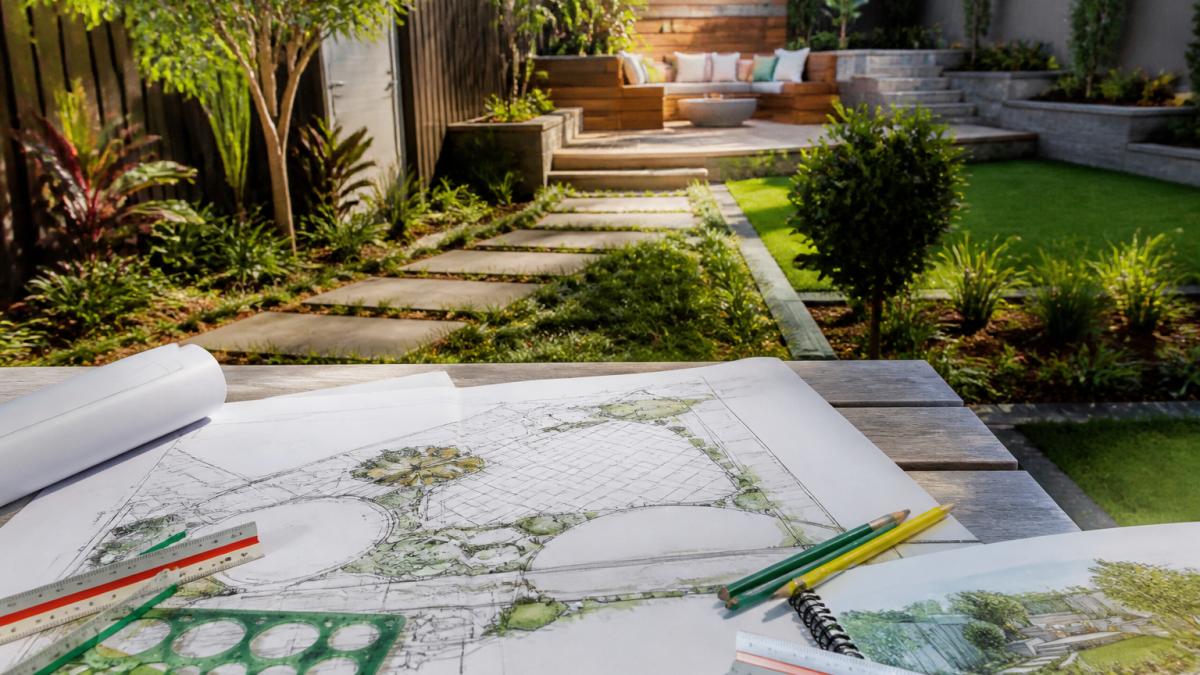
The ability to visualise a garden before construction transforms the design process. 3D landscape design services have become essential for homeowners and builders who want to see how a design will actually look before committing to construction.
Three-dimensional design software allows landscape architects to model existing site conditions, house position, existing trees, slope, and sun angles, then layer proposed changes. The result is a realistic preview of the finished garden. You can see how a pergola will frame views, how paving materials will look in different light, and how plants will mature over time.
For homeowners, visualisation clarifies the designer's vision and allows meaningful feedback before construction begins. For builders and developers, it's a communication tool that helps clients understand the finished product. For landscape professionals, it's a planning tool that catches design issues before they become expensive construction problems.
Good 3D design shows how the garden changes through the year, how deciduous plants look when leafed out versus bare, and how seasonal plantings contribute colour and interest. This helps avoid gardens that look good in one season but feel bare or overgrown in others.
3D design also facilitates better communication with engineers and builders. Retaining wall heights, drainage routes, and paving layouts can be precisely specified, reducing ambiguity on-site. When everyone is working from the same 3D model, construction typically proceeds more smoothly and stays closer to the original vision.
Residential Drainage Solutions and Soil Health
Drainage is the unglamorous foundation of successful gardens. Poor drainage leads to waterlogged soil, root rot, plant failure, and structural problems in hardscaping. Good drainage, both surface and subsurface, is essential for healthy plants and durable construction.
Surface drainage directs water away from structures and into appropriate outlets. This might mean grading the soil to slope away from the house, installing French drains to intercept water, or creating swales (shallow channels) that guide water to drainage points. In Sydney's variable climate, managing both heavy rainfall and dry periods requires thoughtful design.
Subsurface drainage addresses groundwater and soil saturation. Perforated drainage pipes, gravel layers, and properly constructed retaining wall drainage prevent water accumulation in the root zone. This is particularly important on clay soils, which are common across Greater Sydney and naturally drain slowly.
Healthy soil, rich in organic matter, well-structured, and biologically active, retains moisture in dry periods and drains excess water in wet periods. It supports plant growth and creates resilient gardens. Building soil health takes time but pays dividends in plant vigour and reduced maintenance.
Organic matter is the key. Compost, aged mulch, and well-rotted manure improve soil structure, increase water-holding capacity, and feed soil organisms. Adding 25-50mm of quality compost to garden beds annually, over several years, visibly improves soil and plant performance.
Mulching, composting on-site, and minimising soil disturbance all build soil health while reducing external inputs. A garden designed around soil health requires less fertiliser, less water, and less overall maintenance.
Smart Garden Technology and Low-Maintenance Features
Garden technology has evolved beyond gimmickry. Smart irrigation systems, soil moisture sensors, and automated watering can significantly reduce water use while keeping plants healthy. This matters in Sydney, where water restrictions are increasingly common and water costs continue rising.
Smart irrigation adjusts watering based on rainfall, soil moisture, and weather forecasts. A system that waters less on cool days and skips watering after rain uses substantially less water than traditional fixed schedules. Over a season, the water savings are significant.
Soil moisture sensors provide real-time data about water availability in the root zone. Rather than guessing whether plants need water, you can measure it. This is particularly valuable for newly planted gardens, where understanding soil moisture patterns helps establish plants successfully.
Low-maintenance features extend beyond technology. Hardscaping, paving, gravel, and mulched areas, requires less maintenance than turf. Perennial plantings require less replanting than annuals. Structural planting (larger shrubs and trees) creates visual interest with minimal fussing.
The combination of smart technology and thoughtful design creates gardens that look good, function well, and don't demand constant attention.
| Design Element | Low-Maintenance Approach | Benefits |
|---|---|---|
| Irrigation | Smart systems with soil sensors | Reduces water use, keeps plants healthy |
| Planting | Native and drought-tolerant species | Minimal watering, fertilising, or pest management |
| Hardscaping | Permeable paving and gravel | Reduces maintenance, manages stormwater |
| Soil | Annual organic mulch application | Improves structure, reduces watering needs |
| Lawn | Reduce or eliminate turf | Frees time and water for more rewarding plantings |
Creating a garden that reflects 2026 best practice, sustainable, resilient, and genuinely livable, requires professional guidance. The interaction between site conditions, design intent, and construction quality is complex. FDSS Landscaping Services combines landscape design expertise with construction capability, managing projects from initial concept and 3D visualisation through to completion. If you're planning a landscaping project across Greater Sydney, request a quote to discuss how contemporary garden design ideas can transform your outdoor space.
Frequently Asked Questions
What are the main garden design ideas trending in 2026?
The top garden design ideas for 2026 focus on sustainability, functionality and climate resilience. Key trends include native plantings for biodiversity, permeable paving and hardscaping that reduce runoff, outdoor living spaces that extend your home, and integration of smart irrigation systems. Sustainable landscaping materials, rewilding elements and low-maintenance garden zones are also gaining momentum as homeowners prioritise both aesthetics and environmental responsibility.
How do sustainable landscaping materials fit into modern garden design?
Sustainable landscaping materials reduce environmental impact whilst creating durable outdoor spaces. Recycled aggregates, permeable paving, reclaimed timber and locally sourced stone are now central to contemporary garden design. These materials support soil health, improve drainage efficiency and reduce waste. They also age beautifully in Australian climates. Incorporating sustainable materials doesn't compromise style, modern designs use them as aesthetic features that align with eco-conscious values.
Why is 3D landscape design important for planning a garden project?
3D landscape design services allow you to visualise your finished garden before construction begins. This technology helps you understand spatial relationships, test different planting schemes, evaluate hardscaping placement and assess how the design flows with your home. For property owners planning significant investments, 3D visualisation reduces costly changes during construction and ensures the design matches your vision. It's particularly valuable for complex projects involving retaining walls, drainage or outdoor living areas.
What should I know about residential drainage solutions in garden design?
Proper drainage is essential for garden longevity and plant health. Residential drainage solutions address water management through permeable surfaces, gravel gardens, swales and subsurface systems. In Sydney's variable climate, effective drainage prevents waterlogging, protects structural elements like retaining walls and supports healthy soil. Drainage requirements depend on your property's slope, soil type and local council guidelines. Professional assessment ensures your garden design incorporates appropriate drainage without compromising aesthetics.
How do retaining walls contribute to garden design and functionality?
Retaining walls serve both structural and design purposes. They manage sloped terrain, create level planting areas and define garden zones. Modern retaining walls are designed as landscape features using quality materials that complement your home. They enable tiered planting, improve drainage and add visual interest. The right retaining wall design depends on soil conditions, height requirements and your property's aesthetic. Professional design ensures walls are both safe and visually integrated into your overall garden.
What maintenance is required for 2026 garden design trends?
Maintenance requirements vary by trend. Native plantings and climate-resilient species typically need less watering once established. Permeable paving requires occasional cleaning but minimal repair. Smart irrigation systems reduce manual watering. Low-maintenance garden zones with gravel, xeriscaping or structural planting minimise ongoing work. Hardscaping like retaining walls and paving need periodic inspection rather than active maintenance. The key is choosing design elements suited to your lifestyle and climate, so maintenance feels manageable rather than burdensome.
How can I incorporate biodiversity and rewilding into my garden design?
Biodiversity-focused gardens use native species, pollinator-friendly planting and varied habitat layers. Rewilding elements include allowing some areas to grow naturally, creating shelter for insects and birds, and reducing chemical inputs. These approaches support local ecosystems whilst creating visually interesting, dynamic gardens. Native plantings are well-suited to Sydney's climate and require less irrigation. Combining structured hardscaping with wild planting zones creates balance, a garden that's both intentional and ecologically beneficial.