 how-to
Backyard Landscaping Sydney: A Practical Planning Guide
Table of Contents
- Backyard Landscaping Sydney: Where to Start
- Backyard Landscape Design: From Concept to 3D Plan
- Small Backyard Landscaping Ideas That Still Feel Generous
- Low-Maintenance Backyard Landscaping for Busy Households
- Backyard Paving Ideas and Hard Landscaping Choices
- Council Approvals, Easements and Site Constraints
- What Backyard Landscaping Costs Depend On
- Conclusion: Planning a Backyard That Works Long Term
- Frequently Asked Questions
Last Updated: October 12, 2026
Backyard Landscaping Sydney: Where to Start
Most backyard landscaping Sydney projects go wrong before a single paver is laid. The plans are drawn for a block that doesn't exist, or the budget is set for a job nobody quoted.
So before you sketch a single garden bed, read your block properly. That means understanding slope, soil, drainage, sunlight, easements and how you actually want to use the space.
Reading your block before you design
Start with the things you can't change. Where does water sit after heavy rain? Which direction does the block face, and where does sun hit at 9am versus 3pm?
Walk the site after a downpour. Note the soggy patches. Check where the neighbour's runoff enters your yard. These details decide where a deck can go, where turf will survive, and whether you need excavation before construction starts.
Setting a realistic scope and budget
Pricing for landscaping depends on site access, levels, materials, drainage requirements and how much structural work is involved, so any figure quoted without a site visit is a guess. We'd rather tell you that upfront than hand you a number that changes later.
A practical approach is to separate the project into stages. Structural work first: drainage, retaining, levels, excavation. Then hard landscaping: paving, concreting, structures. Then soft landscaping: turf, garden beds, planting.
Backyard Landscape Design: From Concept to 3D Plan
Good design answers questions before construction begins. What will the space look like in winter when the shade changes?
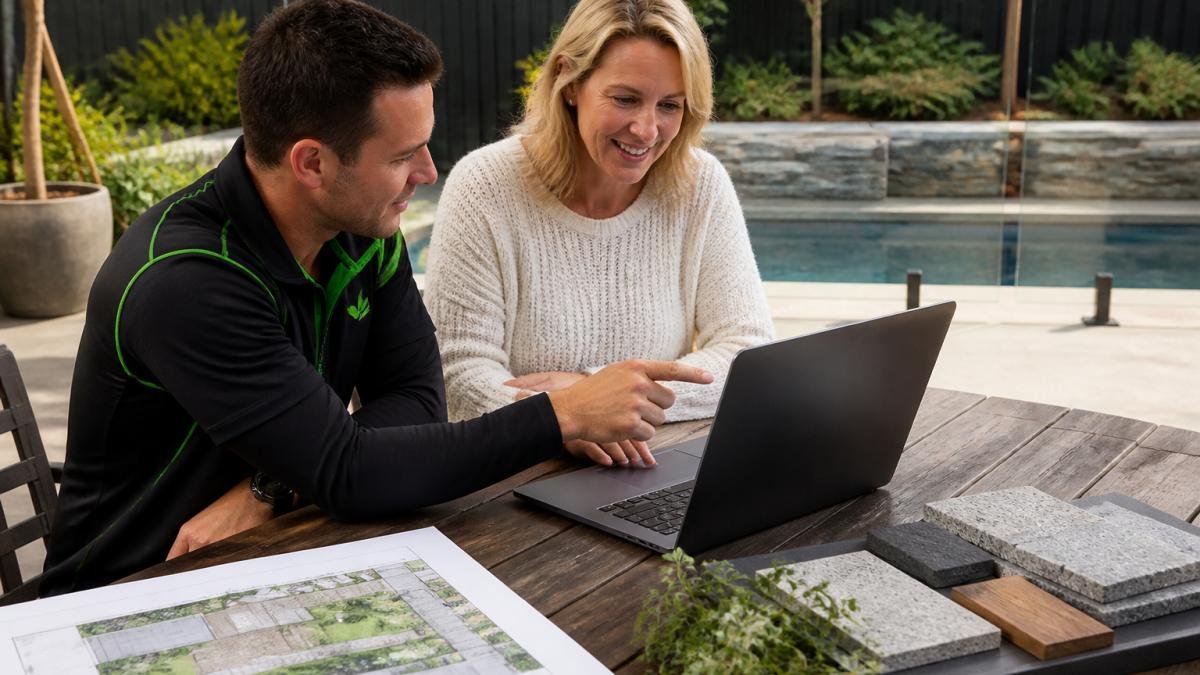
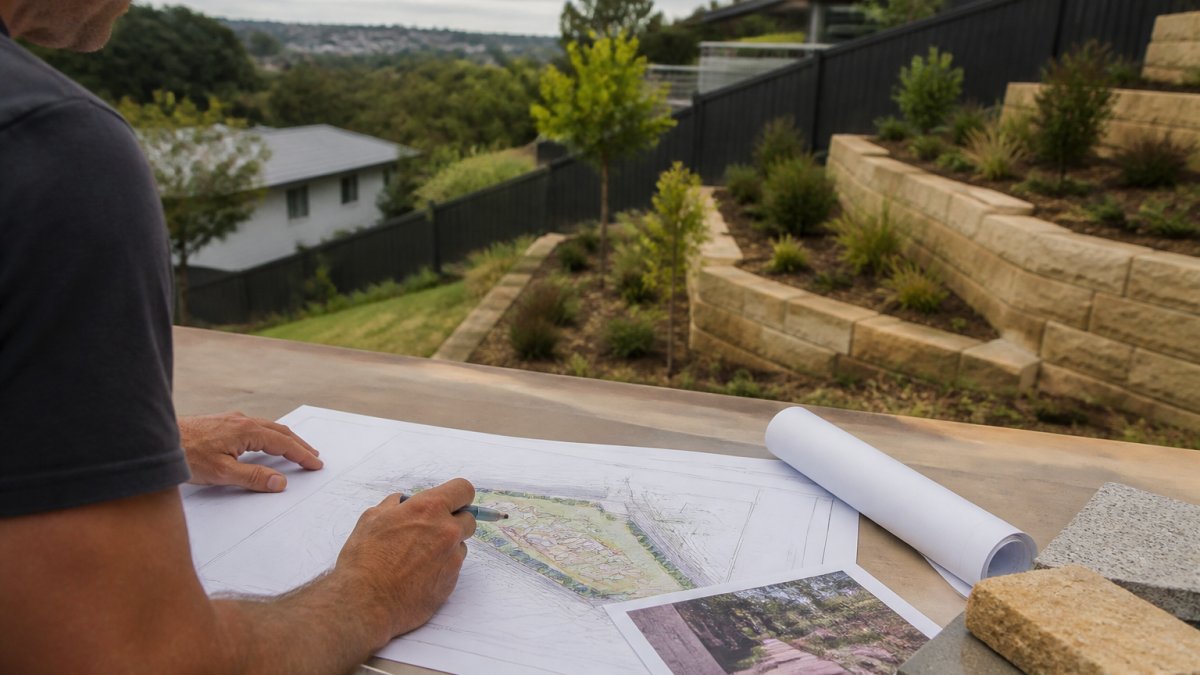
This is where a 3D plan earns its keep. Seeing the design in three dimensions lets you check proportions, sight lines and material choices while changes are still cheap.
A design consultation should cover how you want to live outdoors: entertaining, kids, pets, quiet corners, clotheslines, storage.
Small Backyard Landscaping Ideas That Still Feel Generous
Small blocks reward discipline, not clutter. The trick is to give the eye somewhere to travel and to avoid filling every square metre with something.
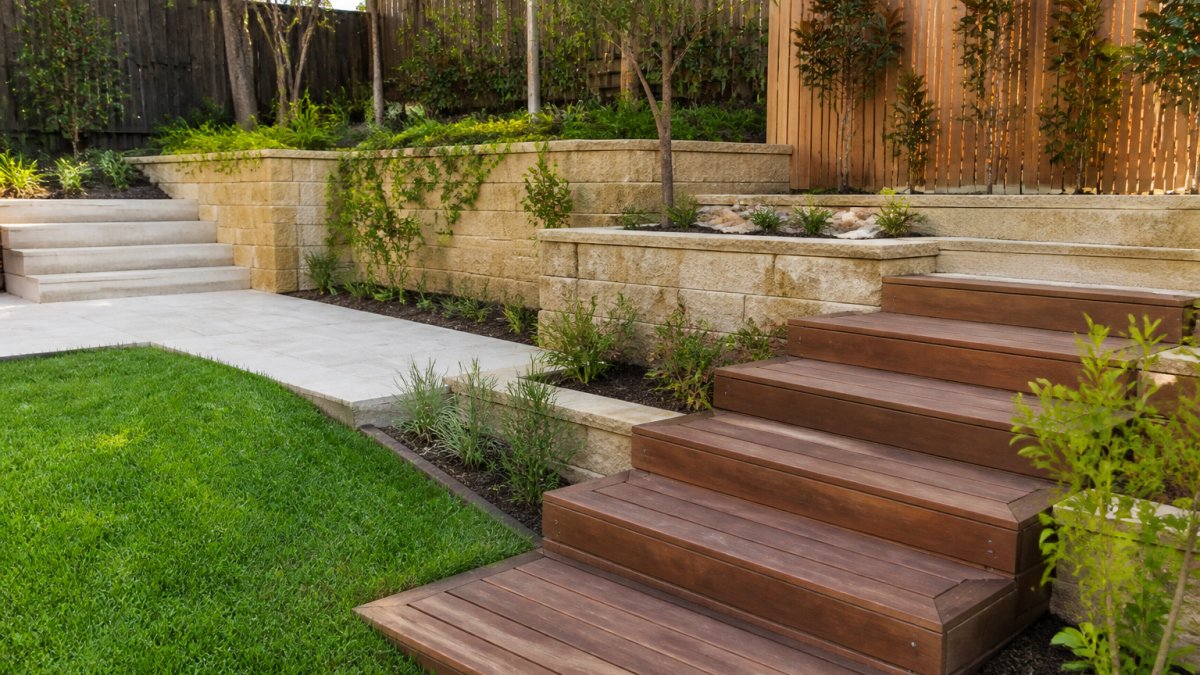
Start by choosing one clear function for the space. A courtyard used for evening meals needs different bones than a yard for young kids. Once that's decided, use level changes, a single strong paving format, and vertical planting to draw the eye upward rather than outward.
Work with the microclimate, not against it
A compact yard is more sensitive to local conditions than a large one, because there's less buffer. A western-facing courtyard in Western Sydney can hold heat well into the evening, while a shaded southern strip in the Hills District may stay damp and slow to dry. Before choosing plants or paving, note:
- Which parts of the yard get sun at 9am, midday and 3pm, and how that shifts between summer and winter
- Where water sits after heavy rain, and where it drains to
- Whether neighbouring buildings, fences or mature trees create permanent shade
- How much wind the space catches, particularly on exposed ridgelines
Those observations decide whether a space suits a shade-tolerant planted bed, a heat-tolerant turf, or a hard surface that won't stay slick.
Design moves that make a small yard read larger
- Run paving in one direction to make the space read longer, and keep joint lines consistent
- Use raised garden beds to define zones without walls, and to lift planting into view
- Choose a consistent material palette rather than several competing finishes
- Screen overlooking neighbours with layered planting or a tailored screen rather than a solid barrier that blocks light and air
- Keep turf to a manageable patch, or replace it with planted beds and decking where mowing and watering aren't practical
- Use a single feature, a tree, a water bowl, a bench, as a focal point rather than several
Materials that suit compact, hard-working yards
On small sites, material choice does more work than on large ones because every surface is seen up close. Consider:
- Paving: large-format pavers reduce visual clutter, but check slip resistance for shaded or pool-adjacent areas that stay damp
- Decking: timber or composite decking can handle level changes and provide a warm surface, but needs ventilation underneath to avoid moisture issues
- Gravel or permeable surfaces: useful for utility strips and side access, and can help with drainage where runoff is a concern
- Retaining and edging: even low retaining (a few courses) can create usable level changes, but requirements depend on the site and the relevant council or authority
Small outdoor spaces succeed when every element has a job. If a feature doesn't earn its space, it's costing you room you could use better.
Low-Maintenance Backyard Landscaping for Busy Households
Low-maintenance doesn't mean no maintenance. It means fewer tasks, less frequent ones, and a yard that still looks considered between visits.
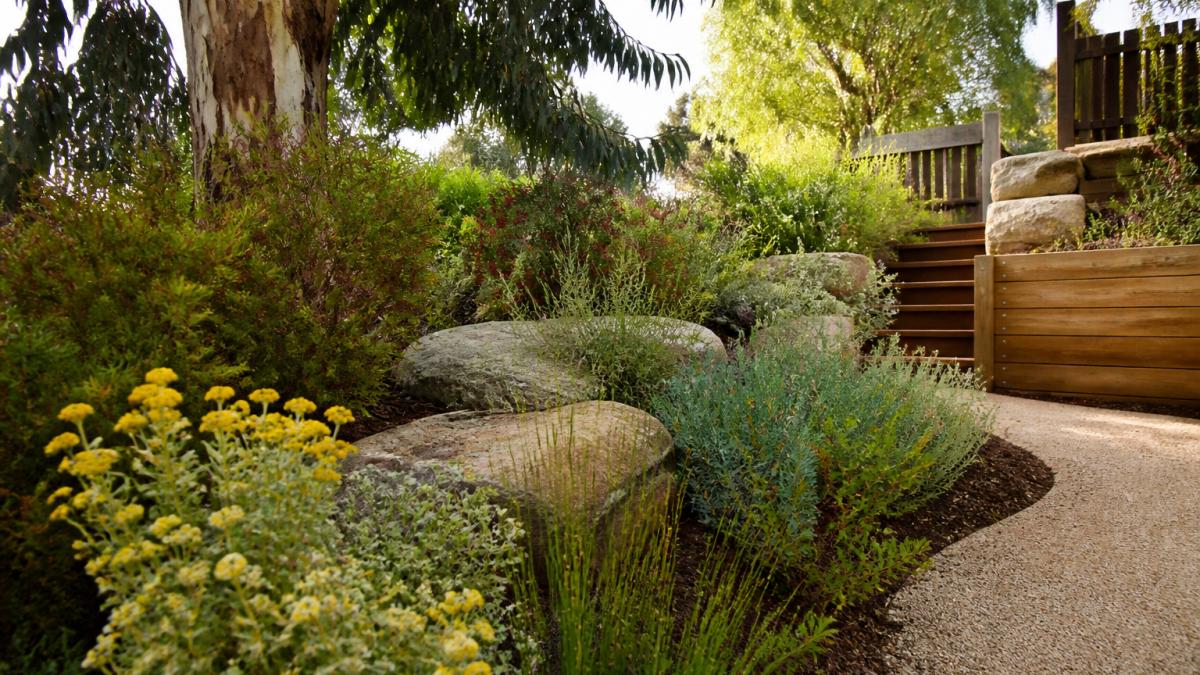
The biggest lever is plant selection. Choose species suited to your local conditions rather than ones that need constant watering and pruning to survive.
Hard landscaping choices matter too. A well-built paved area or deck needs far less attention than a large lawn.
Backyard Paving Ideas and Hard Landscaping Choices
Paving sets the tone for the whole yard, so it's worth getting the format, colour and finish right before committing.
Think about how the surface performs, not just how it looks. Smooth finishes can become slippery when wet, so consider texture and slip resistance, especially near pools or shaded areas that stay damp.
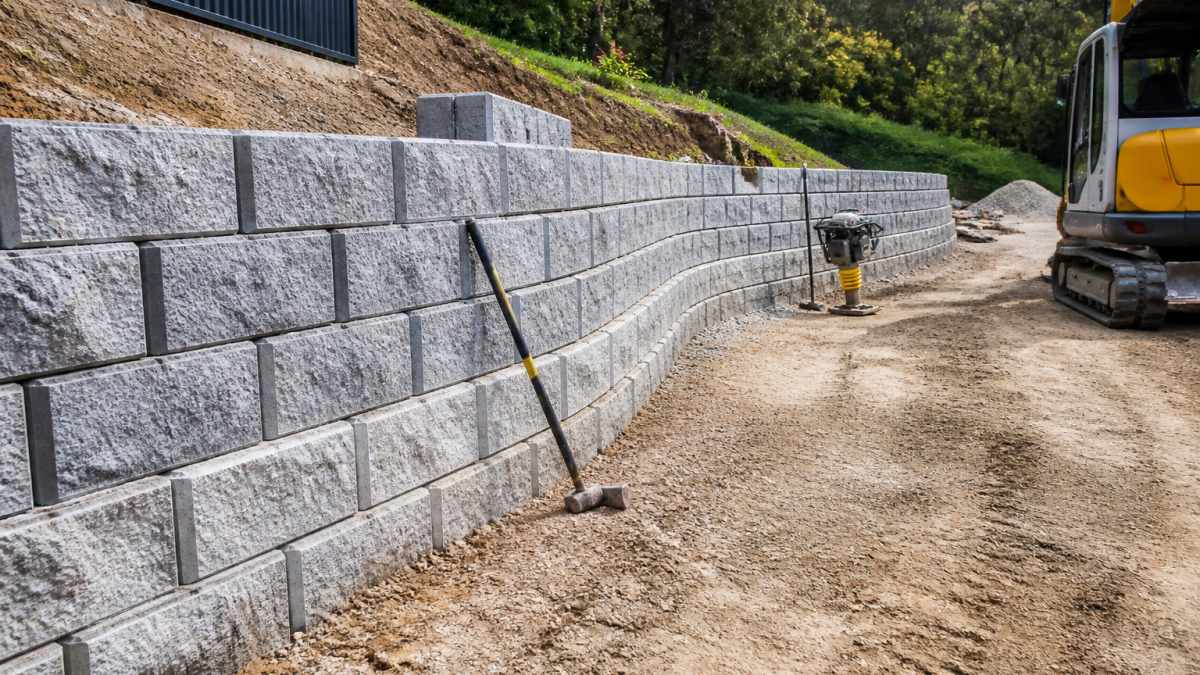
Hard landscaping also includes retaining walls, concreting, steps, edging and structures such as pergolas. These elements do the structural work that makes the softer parts possible.
| Element | What it does | What to weigh up |
|---|---|---|
| Paving | Defines outdoor living zones | Slip resistance, finish, colour, pattern |
| Retaining walls | Manages level changes | Site conditions, drainage, approvals |
| Concreting | Provides durable surfaces | Finish, reinforcement, movement joints |
| Turf | Softens and cools the space | Water, mowing, wear tolerance |
| Structures | Adds shade and shelter | Position, materials, sun path |
Council Approvals, Easements and Site Constraints
Not every project needs approval, but some do, and finding out early saves rework. Requirements depend on your site and the relevant council or authority, so treat any general advice as a starting point rather than a ruling.
Things worth checking before you build:
- Easements across the block and what they restrict
- Whether retaining walls above a certain scale need approval or engineering
- Setbacks and boundary rules
- Drainage and stormwater connection requirements
- Any covenants or strata rules that apply to your property
We always recommend confirming requirements with your local council before construction, because the answer genuinely changes from site to site.
What Backyard Landscaping Costs Depend On
Landscaping pricing isn't a single number, and anyone quoting one without seeing your site is guessing. What drives cost is the work your specific block demands, not the size of the yard alone.
Rather than quote a figure we can't stand behind, here's how to think about what moves a landscaping budget up or down, and how to compare quotes fairly.
The factors that change a quote
- Site access: narrow side access, steep driveways, or limited truck turning space slow down excavation and material delivery, and can require smaller machinery or manual handling
- Levels and excavation: a flat, accessible block needs far less cut and fill than a sloping site. Significant level changes usually mean retaining, drainage and additional cartage
- Drainage: resolving where water goes, surface grading, agi drains, stormwater connection, is often the least visible but most important cost. Skipping it is where budgets blow out later
- Retaining walls: height, length, soil load, and whether engineering or approval is required all affect cost. Requirements depend on the site and the relevant council or authority
- Materials: paving, decking, turf and wall materials vary widely. A consistent, mid-range palette often delivers a better result than a mix of premium and budget finishes
- Structural vs decorative work: concreting, footings, retaining and drainage are structural. Paving, turf and planting sit on top. Structural work is where the bulk of the budget usually sits
- Services and utilities: moving or protecting irrigation, power, gas or sewer lines adds coordination and cost
How to compare quotes fairly
A cheaper quote isn't always cheaper. When comparing, check that each quote covers the same scope:
- Is excavation and spoil removal included, or priced separately?
- Is drainage designed and included, or assumed to be adequate?
- Are retaining walls engineered and approved where required?
- Are materials specified by brand, size and finish, or left vague?
- Is there a clear sequence and timeline, or an open-ended start date?
- What's excluded, irrigation, lighting, planting, clean-up?
A quote that lists exclusions and assumptions is more useful than one that looks tidy but hides variables.
A practical way to plan your budget
Work backwards from how you want to use the yard, then price the structural work first. Drainage, levels and retaining determine what's possible above them. Once those are resolved, hard landscaping and soft landscaping can be priced with more confidence, and staged if needed.
Because costs depend so heavily on site conditions, the only reliable way to know what your project will cost is a site assessment and a tailored quote.
Conclusion: Planning a Backyard That Works Long Term
The difference between a backyard that looks good for a season and one that works for years comes down to planning. Read the site, resolve drainage and levels, choose materials and plants that suit the conditions, and stage the build in the right order.
That's the approach FDSS Landscaping Services takes across the Hills District and North-West Sydney, from Castle Hill and Baulkham Hills through to Kellyville, Rouse Hill, Box Hill and The Ponds.
If you're weighing up a backyard project, start with a proper site assessment and a tailored quote rather than a guess. Request a landscaping quote from FDSS Landscaping Services and get a plan built around your block, your budget and how you actually want to use the space.
Frequently Asked Questions
How do I plan a backyard landscaping project?
Start by assessing your block: slope, drainage, sun direction, soil and access for machinery. Then decide how you want to use the space, whether that is outdoor entertaining, a lawn for kids, garden beds or a pool. A concept plan and 3D design help you test layouts before construction begins. Check whether your project needs council approval, then stage the build so excavation and drainage happen before paving, turf and planting. A design-and-build team can manage this sequence from concept through to completion.
What should I consider before installing a retaining wall?
Retaining walls depend on site conditions, so requirements vary. Consider the height of the wall, the load behind it, soil type, drainage and proximity to boundaries or structures. Taller walls and walls near boundaries often need engineering input and council approval, and some works may require a complying development certificate. Drainage behind the wall matters as much as the wall itself. Because rules differ between councils across the Hills District and Greater Sydney, confirm requirements with your local council or a qualified professional before work starts.
How can I improve drainage in my backyard?
Poor drainage shows up as soggy lawns, water pooling near the house or damp patches after rain. Solutions include surface grading to direct water away from the dwelling, agri-drainage lines, soak wells, and permeable surfaces such as gravel or permeable paving. In larger yards, a swale or channel can move water to a suitable discharge point. The right approach depends on your block's slope, soil and where stormwater can legally discharge, so a site assessment is the sensible first step before any excavation.
What is the best low-maintenance landscaping for a backyard?
Low-maintenance backyards usually combine hard landscaping with tough, suitable planting. Consider paved or gravel areas instead of large lawn zones, raised garden beds with hardy native or drought-tolerant species, mulching to suppress weeds, and an irrigation system on a timer. Choose materials that age well in local conditions and avoid plants that need constant pruning. The goal is a space that still looks established without weekend upkeep, which is where good design and plant selection pay off over time.