 ultimate-guide
Artificial turf installation cost in North-West Sydney
Table of Contents
- What affects artificial turf installation cost
- Site preparation and excavation costs
- Types of synthetic turf and quality differences
- The synthetic grass installation process
- Landscape drainage solutions for artificial turf
- Artificial turf maintenance tips for longevity
- DIY versus professional installation
- Getting a quote for your project
- Frequently Asked Questions
Last Updated: August 18, 2026
What affects artificial turf installation cost
The cost of artificial turf installation in North-West Sydney varies significantly depending on site conditions, material quality, labour intensity and local logistics. Understanding these cost drivers upfront helps homeowners and builders plan realistic budgets and avoid surprises.
Site preparation complexity is often the biggest variable, a relatively flat, accessible backyard costs far less to prepare than sloped terrain or properties with difficult access. The type and quality of synthetic turf you select matters significantly, as premium products with better UV stabilisation and durability command higher material costs. Labour intensity depends on excavation requirements and whether existing turf or hardscaping needs removal. Local delivery and waste disposal logistics in the Hills District also affect overall project cost.
Understanding these variables before getting a quote helps you ask better questions and compare quotes more effectively.
Site preparation and excavation costs
Site preparation is where most artificial turf installation projects either run smoothly or encounter unexpected expenses. The process involves removing existing vegetation, excavating to the correct depth, compacting the base and installing drainage layers, all essential for long-term performance.
Excavation depth depends on your existing surface and the finished level you want. Most residential installations require 75-100mm of excavation to accommodate the base layers (crushed rock, road base and underlay). If your property has existing turf, this needs complete removal and disposal.
Access is a practical consideration that often gets overlooked. Properties in Castle Hill, Baulkham Hills and Rouse Hill with narrow side access, steep driveways or limited machinery space incur higher labour costs because work must be done manually or with smaller equipment. Easy access with room for excavators and compactors reduces labour intensity significantly.
The ground itself presents variables. Rocky or compacted soil requires more excavation effort. Clay-heavy soil common in parts of North-West Sydney may need additional drainage preparation. Sloped terrain requires more complex grading and base preparation than level blocks.
Once excavation is complete, the base must be properly compacted. Road base (typically 50-75mm) is spread and compacted to create a stable foundation. This step is critical for artificial turf longevity; poor compaction leads to settling, movement and premature wear.
Types of synthetic turf and quality differences
Synthetic turf products vary considerably in durability, appearance and performance characteristics. The quality you select directly impacts both installation cost and longevity.
Lower-cost synthetic turf typically features shorter pile height, lower stitch rate and basic UV stabilisation. These products work for light-use areas like balconies or small decorative spaces, but show wear faster in high-traffic residential areas or under intense Sydney sun exposure.
Mid-range synthetic turf offers better balance between cost and performance. Pile height is typically 35-50mm, providing a more natural appearance and better feel underfoot. Stitch rate is higher, meaning denser coverage that resists matting and wear. UV stabilisation is more comprehensive, protecting against colour fading over 10-15 years of outdoor exposure.
Premium synthetic turf features longer pile height (up to 60mm), very high stitch rates and advanced UV stabilisation with heat-reflective technology. These products maintain appearance longer, feel more like natural grass and perform better in high-traffic areas. For North-West Sydney properties where summer heat and intense UV are significant factors, investing in better UV stabilisation reduces the speed at which colour fades.
Your choice should match your intended use. A decorative lawn in a low-traffic area doesn't need premium product. A family backyard where children play regularly, or an outdoor entertaining space, benefits from mid-range or premium quality that withstands heavy use.
The synthetic grass installation process
Professional artificial turf installation follows a structured sequence that ensures proper drainage, longevity and appearance.
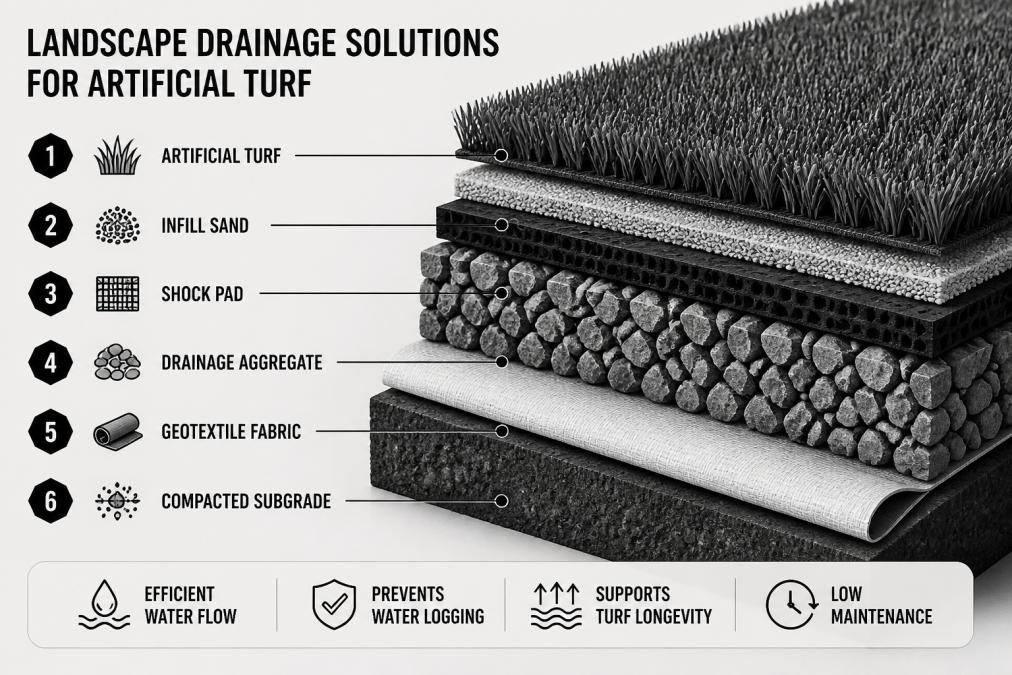
After site excavation and base preparation are complete, a geotextile fabric (weed membrane) is laid across the compacted road base. This layer prevents weeds from growing through the artificial turf while allowing water drainage.
The underlay layer comes next, critical for drainage and cushioning. Underlay thickness ranges from 10-15mm depending on product quality and site drainage conditions. Thicker, denser underlay provides better drainage performance and longer-lasting cushioning, particularly important in areas prone to water pooling.
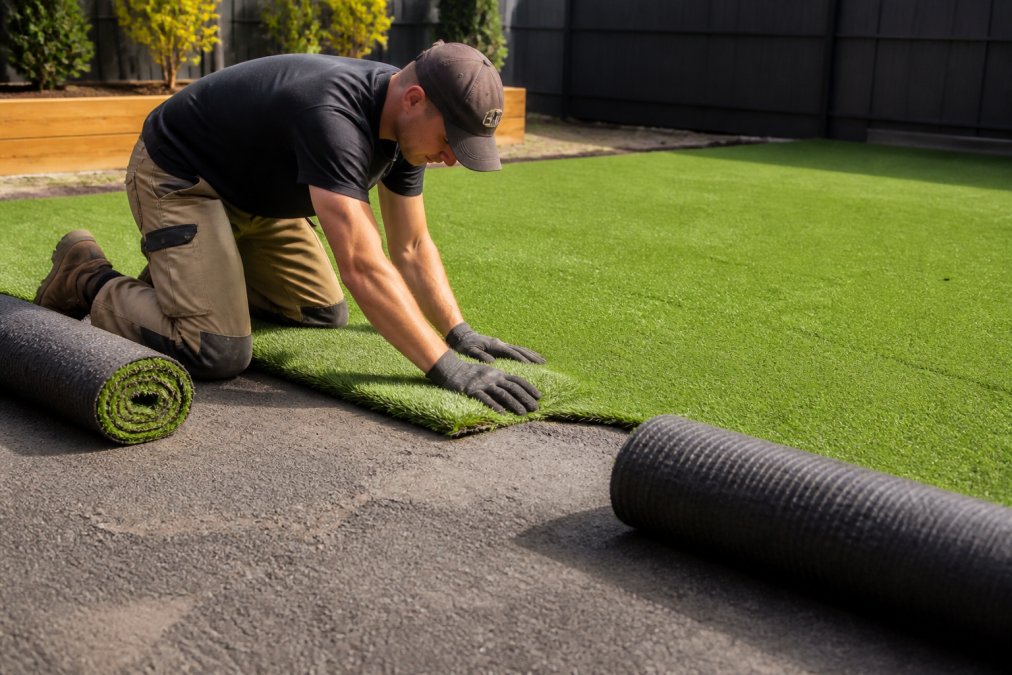
The synthetic turf is then unrolled and positioned across the prepared area. Seams between rolls are carefully aligned to minimise visibility and secured using specialised seam tape and adhesive. Proper seam work is essential; poor seaming leads to visible lines and potential separation under foot traffic.
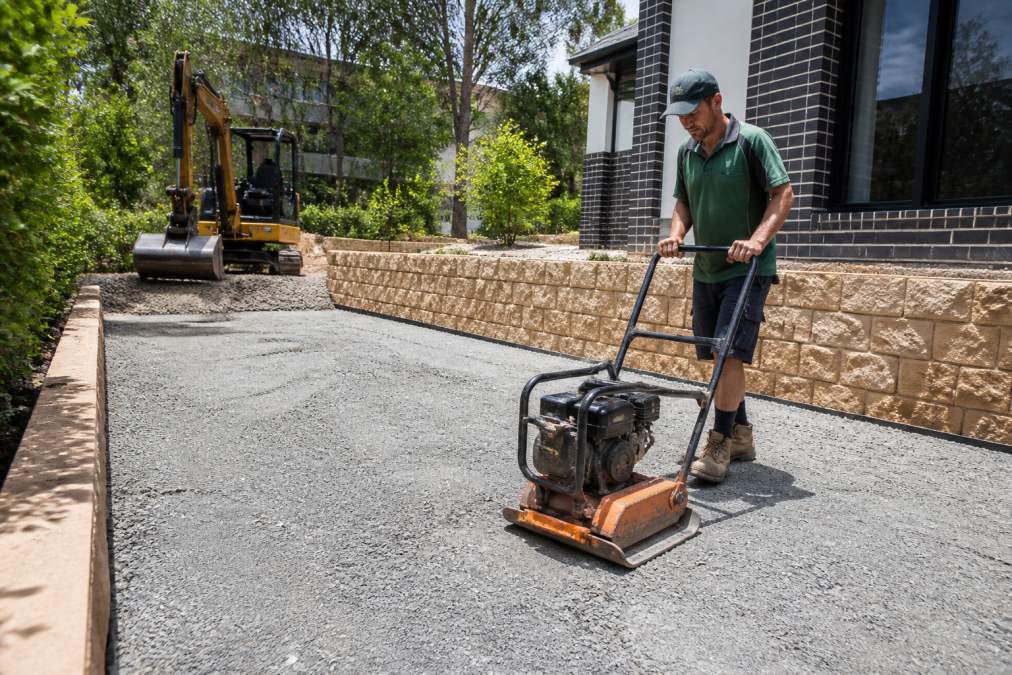
Once the turf is secured, infill material is applied. Most residential installations use silica sand, though some premium products use rubber crumb or hybrid infill systems. The infill is spread evenly and brushed into the pile to support the grass blades and provide drainage.
The final step involves a thorough brushing to lift the pile, distribute infill evenly and ensure a natural appearance. The installer checks for proper drainage by running water across the surface and confirming it flows away rather than pooling.
Professional installation typically takes 1-3 days depending on project size and site complexity. A 100 square metre backyard might take 2-3 days. The timeline also depends on weather; installation is best done in dry conditions to ensure proper adhesive curing and infill settling.
Landscape drainage solutions for artificial turf
Drainage is often the difference between artificial turf that performs well for 15+ years and turf that develops problems within 5 years. North-West Sydney properties experience significant rainfall in summer months, making proper drainage design essential.
The drainage system for artificial turf works in layers. The compacted road base provides primary drainage by allowing water to flow laterally and downward. The underlay layer provides secondary drainage and prevents fine particles from the base from rising into the turf. Proper grading ensures water flows away from buildings and toward natural drainage points or drainage systems.
Some properties require additional drainage infrastructure. If the site has poor natural drainage, clay-heavy soil or is in a low-lying area, a subsurface drainage system may be necessary. This typically involves perforated drainage pipes laid beneath the base layer, connected to a drainage outlet or soakage pit. These systems prevent water pooling and extend turf lifespan significantly.
Edge drains around the perimeter of the turf installation prevent water from pooling at the edges. These are particularly important where artificial turf meets hardscaping like patios or concrete paths.
Grading (the slope of the prepared surface) is critical. A gentle fall of 1-2% ensures water flows away from buildings and doesn't collect in low spots. Level or poorly graded installations develop wet patches where water pools, leading to infill migration, odour problems and accelerated wear.
For properties in areas like Bella Vista or The Ponds where water management is challenging, discuss drainage options with your installer before finalising the design.
Artificial turf maintenance tips for longevity
Proper maintenance extends the life of artificial turf significantly and keeps it looking good. The good news is that maintenance is far simpler than natural grass, with no mowing, fertilising or watering required.
Regular brushing lifts the pile and prevents matting, particularly in high-traffic areas. Brushing once or twice per month during the warmer months keeps the turf looking fresh. Use a stiff-bristled brush or a powered turf brush, working in different directions to avoid creating directional wear patterns.
Debris removal is straightforward. Leaves, twigs and organic matter should be swept or blown off regularly to prevent decomposition on the surface. Allowing organic matter to accumulate can trap moisture and create conditions for mould or odour problems.
Infill maintenance involves occasional topping up. Over time, infill migrates due to foot traffic and rainfall. Inspecting the turf annually and adding infill where pile height has reduced keeps the turf cushioned and maintains proper drainage.
Stain removal is occasionally necessary. Most stains (food, dirt, organic matter) rinse away with water and mild detergent. For stubborn marks, a soft brush and diluted vinegar solution usually works. Avoid harsh chemicals or high-pressure cleaning, which can damage the pile or dislodge infill.
Pet waste requires prompt removal. Solid waste should be picked up immediately. For urine, rinse the area with water to dilute and disperse the urine. Proper rinsing prevents odour and ammonia buildup.
Winter care in Sydney is minimal; the climate doesn't require special seasonal maintenance. However, ensuring drainage remains clear and leaves don't accumulate on the surface keeps the turf in good condition year-round.
DIY versus professional installation
The decision between DIY installation and hiring a professional contractor depends on project size, site complexity and your comfort with construction work.
Small DIY projects are feasible. A small balcony, deck or 20 square metre courtyard can be installed by a motivated homeowner with basic tools and careful attention to detail. The key requirements are understanding proper base preparation, getting the underlay and geotextile positioned correctly, and ensuring seams are properly secured.
However, most residential properties benefit from professional installation. Larger areas (100+ square metres), sloped terrain, complex site access or properties requiring drainage infrastructure are better handled by experienced installers. Mistakes in site preparation, drainage or seaming are costly to fix and directly affect turf performance and lifespan.
Professional installers bring equipment (compactors, rollers, specialised tools) that aren't practical for one-off DIY projects. They understand local site conditions and can identify drainage challenges before they become problems. They also carry proper insurance and warranties on their work, protecting your investment.
For properties in North-West Sydney where site access, terrain or soil conditions present challenges, professional installation is typically the better choice.
Getting a quote for your project
Requesting a quote for artificial turf installation should involve providing your installer with clear information about your site and project scope.
Start by measuring the area you want to install. Provide square metres rather than rough estimates. If the area is irregularly shaped, sketch it roughly or provide multiple measurements so the installer can calculate accurately.
Describe your site conditions honestly. Mention sloped terrain, difficult access, existing vegetation that needs removal, proximity to buildings or trees, and any drainage concerns you've noticed. These details directly affect the quote.
Specify the type and quality of synthetic turf you're interested in. If you're unsure, ask your installer for samples and recommendations based on your site conditions and intended use.
Ask whether the quote includes site preparation, excavation, base preparation, underlay, infill and final brushing. Clarify what's included and what might be additional (waste removal, tree removal, drainage infrastructure).
Discuss timeline and weather considerations. Installation works best in dry conditions. If you're planning a specific timeframe, confirm availability and any seasonal factors that might affect the schedule.
FDSS Landscaping Services provides detailed quotes that break down the artificial turf installation cost for your specific property. We assess site conditions, recommend appropriate materials and provide transparent pricing so you understand exactly what's included. Requesting a quote is the best way to move from general information to a specific plan for your project.
Frequently Asked Questions
What is the typical cost per square metre for artificial turf installation?
Artificial turf installation cost per square metre varies based on site conditions, product quality, base preparation requirements and labour. Hidden costs often include site access, waste disposal, excavation depth and drainage infrastructure. Local site conditions in North-West Sydney, such as soil type, slope and existing vegetation, significantly affect the final figure. Request a detailed quote that itemises materials, labour and site-specific requirements to understand the true cost for your property.
How does site preparation affect the cost of synthetic grass installation?
Site preparation is often the largest cost variable. Properties requiring extensive excavation, removal of existing turf, rock removal or significant levelling will cost more than properties with minimal preparation. Drainage requirements, sub-base material (crushed rock and road base), geotextile fabric and compaction all add to preparation costs. A professional assessment of your site determines whether preparation is straightforward or complex, which directly influences your artificial turf installation cost.
Is artificial turf cheaper than real grass in the long term?
Artificial turf has higher upfront installation costs but eliminates ongoing mowing, fertilising, watering and reseeding expenses. Over 10-15 years, synthetic grass typically costs less to maintain than natural lawn. However, artificial turf maintenance tips include regular brushing, infill top-ups and occasional cleaning to extend lifespan. The break-even point depends on your property size, local water costs and maintenance preferences. A quote from a professional landscaper will help you compare long-term costs.
What hidden costs should I budget for with artificial turf installation?
Beyond materials and labour, budget for site access challenges, waste removal and disposal fees, underlay and geotextile upgrades, drainage infrastructure, edging installation and UV-stabilised infill. Properties in areas like Castle Hill or Rouse Hill with difficult access or steep slopes may incur additional costs. Request an itemised quote that clearly separates material supply, labour, waste disposal and any site-specific charges so you understand the full artificial turf installation cost.
Getting an accurate quote for artificial turf installation in North-West Sydney starts with understanding your site and what quality product suits your needs. FDSS Landscaping Services offers professional assessment and detailed quotes for residential and commercial properties throughout the Hills District and Greater Sydney. Contact us to discuss your landscaping project and receive a tailored quote that reflects your site conditions, material selection and project scope.