 Ultimate guide
Is Aluminium Slat Fencing Worth It in Kellyville?
Last Updated: November 17, 2026
Quick Summary
Aluminium slat fencing suits Kellyville homes that want privacy with a clean, contemporary look, and it avoids the warping, rotting and splintering of untreated timber. Its value depends on slat spacing, orientation and your neighbours' viewing angles, so check how the layout looks from eye level and from upper-storey windows before committing.
- Aluminium does not warp, rot or splinter the way untreated timber can.
- Horizontal slats suit wide blocks, while vertical slats suit narrower sites.
- Tight slat spacing blocks more sightlines but restricts airflow and light.
- Elevated views from a second storey can see through gaps that look private at eye level.
- Compare quotes line by line, since much cheaper quotes often exclude removal, disposal or footings.
Table of Contents
- What Aluminium Slat Fencing Offers Kellyville Properties
- Horizontal Versus Vertical Slat Styles
- Slat Spacing and the Privacy Trade-Off
- Powder-Coated Finishes, Durability and Low Maintenance
- Pool Areas, Boundaries and Council Considerations
- What Drives Cost and the Installation Timeline
- Requesting a Site-Specific Quote for Your Kellyville Fence
- Frequently Asked Questions
Aluminium slat fencing is a popular boundary and privacy option for Kellyville homes, and it is often weighed against timber and other materials. Whether it is worth the investment depends on your block, your privacy needs and how much maintenance you are prepared to do. This guide walks through the trade-offs so you can decide with a clear picture of what to expect.
What Aluminium Slat Fencing Offers Kellyville Properties
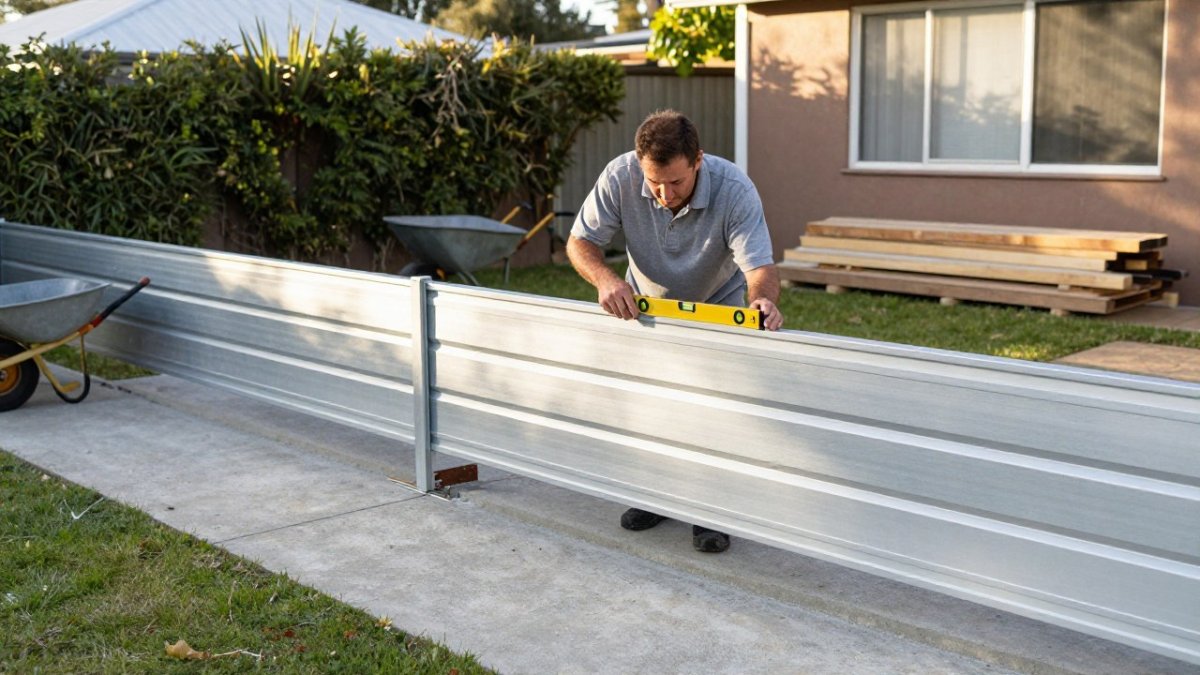
Aluminium slat fencing is a boundary and screening system made from individual aluminium slats mounted on a framing structure, typically finished in a powder-coated colour. It offers a clean, contemporary look while controlling sightlines and wind passing through the yard. For many Kellyville homes, that combination of privacy and a modern aesthetic is the main attraction.
The material's appeal is practical as well as visual. Aluminium does not warp, rot or splinter the way untreated timber can, which makes it a sensible choice for owners who want a fence that holds its shape over time.
Horizontal Versus Vertical Slat Styles
The two main layouts create quite different results. Horizontal slats give a long, low, architectural line that suits modern homes and wide blocks, and they tend to make a yard feel broader. Vertical slats draw the eye upward and work well where you want height and a more enclosed feel, often on narrower sites.
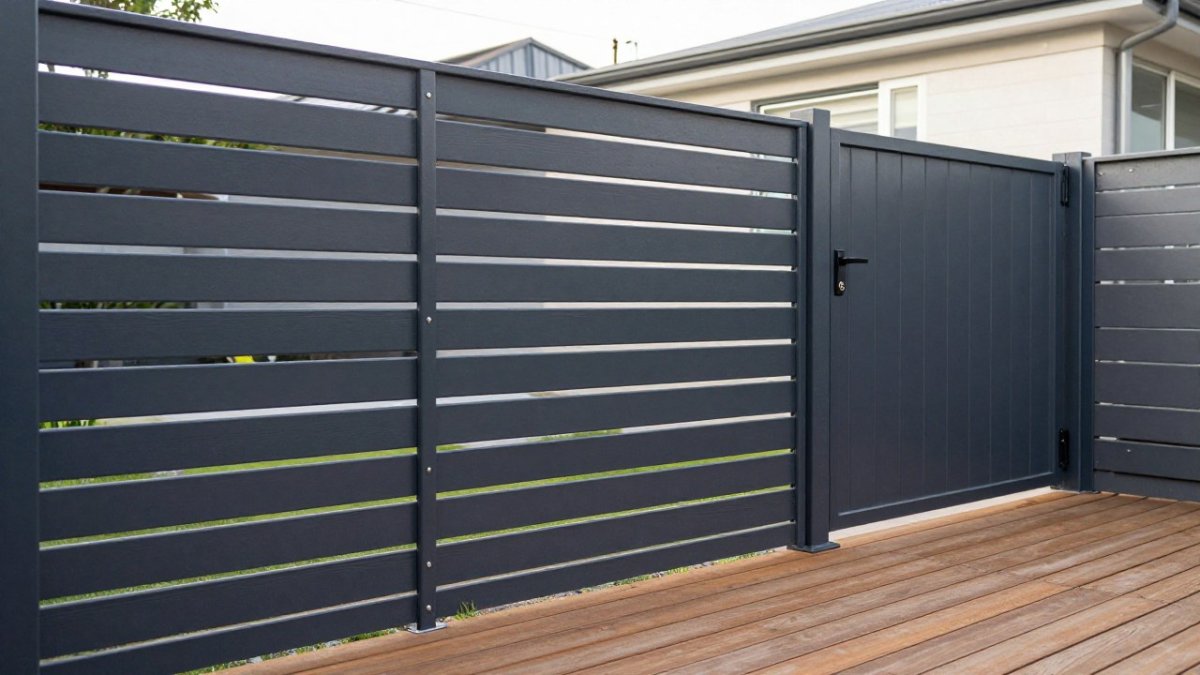
Your choice also affects how much of the yard is visible from the street and from neighbouring properties. Horizontal layouts can feel more open at a glance, while vertical layouts typically read as more solid. It is worth standing in the yard and looking at both orientations against your house before deciding, because the visual impact is hard to judge from a catalogue image alone.
Slat Spacing and the Privacy Trade-Off
Spacing between slats is where privacy and airflow pull against each other, and it is the single decision most likely to disappoint an owner after installation. Tight spacing blocks sightlines and dulls traffic noise more effectively, but it also restricts breeze and natural light through the fence line. Wider gaps let air move through and look lighter, yet they reveal more of the yard behind.
The mechanism is simple geometry. Privacy depends on the relationship between slat width, gap width, fence height and the viewer's eye level and distance. A fence viewed from a standing position on the footpath a few metres away reveals far less than the same fence viewed from a second-storey window next door, where the angle looks down through the gaps. That is why a layout that looks solid in a showroom can feel exposed once it is on site.
A useful way to think about it is in terms of three viewing conditions:
- Eye-level from the street or a neighbouring ground-floor window. This is the easiest condition to block, and moderate gaps often read as private here.
- Elevated viewing from a second storey. Gaps that are invisible at eye level become sightlines from above, so taller fences or tighter spacing may be needed where neighbouring homes have upper-level windows overlooking the boundary.
- Oblique viewing along the fence line. Looking down the length of a fence at a shallow angle compresses the gaps visually, so a fence can appear more solid from one direction than another.
Orientation matters too. Horizontal slats tend to read as more open because the eye follows the long line, while vertical slats at the same spacing often feel more enclosed. Combining orientations, horizontal panels with a vertical screen section, for example, is a common way to balance privacy where it matters with a lighter look elsewhere. Where a fence forms part of a wider outdoor scheme, Fencing & Gates can be planned alongside the rest of the yard so the layout, spacing and gate positions work together.
Consider how the space will be used. A pool area or outdoor dining zone usually benefits from tighter spacing and a taller run, while a side passage used mainly for access may be fine with a more open design that keeps the space from feeling like a tunnel. Where noise is a concern, tighter spacing helps, but it is not a substitute for mass, a solid panel or masonry element will always outperform slats for acoustic blocking.
Watch out: choosing spacing purely from a catalogue image is the most common cause of privacy complaints after handover. Ask to see a sample panel at the proposed height, and if possible view it from the neighbouring side and from any elevated window that overlooks the boundary before signing off.
The article's key points on slat spacing and viewing conditions can be scanned at a glance:
| Viewing condition | Privacy effect | What to consider |
|---|---|---|
| Eye level from street or ground-floor window | Easiest to block; moderate gaps often read as private | Moderate spacing usually sufficient |
| Elevated view from second storey | Gaps become sightlines from above | Taller fence or tighter spacing may be needed |
| Oblique view along the fence line | Gaps compress, fence looks more solid | Check appearance from each direction |
| Horizontal slats | Read as more open | Eye follows the long line |
| Vertical slats | Often feel more enclosed | Same spacing reads more solid |
Powder-Coated Finishes, Durability and Low Maintenance
Powder-coated finishes are a key reason many owners choose aluminium. The choice of colour affects how the fence sits against your home and landscaping.
Aluminium is generally low maintenance compared with timber, which typically requires regular staining or sealing. It is sensible to ask about the coating specification and any warranty terms before committing.
Pool Areas, Boundaries and Council Considerations
If your fence is near a pool or forms part of a boundary, the rules can be more involved than the fence itself. Pool barrier requirements, height limits and setbacks are set by the relevant council and state regulations, and they depend on the specifics of your site. We cannot give a definitive answer that applies to every property, so check with your local council before ordering materials.
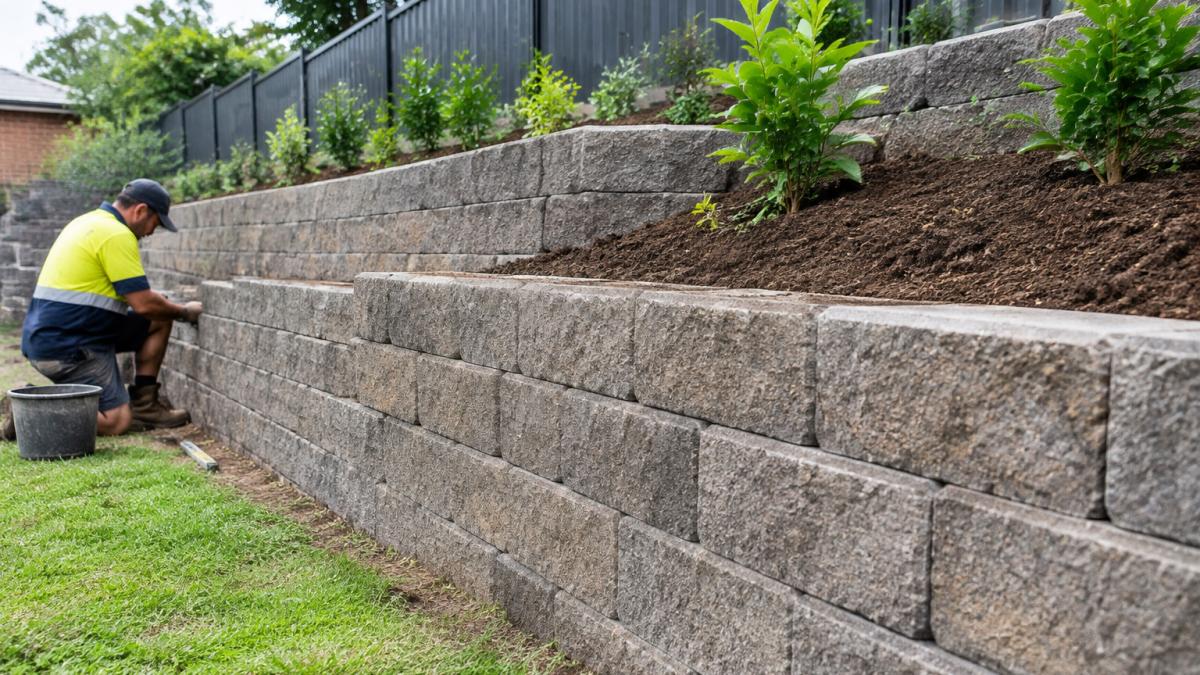
Boundary fences can also involve a neighbour. In some cases a shared fence needs agreement before work starts, and the location of the boundary line should be confirmed rather than assumed. Where the fence meets sloping ground or a retained edge, Retaining Walls may also be part of the discussion. Our team at FDSS Landscaping Services can help you plan layout and placement, but compliance outcomes always depend on your site and the authority that governs it, so treat the advice above as a starting point rather than a guarantee.
What Drives Cost and the Installation Timeline
Most fencing quotes are not directly comparable, which is why two prices for the same run can differ substantially. Understanding what sits behind the number makes it easier to compare like with like and to spot where a cheaper quote has simply left something out.
Several factors affect the final price, and pricing depends on quantity, site conditions and specification. The main considerations are:
- Run length and height. These set the quantity of slats, posts and rails, and taller runs need larger posts and deeper footings to resist wind load.
- Slat profile and spacing. Wider or thicker profiles and tighter spacing both increase material per lineal metre.
- Post spacing and footing design. Posts set further apart reduce post count but demand heavier sections; reactive clay soils common across parts of the Hills District can require deeper or bell-shaped footings.
- Gates. A gate is a separate engineered item with its own frame, hinges, latch and often a self-closing mechanism, so it is rarely a simple add-on to the fence rate.
- Finish. Finish selection can influence the overall specification.
- Site access and preparation. Narrow side access, sloping ground, existing fence removal, vegetation clearing and any retaining or excavation work all add labour and disposal.
- Boundary and compliance work. Survey identification, neighbour liaison and any pool-barrier documentation add time even where the fence itself is straightforward.
A well-structured quote should separate these elements rather than presenting a single lump sum. Ask for the run length, height, post spacing, slat profile, gate schedule and finish to be itemised, and confirm what is excluded, removal and disposal, footings, survey, and any make-good to lawns or paving are the usual omissions.
The installation sequence generally runs as follows:
- Site measure and design. Confirm the boundary line, fence height, gate positions and any pool-barrier or easement constraints.
- Approvals and neighbour agreement. Where a shared boundary or pool barrier is involved, confirm requirements with the relevant council or certifier and reach agreement before ordering.
- Materials ordering. Powder-coated components are made to order, so lead times vary by profile and colour.
- Set-out and excavation. Mark post positions, expose services where required, and excavate footings.
- Post installation and curing. Posts are set in place and allowed to settle before panels are loaded.
- Panel and gate installation. Slats, rails and gates are fitted, aligned and adjusted.
- Handover. Check gate operation, latch alignment, fixings and finish, and confirm care instructions.
Delays most often come from waiting on approvals, neighbour agreement or material lead times rather than from the installation itself, so raising these early is the simplest way to keep a project on track. Weather can also interrupt footing and curing stages, which is worth factoring into any date you are working towards.
Watch out: a quote that is significantly cheaper than the others usually reflects a thinner post section, shallower footings, a shorter workmanship period or excluded removal and disposal. Compare the specification line by line, not just the total.
Requesting a Site-Specific Quote for Your Kellyville Fence
The most useful next step is a measured, site-specific assessment. A quote tailored to your block, the slat layout you prefer and the privacy level you need will tell you far more than any general article can. Share your plans, boundary details and any pool or retaining conditions so the quote reflects what your yard actually requires.
If you are ready to explore aluminium slat fencing for your Kellyville property, request a site-specific quote from FDSS Landscaping Services. We will review your site and talk through the design options.
Frequently Asked Questions
Is aluminium slat fencing suitable for pool areas?
Aluminium slat fencing can be used around pool areas, but the design, gap sizes, height and gate arrangement must meet the pool barrier requirements that apply to your property. These requirements depend on the site and the relevant council or certifying authority, so confirm them before you choose a design. FDSS Landscaping Services can discuss your pool area during a site measure and help you plan a fence layout that suits your property. Request a quote to start that conversation.
How does aluminium slat fencing compare to timber for durability?
Aluminium does not rot, split or attract termites the way timber can. Timber requires regular sealing or painting to stay sound, while aluminium generally needs only occasional washing. Results still depend on the coating, the installation and how exposed the site is, so ask your installer about the finish specified for your property.
Do I need council approval for new fencing in the Hills District?
Whether a fence needs approval depends on its height, location, the property and the local council's planning controls. Some boundary fences are exempt, while others, particularly pool barriers and fences near the street, may need consideration. We recommend checking with your local council before installation and confirming any requirements for your specific site. Our team can help you understand what applies to your project during the planning stage.
How long does the installation process typically take for residential fencing?
Installation timeframes vary with the length of the run, the number of gates, site access, ground conditions and material availability. Planning, site measure and any approvals usually come before fabrication begins, and the physical installation follows. Because every property is different, we give a project timeline after assessing your site rather than quoting a fixed period in advance.